
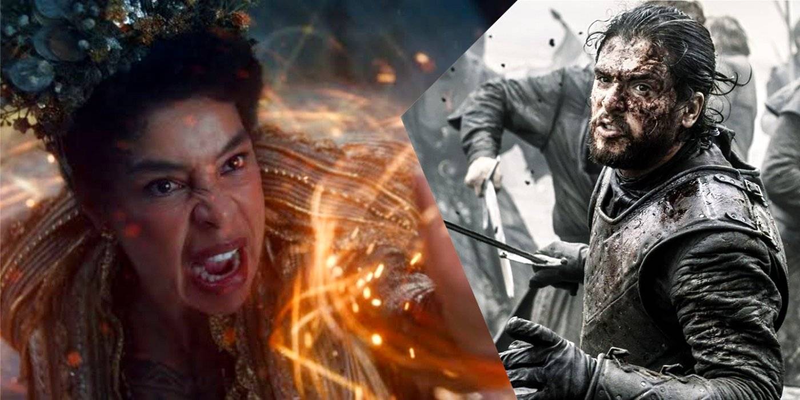
Game of Thrones set the modern standard for fantasy world-building on television, but four series have since proven that Westeros isn't the only way to build a world that feels genuinely lived in. The Dark Crystal: Age of Resistance, Netflix's One Piece, The Wheel of Time, and Arcane each approach world-building from a fundamentally different angle — ecological depth, geographic variety, historical scale, and narrative density — and all four succeed in ways that Martin's adaptation never quite attempted.
The Announcement
The conversation around fantasy television has shifted since Game of Thrones ended in 2019. Critics and audiences now evaluate new entries not just on whether they match HBO's production values, but on whether they expand what the medium can do with invented worlds. Age of Resistance arrived in 2019 as a prequel to Jim Henson's 1982 cult film, One Piece debuted its live-action adaptation in 2023, The Wheel of Time launched on Prime Video in 2021, and Arcane's first season dropped on Netflix the same year — each earning acclaim specifically for world-building that feels distinct from the Westerosi template.
Why This Now
Streaming platforms have changed the economics of fantasy storytelling. Where Game of Thrones needed to justify its budget through broad appeal, today's genre shows can target specific audiences with deeper, weirder, or more mechanically intricate worlds. The success of The Witcher and House of the Dragon proved there's appetite for multiple simultaneous fantasy franchises, while Arcane's sweep at the Annie Awards and The Game Awards demonstrated that animation can deliver world-building density that live-action struggles to match. Meanwhile, One Piece's 25-year manga run gave Netflix a pre-tested blueprint for a world that expands by design rather than necessity.
Deconstruct the Impact
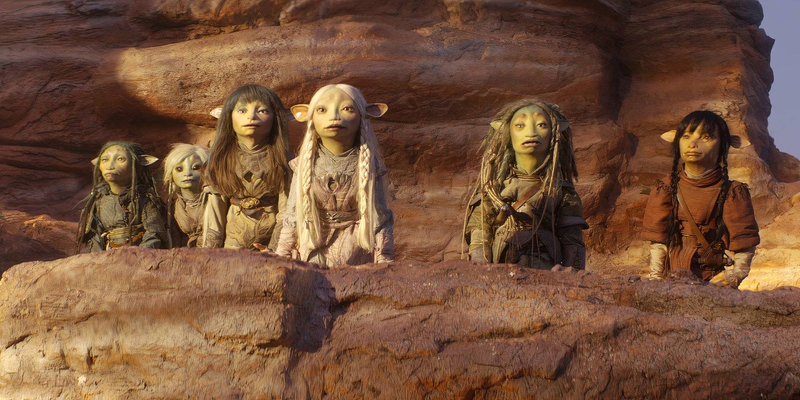
Age of Resistance builds its world from the ground up — literally. Thra's seven Gelfling clans each possess distinct architecture, clothing traditions, and relationships to the land they inhabit. The series treats its setting as an ecosystem first and a backdrop second; every creature, from the lumbering Landstriders to the parasitic Arathim, occupies a defined niche. This ecological coherence makes the Skeksis' exploitation of the Crystal feel like an environmental catastrophe rather than merely a political one. For viewers accustomed to fantasy worlds where non-human races are essentially humans with pointed ears, Thra offers a genuinely alien alternative that still reads emotionally.
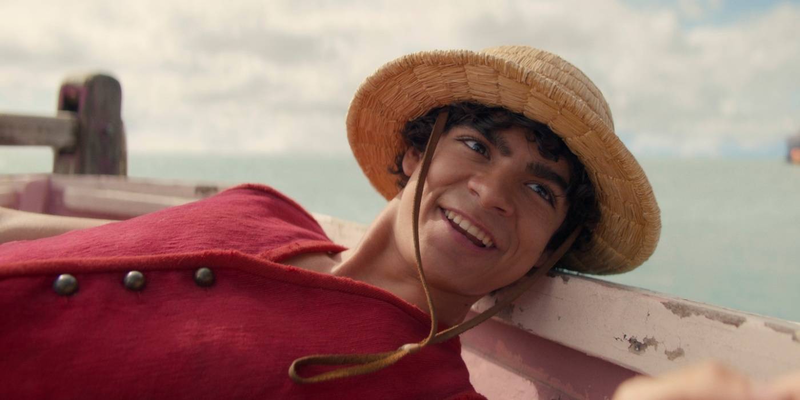
One Piece takes the opposite approach. Instead of deepening a single setting, it widens the map with every arc. The Baratie isn't just a restaurant — it's a floating kitchen staffed by former pirates with its own code of honor. Arlong Park isn't merely a villain's lair; it's a fish-man supremacist stronghold built on the ruins of human oppression. Each island operates under different laws, worships different gods, and runs on different economies, yet all connect through the World Government's shadow and the mystery of the Void Century. The result feels less like a kingdom and more like a planet — one where cultural shock is a weekly occurrence for both characters and audience.
The Wheel of Time competes on historical scale. Robert Jordan's novels span multiple Ages, each leaving ruins, prophecies, and magical residues that shape the present. The show translates this through the White Tower's rival Ajahs, the Aiel's waste-walking culture, the Seanchan's rigid hierarchy — societies shaped by three thousand years of history since the Breaking of the World. Magic isn't a garnish; the One Power structures gender politics, international relations, and religious doctrine. Where Game of Thrones uses history as texture, The Wheel of Time uses it as architecture.
Arcane achieves density through narrative economy. Piltover and Zaun exist in a symbiotic relationship where every technological advance in the city above creates a corresponding crisis below. Hextech doesn't just power gadgets — it reshapes trade routes, enables surveillance states, and fuels the Shimmer addiction devastating Zaun's underclass. The show's two-season runtime forces ruthless efficiency: every location, invention, and institution introduced in episode one pays off by the finale. Nothing exists for atmosphere alone.
The Broader Trend
These four series represent a maturation of fantasy television beyond the "gritty realism" paradigm Game of Thrones popularized. Age of Resistance proves practical effects and puppetry can create tactile immersion that CGI struggles to replicate. One Piece demonstrates that long-form manga adaptation can teach television how to structure episodic world-expansion. The Wheel of Time shows that doorstopper fantasy novels contain world-building tools — cyclical time, magic-as-infrastructure, deep-time consequences — that television is only beginning to exploit. And Arcane, born from League of Legends lore, proves that video game adaptations can surpass their source material's narrative ambitions when given creative freedom.
The common thread isn't budget or prestige — it's specificity. Each show makes choices about what its world is rather than defaulting to medieval European pastiche.
Counterpoint or Skepticism
There's a legitimate case that Game of Thrones' "imperfect" world-building is actually a feature, not a bug. Westeros feels lived-in precisely because large swathes of it remain unexplored — the Summer Islands, Sothoryos, the far east beyond Asshai. Martin's unfinished novels deliberately withhold answers, creating a sense of genuine historical distance that complete worlds sometimes lack. A world where every mystery resolves can feel smaller than one where the map's edges fade into rumor. Additionally, all four comparison shows benefit from hindsight: they built on Game of Thrones' proof of concept, its audience education, and its production infrastructure.
What Comes Next
The next frontier isn't just deeper worlds — it's interactive ones. Arcane's success has already sparked Riot Games to expand Runeterra across multiple media. One Piece's live-action renewal will test whether seasonal television can sustain the manga's endless expansion. The Wheel of Time's upcoming seasons must navigate a book series that grows more sprawling with each volume. And Age of Resistance, cancelled after one season, remains a tantalizing what-if — a world so fully realized it deserved more time to breathe.
What unites these series isn't that they "beat" Game of Thrones. It's that they proved fantasy television can support multiple distinct approaches to world-building simultaneously — ecological, geographic, historical, and systemic — without collapsing into derivative noise. The genre's health depends on that diversity.



Comments (0)
Loading comments…