
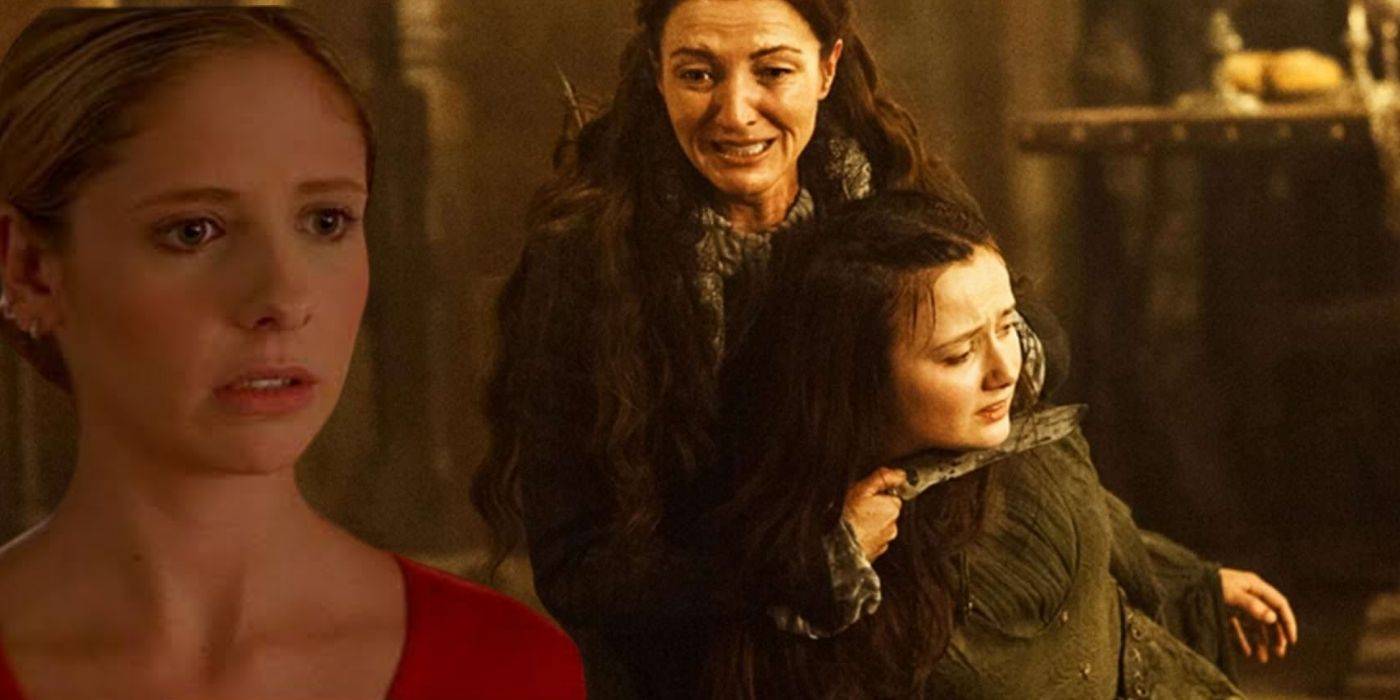
Five fantasy television episodes stand above the rest — not just for their quality, but for the specific, irreversible shock of experiencing them blind. A Song of Ice and Fire adaptation Game of Thrones delivers the Red Wedding in "The Rains of Castamere." The Sandman reframes mortality in "The Sound of Her Wings." Supernatural caps five seasons of apocalypse buildup with "Swan Song." Buffy the Vampire Slayer strips away the supernatural entirely for "The Body." And House of the Dragon sets the Dance of the Dragons in motion with "The Lord of the Tides." Each episode earns its place through a moment that cannot be replicated once the surprise is gone.
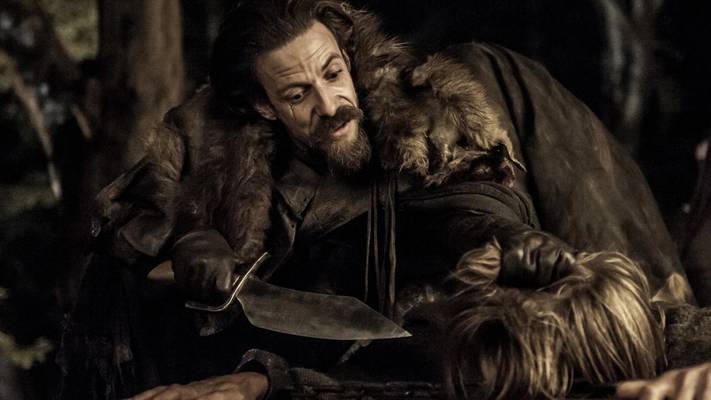
The Announcement: Five Episodes That Define the Genre
The list, compiled from fan discourse and critical consensus, spans two decades of fantasy television. "The Rains of Castamere" (Game of Thrones Season 3, Episode 9) aired in 2013. "The Body" (Buffy Season 5, Episode 16) debuted in 2001. "Swan Song" (Supernatural Season 5, Episode 22) arrived in 2010. "The Sound of Her Wings" (The Sandman Season 1, Episode 6) dropped on Netflix in 2022. "The Lord of the Tides" (House of the Dragon Season 1, Episode 8) premiered in 2022. What unites them isn't a shared network or showrunner — it's the way each episode weaponizes the viewer's trust in genre conventions.
Game of Thrones spent three seasons training audiences to expect noble heroes to survive. The Red Wedding didn't just kill characters; it killed the contract between show and viewer. Buffy built five seasons on the premise that magic solves problems, then presented a death magic couldn't touch. Supernatural framed the apocalypse as a battle to be won, then resolved it through sacrifice instead of victory. The Sandman introduced Death as a terrifying concept, then revealed her as the kindest entity in the universe. House of the Dragon used a family dinner to lay the groundwork for a civil war that would define a dynasty.
Why This Now: The Streaming Rewatch Economy
These episodes resurface in conversation now because streaming has transformed how we consume them. When Game of Thrones aired weekly, the Red Wedding was a shared cultural event — watercooler talk the next morning. Today, a new viewer hits "The Rains of Castamere" alone, possibly spoiled by memes, possibly not. The first-time experience has become a scarce resource. Fans who lived through the original airings describe a kind of envy toward the uninitiated: the luxury of not knowing.
This dynamic creates a paradox. These episodes reward rewatching — The Body reveals new layers of grief on a second pass; The Lord of the Tides foreshadows the Dance of the Dragons in ways only visible in retrospect. But the specific emotional violence of the first watch — the gasp, the pause, the need to walk away from the screen — is a non-renewable resource. Streaming platforms know this. HBO Max and Netflix both market "first watch" experiences through curated collections, implicitly acknowledging that the initial viewing is a distinct product from the rewatch.
Deconstructing the Impact: What Each Episode Broke
"The Rains of Castamere" didn't just shock — it restructured fantasy storytelling. Before 2013, prestige fantasy on television was virtually nonexistent. After, every showrunner had to answer: are your characters actually safe? The Red Wedding's influence echoes in The Walking Dead, The Witcher, and House of the Dragon itself. Michelle Fairley's performance as Catelyn Stark — the transition from political calculation to animal grief to hollowed-out silence — remains the gold standard for on-screen devastation.
"The Body" operates differently. No twist, no betrayal, no supernatural element. Just a brain aneurysm and the aftermath. Joss Whedon directed the episode without a musical score, forcing viewers into the same disorienting silence as the characters. Anya's monologue — "I don't understand how this all happens. How we go through this. I knew her, and then she's — there's just a body, and I don't understand why she just can't get back in it and not be dead anymore" — articulates the irrationality of grief better than any fantasy metaphor could. Sarah Michelle Gellar's physical performance — the way Buffy moves through her own house like a stranger — makes the Slayer's strength irrelevant.
"Swan Song" resolves Supernatural's central tension: the codependency of the Winchester brothers framed as cosmic destiny. The apocalypse isn't stopped by killing the devil; it's stopped by Sam choosing his brother over his fate. The episode's final montage — childhood memories set to "Carry On Wayward Son" — retroactively recontextualizes five seasons of monster-of-the-week episodes as chapters in a single story about two boys in a car. Chuck Shurley's narration ("Endings are hard. Any chapped-ass monkey with a keyboard can poop out a beginning, but endings are impossible") doubles as a mission statement for the series.
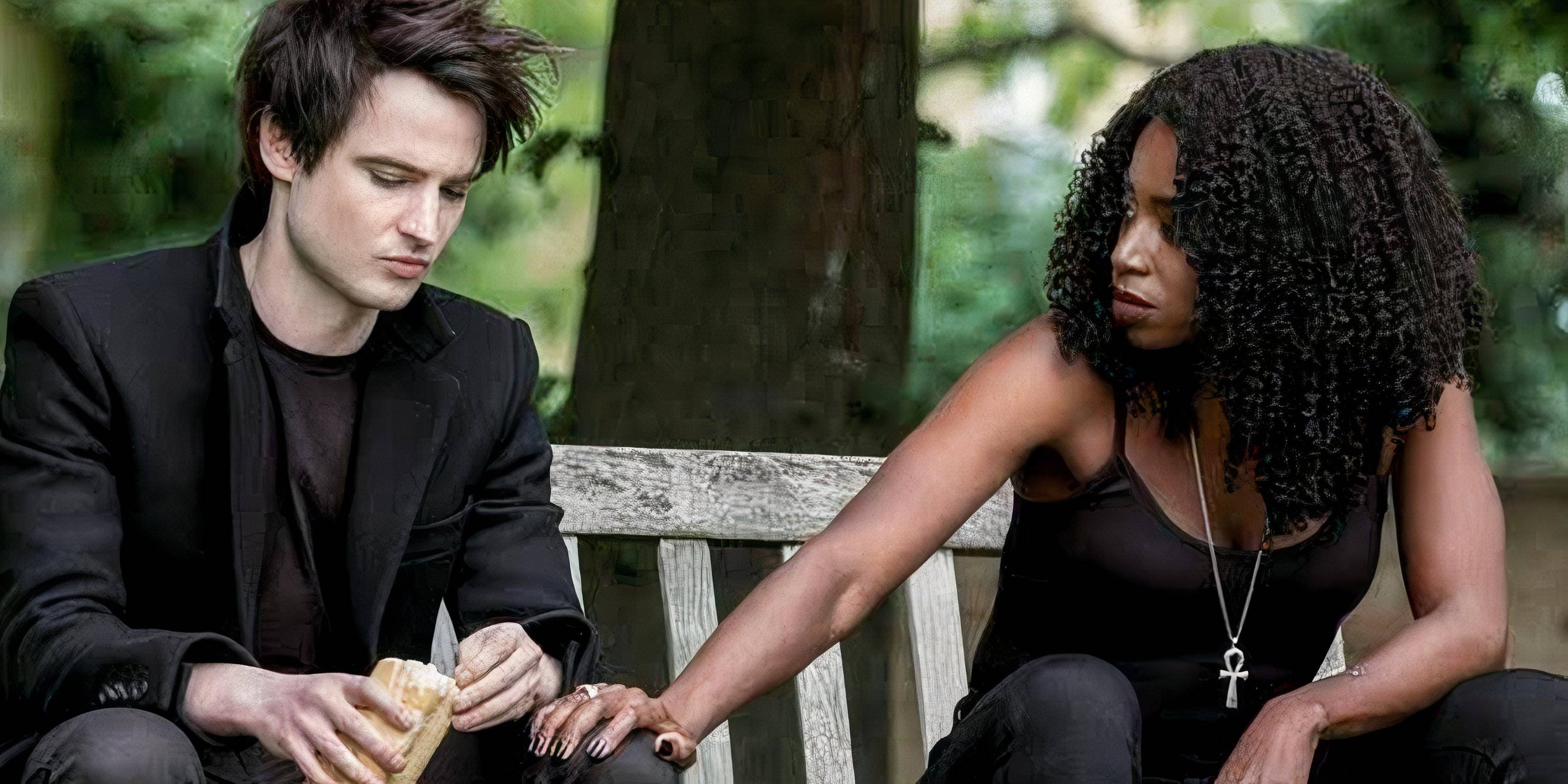
"The Sound of Her Wings" arrives at The Sandman's midpoint as a tonal pivot. Five episodes of Dream's imperious cruelty give way to an afternoon with his sister Death, visiting a newborn, an elderly woman, a suicidal trans woman, and a cat. Kirby Howell-Baptiste plays Death as radically present — not gothic, not ominous, just there. The episode argues that mortality isn't a tragedy but a mercy, and that Dream's realm of stories matters only because waking life ends. It's the rare fantasy episode that uses the fantastic to illuminate the mundane rather than escape it.
"The Lord of the Tides" compresss a decade of political maneuvering into a single supper. The time jump recasts the younger generation — Aegon, Aemond, Helaena, Jacaerys, Lucerys — as adults with grievances and ambitions. Paddy Considine's Viserys, rotting alive but determined to reach the Iron Throne one last time, anchors every scene. The "strong boys" toast — Aemond's quiet declaration that he sees through Rhaenyra's lineage — crystallizes the conflict in four words. Daemon beheading Vaemond Velaryon in the throne room signals that law no longer binds the Targaryens. Viserys' deathbed confusion, mistaking Alicent for Rhaenyra and referencing Aegon's prophecy, ensures the succession crisis will be fought over a misunderstanding.
The Broader Trend: Fantasy's Maturation on Television
These five episodes chart fantasy TV's evolution from genre ghetto to prestige destination. Buffy proved a "monster of the week" show could deliver literary-grade character study. Supernatural demonstrated that a network procedural could sustain a five-season mytharc. Game of Thrones convinced HBO to spend feature-film budgets on dragons and direwolves. The Sandman adapted a "unfilmable" comic by trusting its source material's philosophical core. House of the Dragon proved the Game of Thrones universe could survive its parent show's controversial finale.
Each episode also represents a different relationship to its source material. "The Rains of Castamere" adapts George R.R. Martin's "Red Wedding" chapters with brutal fidelity. "The Body" is an original script by Joss Whedon, using the show's established vocabulary to tell a story the comics never attempted. "Swan Song" was intended as a series finale — Eric Kripke's planned endpoint before Supernatural continued for ten more seasons. "The Sound of Her Wings" translates Neil Gaiman's The Sandman #8-9, preserving the issue's dialogue-heavy structure. "The Lord of the Tides" draws from Fire & Blood, compressing years of history into dramatic scenes the history book only summarizes.
Counterpoint: The Case for the Rewatch
Not everyone agrees the first watch is the definitive experience. Critics argue that "The Body" hits harder on rewatch — the viewer knows what the characters don't, creating dramatic irony that deepens the tragedy. "The Lord of the Tides" rewards encyclopedic knowledge; the Velaryon succession dispute, the significance of Viserys' prophecy, the history between Daemon and Vaemond — all land with more weight when you understand the context. The Sandman fans note that "The Sound of Her Wings" gains meaning in retrospect, once Dream's arc bends toward humanity.
There's also the spoiler paradox. The Red Wedding is so culturally pervasive that true blindness is nearly impossible. A 2024 viewer likely knows "something bad happens at a wedding" before pressing play. Does that diminish the episode? Or does the dread of anticipation create its own tension? Game of Thrones showrunners David Benioff and D.B. Weiss have argued the latter — that the episode works as tragedy precisely because the audience senses doom approaching, mirroring Catelyn's slow realization at the Twins.
What Comes Next: The Next Generation of Unforgettable Episodes
Fantasy television is in its richest era yet. The Rings of Power Season 2, House of the Dragon Season 3, The Witcher's reboot, Percy Jackson Season 2, and Netflix's Avatar: The Last Airbender all have opportunities to join this conversation. The A Knight of the Seven Kingdoms adaptation will test whether the Game of Thrones universe can produce a new "Rains of Castamere" without the shock of the new. The Sandman Season 2 adapts The Doll's House — a storyline with its own devastating turns.
But the next great "erase my memory" episode might come from an unexpected corner. Animation continues to push boundaries — Arcane, Scavengers Reign, Blue Eye Samurai — proving the medium suits fantasy's imaginative demands. Gaming adaptations like The Last of Us and Fallout have already produced episodes that function as standalone emotional gut-punches. The formula remains the same: earn the viewer's trust, then break it in service of something truer than plot.
For now, these five episodes stand as monuments to what fantasy television can achieve when it stops pretending death is reversible, heroes are invincible, and magic fixes everything. They remind us that the genre's greatest power isn't escape — it's the ability to make the familiar devastating by showing it through a stranger's eyes.
Comments (0)
Loading comments…