
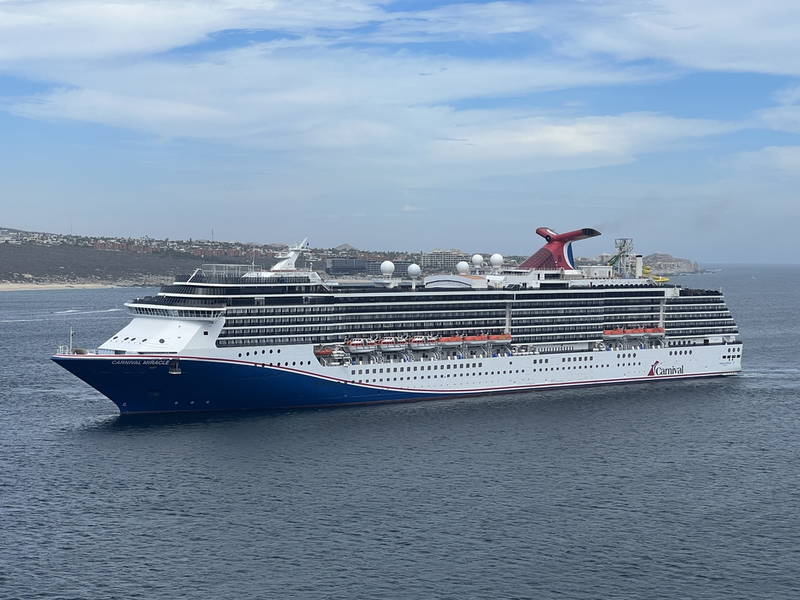
Carnival Cruise Line just caught a major break in court. A federal appeals court overturned parts of a $10.3 million jury verdict against the company in a sexual assault case, ruling that the trial judge made a critical mistake: keeping an FBI report out of the courtroom that concluded the encounter at the center of the lawsuit was consensual.
The ruling from the U.S. 11th Circuit Court of Appeals, issued Aug. 25, vacates the judgment on the sexual assault and false imprisonment claims and sends both back for a new trial. The court also reversed the lower court's partial summary judgment on the false imprisonment claim. In plain terms: the jury's award to the plaintiff, identified only as Jane Doe, isn't dead — but it's very much in limbo.
One Report Changed Everything

The appellate judges sided with Carnival's argument that the FBI's conclusion could have changed the jury's mind. "The agent's report could have been the deciding factor for the jury," they wrote. Judge Barbara Lagoa, who authored the opinion, noted that Doe failed to show the FBI's findings "could not be trusted" and conceded that the investigation itself was timely.
So why didn't the jury hear about it? The lower federal court in southern Florida excluded the FBI report, and Carnival argued that was a reversible error. The appeals court agreed — and that disagreement is the entire ballgame.
A Confusing Night on the Carnival Miracle

Here's what the case is actually about. In 2018, on the Carnival Miracle, a passenger identified only as Jane Doe was extremely intoxicated. She told authorities she barely remembered her encounter with a member of the ship's cleaning crew and couldn't say for sure whether the man blocked her from leaving a storage closet. But she told friends and a ship security officer that she believed she was assaulted.
The crew member told FBI agents the meeting was consensual. Notably, security video of the closet area was never examined. That combination — a complainant with fragmented memory, a defendant with a clear story, and unexamined footage — is exactly the kind of murky factual situation where evidentiary rulings decide everything.
For Doe, the ruling is brutal in a way that goes beyond the money. She went through a six-day trial in Miami that concluded in July, watched a jury agree with her, and now faces the prospect of doing it all over again. No new trial date has been set, which means months or years of additional waiting. The psychological toll of relitigating an assault is something no appeals court opinion can quantify.
A Familiar Fight for Carnival
There's also a real strategic concern here. The FBI report's conclusion — that the encounter was consensual — was based on interviews with the crew member and, to a degree, on Doe's own inability to recall details. Victim advocates would argue that a "consensual" finding in a case involving heavy intoxication ignores the reality that a person too drunk to remember can't meaningfully give consent. The appeals court's framing treats the FBI report as a neutral arbiter rather than one side of a deeply disputed story.
This isn't Carnival's first rodeo. The cruise line has been a repeat defendant in lawsuits accusing crew members of sexual misconduct toward passengers. In recent years, appeals courts have sided with Carnival in other assault-related cases — including a ruling that the company wasn't liable for a teen's sexual assault on a ship. There's a pattern here: even when passengers win, Carnival has both the resources and the legal appetite to fight through years of appeals.
That's partly by design. Carnival Corp., headquartered in Doral, Florida, is partly self-insured for liability claims. That means it's not purely an insurance company's money on the line — it's Carnival's own bottom line, which gives the company every incentive to litigate aggressively. And with "nuclear verdicts" becoming a hot topic in liability circles, cruise lines are fighting harder than ever to keep cases away from juries or get verdicts overturned.
The Bigger Picture for Cruise Passengers
The cruise industry has a well-documented problem with sexual assault claims. Because ships operate in international waters and passengers come from everywhere, jurisdiction is messy. Victims face a maze of forum choices, ticket fine print, and maritime law rules that land-based assault cases simply don't involve.
For anyone considering a cruise, the takeaway is uncomfortable but straightforward: this case shows how hard it can be for an assault survivor to get a final, enforceable verdict. A jury believed Jane Doe. An appeals court decided the jury didn't get the full picture. Both things can be true — and that's the legal system working exactly as designed, even when the result feels like a step backward for accountability.
What Comes Next
The 11th Circuit has sent the case back down for a new trial on the false imprisonment and sexual assault claims, and the clock restarts. Watch for two things: whether the FBI report dominates the next trial, and whether Carnival pushes for a settlement now that it has leverage it didn't have before. For Doe, the fight continues. For anyone following cruise line litigation, this is a reminder that a jury verdict in a maritime assault case is rarely the end of the story.
Comments (0)
Loading comments…