
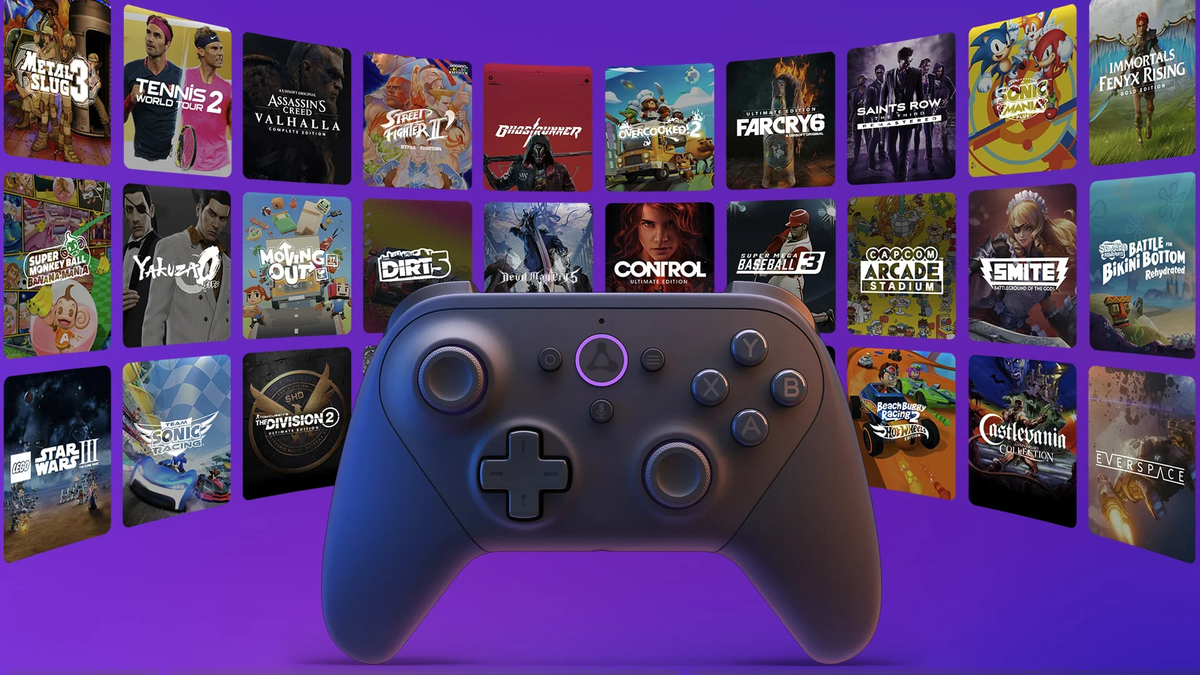
Amazon Games GM Jeffrey Gattis argues that the rising cost of dedicated gaming hardware — Steam Machines pushing past $1,000, PlayStation and Xbox consoles climbing steadily — will inevitably push more players toward cloud gaming services like Amazon Luna. The logic is straightforward: when the barrier to entry hits four figures, a subscription bundled with something you already pay for starts looking like the only sensible option.
Gattis made the case in a recent interview, framing Luna not as a console killer but as a market expander. "Our business is more about reaching more players and expanding the market, not trying to get people to give up their consoles or gaming PCs," he said. "The world doesn't need another one of those. They don't need a fourth entry selling the same games and competing for the same pie of players."
The Bundle That Changes the Math
Amazon recently folded Luna into Prime Video at no extra cost for subscribers, though there's a catch: you need a Fire TV device to play. That requirement simultaneously lowers the hardware floor — a Fire TV Stick costs a fraction of a console — and locks the experience into Amazon's ecosystem. For the millions of households already paying for Prime, the calculation shifts from "should I buy a $500 console?" to "why not try the thing I already have access to?"

Why the Timing Matters
Hardware prices have been moving in only one direction for years. The PlayStation 5 launched at $499; the PS5 Pro rumor mill suggests $699 or higher. Xbox Series X started at $499, and Microsoft's own "Steam Machine" style handheld — the ASUS ROG Ally partnership — targets a premium price tier. Even the Steam Deck, once the budget darling at $399, has seen OLED models push past $549. When Gattis references a "Steam Machine launching at over $1,000," he's reading a market that has largely abandoned the sub-$400 sweet spot that defined previous generations.
This isn't inflation alone. Silicon costs, R&D for ray tracing and AI upscaling, and the simple fact that consoles are now sold at thinner margins (or even losses) with the expectation of subscription revenue recovery — all of it pushes the upfront cost higher. The traditional model of "buy the box, buy the games" is straining under its own weight.
Who Actually Benefits Here
The immediate winners are players who were already on the fence. A parent buying for a teenager, a lapsed gamer curious about a specific title, someone with a solid internet connection but no desire to manage driver updates or storage management — cloud gaming removes the friction of ownership. For Amazon, the win is stickiness: Luna becomes another reason not to cancel Prime, another data stream feeding the recommendation engine, another foothold in the living room.
Traditional platform holders face a more complicated picture. Sony and Microsoft have their own cloud initiatives — PlayStation Plus Premium and Xbox Cloud Gaming — but they're still tethered to the console business model. Every player who chooses Luna over a PS5 is a player not buying $70 games, not subscribing to PS Plus, not investing in the PlayStation ecosystem. The pie Gattis mentions isn't growing; it's just being sliced differently.

The Skepticism Is Earned
Cloud gaming has been "the future" for a decade. OnLive promised it in 2010. Stadia promised it in 2019. Both failed because the fundamental constraints — latency, bandwidth caps, image compression, the simple physics of distance between server and screen — haven't disappeared. They've improved, yes. But "good enough for most games" still excludes competitive shooters, fighting games, and anything where frame-perfect input matters.
Luna's Fire TV requirement adds another layer of friction. It's not "play anywhere" — it's "play on this specific Amazon device." The library, while growing, still trails GeForce Now's "bring your own Steam library" model. And the 1080p/60fps cap (4K is limited to select titles) means enthusiasts with 120Hz displays and fiber connections will still want local hardware.
What Comes Next
The real test isn't whether cloud gaming works — it demonstrably does, for a widening slice of games and players. The test is whether the cost curve of hardware continues its ascent while internet infrastructure catches up. If the next PlayStation launches at $799 and the next Xbox follows, and if 5G home internet and fiber rollouts continue, Gattis's prediction becomes a self-fulfilling prophecy: cloud gaming wins by default because the alternative becomes a luxury good.
Watch the subscription numbers. Watch whether Amazon expands Luna beyond Fire TV to smart TVs, phones, and browsers without extra hardware. Watch whether Sony and Microsoft respond by making their cloud tiers more compelling — or by doubling down on hardware exclusivity. The console isn't dying. But for the first time in decades, it has genuine competition for the living room that doesn't require a box at all.
Comments (0)
Loading comments…