
Yes—Crunchyroll’s Jaadugar: A Witch in Mongolia has become one of this year’s most divisive anime, and the argument is bigger than taste. The show is dividing viewers because it puts Islam, Mongol Empire history, revenge, and cultural trauma at the center of a mainstream streaming anime instead of treating them as background flavor.
Science SARU’s adaptation of Tomato Soup’s historical manga premiered in Japan on July 4, 2026. Crunchyroll’s English dub followed on July 17, 2026, with Episodes 1 and 2 released together, and the first four episodes are now available for the English-language rollout.
That fast rollout has made the show feel like a major event even before it has finished telling its story. It is not a cozy witch story or a fantasy power fantasy; it is a historical drama about displacement, education, captivity, and revenge moving through the Mongol Empire.
“After losing her mother and her homeland, Sitara’s despair transforms into determination with the power of knowledge. New possibilities unfold when a family of scholars takes her in, deepening her education. Meanwhile, Genghis Khan’s Mongol Empire conquers nation after nation, nearing Sitara’s new home. After the Fourth Prince of the empire takes her captive, a flame of revenge is ignited.”
The title is doing a lot of work. “Witch” suggests folklore and danger. “Mongolia” signals a specific historical and cultural setting. “Crunchyroll” tells viewers this is built for global discussion. When those pieces land together, the show is almost guaranteed to attract both curiosity and pushback.
Why Crunchyroll Is Betting on a Historical Anime Now
Crunchyroll’s catalog has long depended on shōnen action, but the streaming market is no longer satisfied with only battle anime, fantasy isekai, and romantic comedies. The company needs shows that can create conversation beyond the usual genre lanes, and Jaadugar gives it something visually distinct, politically charged, and culturally specific.
Science SARU also adds weight to the rollout. The studio has built its reputation on animation that is willing to be strange, expressive, and emotionally direct, so a grounded historical drama feels like a deliberate statement rather than a safe fallback. Naoko Yamada serving as executive director makes the project even more noticeable to anime fans, since her name carries strong associations with character study and emotional realism.
That matters because the stakes are not just about whether viewers enjoy the first four episodes. A show like this can either expand what mainstream anime platforms feel comfortable streaming, or it can become a cautionary example for studios handling sensitive history. Either outcome would be significant.
The Controversy Is About More Than One Bad Episode
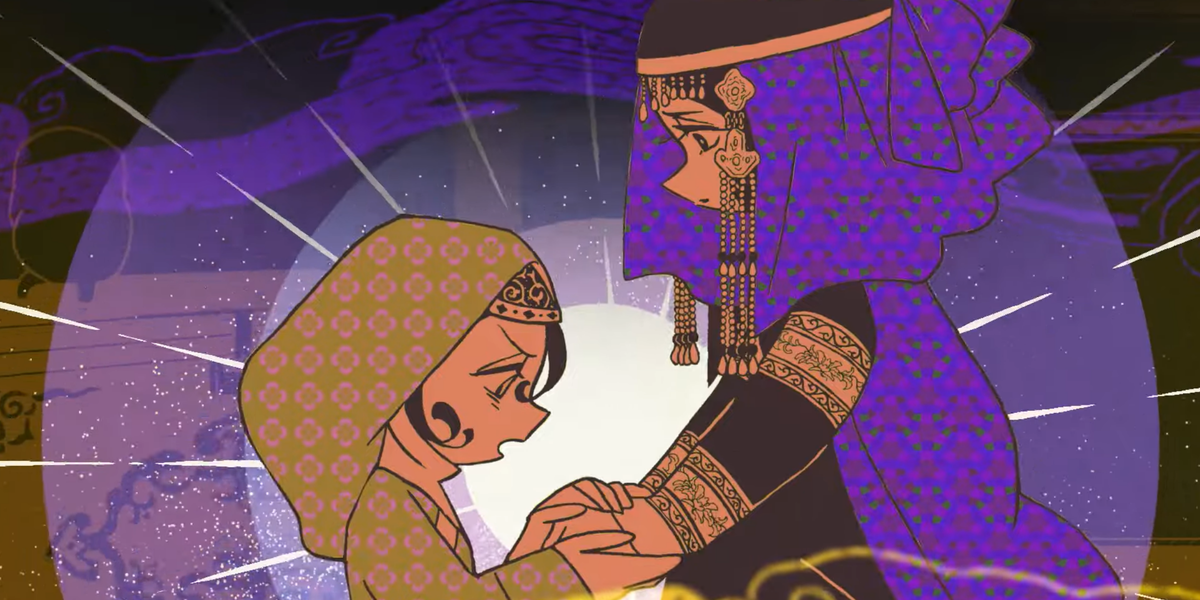
The sharpest debate is over how the series portrays Islam, Muslims, and the Mongol Empire. Some viewers see the show as a valuable chance to explore a lesser-known historical angle through anime. Others are worried that the story is bending real religious and cultural material into familiar dramatic shortcuts.
That is a fair concern. Historical fiction is allowed to reshape events, compress timelines, and invent dialogue. The problem starts when real communities become scenery for a villain plot, or when a real faith is used as shorthand for mystery, danger, or political corruption. The show is not obligated to be a documentary, but it is also not operating in a vacuum.
Representation is not a free pass, and criticism is not automatically bigotry. Both can be valid at the same time. A global anime can introduce audiences to histories they may never encounter in school, while still inviting scrutiny when it handles those histories with questionable care.
That tension is why Jaadugar is already attracting such intense reactions. The premise asks viewers to sit with a protagonist shaped by loss, education, captivity, and revenge. It also asks them to judge how the story frames a woman navigating imperial power, religious identity, and historical violence.
There is another issue hiding under the debate: the word “witch.” In many stories, that label is a quick way to mark someone as dangerous, outsider, or cursed. If Jaadugar defines who is using that label and why it matters, it could become part of the story’s political texture. If it simply drops the word for atmosphere, the backlash will likely get louder.
Who Actually Gets Hit by the Backlash
Crunchyroll benefits from the conversation in the short term. A controversial anime can pull in viewers who want to argue, viewers who want to defend it, and viewers who have never heard of the manga before. Streaming platforms understand that debate is not always bad when the underlying show is visually interesting and easy to watch.
Viewers benefit too, at least in theory. Anime has become one of the easiest ways to access stories from different cultures, religions, and historical periods. Jaadugar points toward a future where the medium is not limited to swords, magic schools, or space operas.
Creators are the riskiest group. If the series is praised, it may help justify more ambitious historical anime. If it is criticized hard enough, studios may become more cautious with real-world settings, especially when those settings involve living religious communities or politically charged empires.
That is why the early reaction can feel bigger than the show itself. Social media rewards quick judgments, and the first two episodes released together gave fans a compact batch to dissect. That is great for engagement, but it is not always ideal for nuance.
The Cast, Crew, and Crunchyroll Rollout
Crunchyroll is streaming the series across North America, Central America, South America, Europe, Africa, Oceania, the Middle East, and the CIS, excluding Russia and Belarus. That wide availability helps explain why the reaction is moving quickly: the show is not trapped in a smaller regional release.
The English dub includes Cristina Vee as Sitara, Marwa Elda as Fatima, Abi Kumar as Shira, Yussef Benelbar as Muhammad, Cameron Wisener as Zumurrud, Zareen Afzaal as Anis, Alex Mai as Tolui, and Christopher Guerrero as Genghis Khan. The Mongolia Arc trailer also highlighted Sorghaghtani, Möge, and Kirgistani, with Japanese voice work from Misaki Kuno, Ayaka Asai, and Mayumi Shintani.
On the production side, Abel Gongora is directing, Kanichi Kato is handling series composition, Kenichi Yoshida is responsible for character designs and chief animation direction, and Koshiro Hino is composing the music. That is a lot of moving parts for a show built around political tension and emotional transformation.
What to Watch Next
New episodes of Jaadugar: A Witch in Mongolia drop Saturdays on Crunchyroll. The key question is whether later episodes clarify the story’s moral center or simply lean harder into shock value.
Right now, the strongest defense of the anime is that it is trying to tell a story outside the usual anime comfort zone. The strongest criticism is that sensitivity does not come from topic choice alone; it comes from execution. A real-world setting needs more than


Comments (0)
Loading comments…