
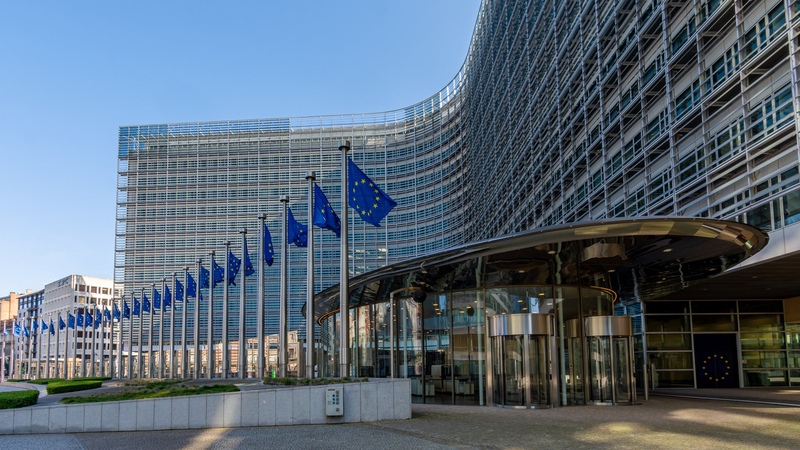
The European Commission has given its blessing to the $55 billion acquisition of Electronic Arts by a consortium led by Saudi Arabia's Public Investment Fund, ruling that the deal "would not raise competition concerns" in the markets where both entities operate. The approval removes the first major regulatory hurdle for what would be the largest leveraged buyout in history, though the deal still faces scrutiny from U.S. antitrust and labor regulators who have raised pointed questions about its impact on workers and market concentration.
The consortium — which includes private equity firms Silver Lake and Affinity Partners, backed by over $20 billion in debt financing from JPMorgan — announced its offer for EA in September 2025. EA shareholders have already voted in favor of the transaction. In its merger review, the Commission applied its standard test: whether the combination would significantly impede effective competition in the EU. The conclusion was that it would not, given the limited overlap between the Saudi sovereign wealth fund's existing portfolio and EA's publishing and development operations.
Why the Saudis, Why Now
Saudi Arabia's Public Investment Fund has been on a years-long spending spree across the gaming sector, acquiring stakes in Nintendo, Capcom, Nexon, and Embracer Group while also funding the creation of Savvy Games Group. The EA bid represents a dramatic escalation — not a minority stake, but full control of one of the West's largest publishers. For PIF, it's a cornerstone asset in a stated strategy to diversify the kingdom's economy away from oil and position itself as a global entertainment hub. For Silver Lake and Affinity, it's a classic leveraged play: acquire a cash-flow-positive giant, service the debt with EA's recurring revenue from Ultimate Team, Battle Passes, and live-service titles, and eventually exit at a multiple.
The timing also reflects a broader shift. After a pandemic-era boom, the gaming industry has contracted — layoffs, studio closures, and canceled projects have become routine. Private equity sees distressed valuations and predictable recurring revenue as an opportunity. EA, with its sports monopolies (FIFA/FC, Madden, NHL) and live-service engine, fits the profile perfectly.
What This Means for Players and Developers
On paper, the EU's clearance suggests business as usual for European consumers. The Commission found no horizontal overlap — PIF doesn't publish games — and no vertical foreclosure risk that would let the consortium disadvantage rivals. EA has publicly committed to maintaining "creative control" and "creative freedom" under the new ownership, a line that reads more like a reassurance to nervous developers than a binding promise. In practice, leveraged buyouts typically bring cost discipline. That often means studio consolidations, reduced headcount, and pressure to maximize monetization in existing franchises rather than fund risky new IP.
For the average player, the immediate experience of FIFA 26 or the next Battlefield won't change. The long-term question is whether a debt-laden EA, answerable to private equity timelines, still greenlights the weird, ambitious projects that occasionally break through — think It Takes Two or the original Dead Space remake pitch.
The Labor Question the EU Didn't Ask
The Commission's mandate is competition, not labor markets. That blind spot is exactly what has U.S. regulators and lawmakers concerned. In October 2025, Communication Workers of America president Claude Cummings Jr. urged the FTC and CFIUS to block or condition the deal, warning that "foreign and private equity interests" could destabilize the American video game workforce. Earlier this year, a bipartisan group of lawmakers asked the FTC to investigate EA's "existing wage-setting power" and the "likelihood of post-transaction layoffs" in concentrated labor markets where EA is often the dominant employer.
Those concerns aren't theoretical. Private equity acquisitions in other sectors have repeatedly led to workforce reductions, outsourcing, and erosion of benefits — all while debt service payments take priority over reinvestment. EA employs roughly 13,000 people globally. The CWA's argument is that a leveraged buyout of this scale, in an industry already bleeding jobs, deserves scrutiny that competition law alone doesn't provide.
A Test Case for the New Antitrust Era
The EA deal sits at the intersection of two trends regulators are still learning to handle: sovereign wealth funds buying strategic cultural assets, and private equity using cheap debt to roll up mature industries. The EU's quick clearance — handled under the normal, non-in-depth review procedure — suggests the Commission sees this as a financial transaction, not a market restructuring. But the FTC under Chair Lina Khan has signaled a willingness to look beyond traditional consumer-price metrics, including labor market effects and the role of cross-ownership in suppressing wages.
CFIUS review adds another layer. The committee assesses foreign investment for national security risks, and while a game publisher isn't a defense contractor, the scale of PIF's influence across Western media and tech has drawn bipartisan scrutiny in Washington. A conditional approval — behavioral remedies, a labor neutrality agreement, or a monitoring trustee — is a plausible outcome.
What to Watch Next
The deal's fate now hinges on the U.S. review process. The FTC could open a second request for information, extending the timeline by months. CFIUS has its own clock. If both clear the transaction, the consortium will likely move to close quickly and begin the work of servicing $20 billion in debt — which is when the real operational changes, if any, will surface. For now, EA's studios keep making games. The question is how long the current leadership's assurances survive contact with a leveraged balance sheet and a new board with a fiduciary duty to the fund's limited partners.


Comments (0)
Loading comments…