
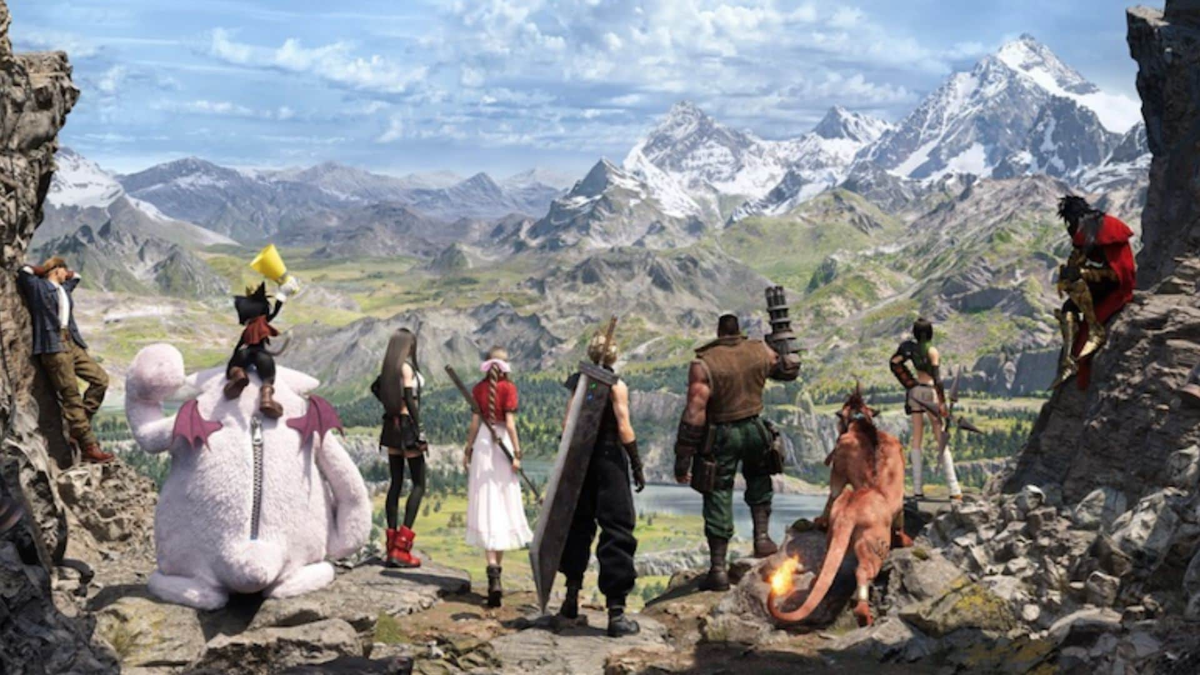
Final Fantasy 7 Rebirth director Naoki Hamaguchi has acknowledged what many players have felt for years: open-world fatigue is real, and it's reshaping how even the biggest franchises approach game design.
In a recent interview, Hamaguchi spoke candidly about the feedback surrounding Rebirth's expansive structure. "There are a lot of open world games out in the world right now, and [the idea of 'open world fatigue'] is a very important concept to me," he said. He described the familiar sensation of being dropped into a massive map with no clear direction — a feeling that has become increasingly common as more series adopt the formula.
The Announcement
Hamaguchi's comments come as the Final Fantasy 7 remake trilogy approaches its conclusion. Rebirth, the second installment, significantly expanded the scope beyond Midgar's walls, introducing regional open zones filled with side content, exploration, and traversal mechanics. While praised for its ambition, the shift also drew criticism for pacing issues and repetitive open-world busywork — the exact friction points Hamaguchi now recognizes.
He emphasized that player freedom remains a priority, but the execution needs to respect the player's time and attention. "The concept of being thrown into this wondrous world where anything goes is amazing," he noted, suggesting the ideal lies somewhere between total aimlessness and rigid linearity.
Why This Now
The open-world boom has defined the last decade of AAA development. From The Legend of Zelda: Breath of the Wild to Assassin's Creed's annual iterations, the template became the default for major releases. But player tolerance for map icons, tower climbs, and checklist design has worn thin. Recent titles like Starfield and Avatar: Frontiers of Pandora faced pushback for scale without density, while more focused experiences — Baldur's Gate 3, Elden Ring's intentional obscurity, even Final Fantasy 16's deliberate linearity — found success by rejecting the bloat.
Square Enix itself has felt this tension. Forspoken's open world was criticized for emptiness. Final Fantasy 16 deliberately avoided the format. Rebirth sits in an awkward middle ground: a remake of a linear classic stretched across an open structure it wasn't originally built for.
Deconstruct the Impact
For the Final Fantasy 7 remake project, this admission signals a potential course correction for the trilogy's final chapter. If Hamaguchi and his team internalize the fatigue critique, Part 3 could tighten its scope — fewer regions, more curated moments, less mandatory side content gating the main story. That would align with the original game's disc-based structure, where the world opened up only near the end.
Players who felt Rebirth's middle sections dragged may see a more focused finale. But there's a risk: the remake trilogy has already committed to its three-part structure. Drastic changes now could create tonal whiplash.
The Broader Trend
Hamaguchi isn't alone. Developers across the industry are quietly pivoting. Ubisoft has acknowledged "Ubisoft formula" fatigue. Sony's first-party studios have largely moved toward semi-open or linear designs (God of War Ragnarök, Spider-Man 2). Even Zelda's next entry may iterate rather than expand. The market is signaling that density, pacing, and narrative momentum matter more than square kilometers.
For Square Enix, this also contextualizes Hamaguchi's stated desire to move on to a new franchise after the trilogy. Remaking Final Fantasy 7 within modern open-world expectations created friction the original never had. A fresh IP lets the team build systems around their design philosophy rather than retrofitting a 1997 script.
Counterpoint
Open-world fatigue isn't universal. Elden Ring sold over 25 million copies by doubling down on scale and player-driven discovery. The difference? Trust. FromSoftware respects the player's intelligence; many modern open worlds treat exploration as a chore list. Hamaguchi's challenge isn't abandoning scale — it's earning the player's engagement within it.
What Comes Next
The final chapter of the Final Fantasy 7 remake trilogy remains undated, but Hamaguchi's comments suggest a team aware of the pitfalls. Watch for whether Part 3 streamlines its structure or doubles down on Rebirth's template. Meanwhile, Hamaguchi's next project — whatever franchise it attaches to — will be the real test of whether this acknowledgment translates into design discipline.
For now, the director has named the problem. Whether the solution arrives in Midgar's conclusion or his next original world remains to be seen.





Comments (0)
Loading comments…