
Self-Driving Truck Startup Gatik Raises $200M After PepsiCo Partnership

Gatik, the autonomous vehicle company specializing in driverless box trucks for short-haul delivery, has secured $200 million in new funding just two months after signing a multiyear commercial deal with PepsiCo. The round, led by Qatar Investment Authority and Koch Disruptive Technologies, brings Gatik's total funding to roughly $500 million since it emerged from stealth in 2019. The company didn't disclose its valuation, but the investment signals growing confidence in its niche approach to autonomous logistics.
The Middle-Mile Opportunity

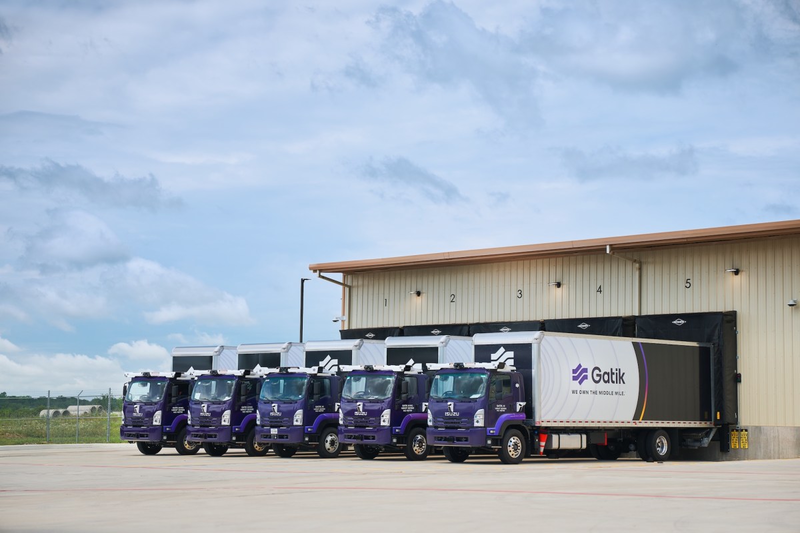
While most autonomous vehicle startups chased robotaxis or long-haul trucking, Gatik carved out a specific lane: middle-mile delivery. Its self-driving box trucks, built on Isuzu chassis, shuttle goods from distribution centers to retail stores over routes that range from 10 to 400 miles. The company's largest public partnership is with PepsiCo, where 41 driverless trucks now move Frito-Lay products like Cheetos and Doritos from warehouses to stores in Dallas, Phoenix, and Northwest Arkansas.
That focus has paid off. According to CEO Gautam Narang, Gatik has locked in $600 million in contracted revenue from customers including Walmart, Kroger, Loblaws, and Tyson Foods. The company now operates dozens of fully driverless trucks across multiple markets, running around the clock on both surface streets and highways, even in light rain and snow.
Why This Investment Matters Now
The $200 million raise comes at a critical moment for Gatik. The company has moved past the pilot phase into commercial operations, but scaling requires significant capital. Narang told TechCrunch that the new funding will support expanding the fleet, hiring additional engineers and operational staff, and entering new cities — and potentially markets outside North America.
The timing also reflects the broader maturation of autonomous vehicle technology. After years of hype and setbacks, the industry is shifting toward practical applications with clear business cases. Gatik's middle-mile model offers immediate ROI for retailers and food companies that need to move goods efficiently without relying on scarce truck drivers.

Who Benefits From Gatik's Driverless Trucks
For PepsiCo and other partners, Gatik's trucks solve a real problem: the driver shortage and rising logistics costs. By removing the human driver, these companies can run deliveries 24/7, reduce labor expenses, and improve supply chain reliability. The trucks operate on fixed routes initially, but Gatik has expanded to dynamic routes with dozens of pickup and drop-off locations, making the system more flexible than it was just a few years ago.
For Gatik, the PepsiCo deal provides a marquee customer and a template for expansion. The company has proven its technology works in real-world commercial conditions, which makes it easier to attract additional customers and investors. The $200 million round includes long-term financial partners like Qatar Investment Authority and Koch Disruptive Technologies, suggesting the investors see Gatik as a long-term bet rather than a quick flip.
The Broader Autonomous Vehicle Landscape
Gatik's success highlights a shift in the autonomous vehicle industry. While companies like Waymo and Cruise have poured billions into robotaxis with mixed results, startups focused on commercial freight have gained traction. Autonomous trucking companies like TuSimple and Plus have also raised significant capital, but they target long-haul routes. Gatik's middle-mile niche sits between last-mile delivery robots and long-haul semis — a space that's less crowded but equally valuable.
The middle-mile market is enormous. Every box of cereal or bag of chips that moves from a distribution center to a store is a potential route for Gatik. By partnering with major retailers and food suppliers, the company has positioned itself as a key infrastructure player in the logistics chain. If autonomous middle-mile delivery becomes standard, Gatik could be the dominant provider.
Skepticism and Remaining Challenges
Despite the momentum, Gatik faces real hurdles. Autonomous vehicle technology is still unproven at massive scale. While Gatik's trucks can handle light rain and snow, more extreme weather could disrupt operations. Regulatory frameworks for driverless commercial vehicles vary by state and country, which could slow expansion into new markets.
There's also the question of job displacement. As Gatik scales, it will replace human delivery drivers on certain routes. While the company argues it addresses a labor shortage rather than eliminating jobs, the shift will inevitably impact employment in the logistics sector. Public perception of autonomous vehicles remains mixed, especially after high-profile accidents involving other companies.
Additionally, Gatik's reliance on a small number of large customers creates concentration risk. If PepsiCo or Walmart decided to develop their own autonomous solutions, Gatik could lose significant revenue. For now, the company's $600 million in contracted revenue provides a buffer, but long-term success depends on diversifying its customer base.
What Comes Next for Gatik
With $200 million in fresh capital, Gatik plans to accelerate its growth. The company will hire more engineers and operational staff, expand into new cities, and potentially enter markets outside North America. CEO Narang emphasized that the investors are aligned with Gatik's long-term vision, which includes scaling from dozens of trucks to hundreds or even thousands.
For the autonomous vehicle industry, Gatik's success provides a blueprint: find a specific, high-value use case, prove it works commercially, and then scale. The middle-mile delivery model may not grab headlines like robotaxis, but it's generating real revenue and real results. If Gatik can execute on its expansion plans, it could become the dominant player in a market that touches nearly every consumer good we buy.
Comments (0)
Loading comments…