
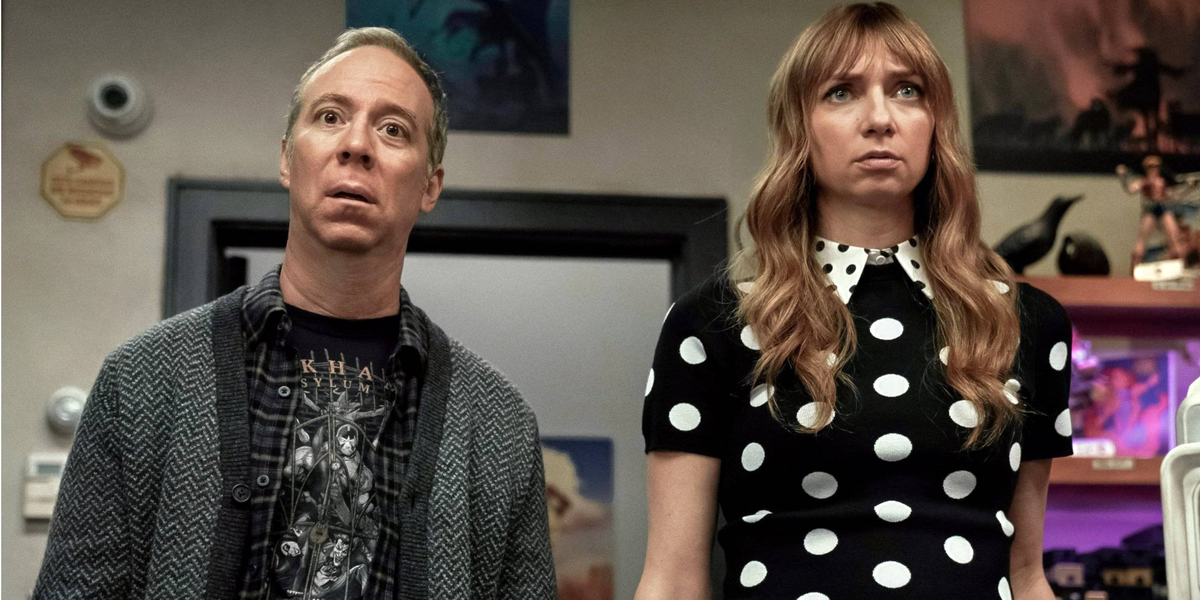
HBO Max's Stuart Fails to Save the Universe premiered July 23, 2026, and it's the first Big Bang Theory spinoff to actually live inside the sci-fi worlds the original show only ever referenced. The series throws Stuart Bloom, Denise, Bert Kibbler, and Barry Kripke into a multiverse-spanning adventure after they break Sheldon and Leonard's quantum device, fracturing reality across alternate timelines. Episodes drop weekly on Max through September 24.

The Sitcom Finally Gets to Play in the Sandbox It Built
For twelve seasons, The Big Bang Theory treated comic books, Star Trek, and multiverse theory as character texture — things the gang argued about over takeout in Apartment 4A. The show's format kept those passions at a distance. You got the references, the Comic-Con episodes, the Halloween costume debates, but never the actual adventures. Stuart Fails to Save the Universe removes that ceiling entirely. Directed by Kyle Newacheck and starring Kevin Sussman, Lauren Lapkus, Brian Posehn, and John Ross Bowie, the spinoff turns the franchise's longest-running inside joke into its premise: what if the nerds actually got to be the heroes?
The quantum device accident isn't just a plot contrivance — it's a mission statement. By fracturing reality, the show gives itself permission to visit bizarre alternate worlds each week, the kind Leonard and Sheldon would have stayed up until 3 AM dissecting. Early critics have called it the franchise's boldest reinvention, praising its visual ambition and willingness to get genuinely weird. It's not trying to recreate the sitcom rhythm of its predecessor. It's building something else on top of that foundation.

Why This Spinoff Works Where Others Haven't
The Big Bang universe has expanded before. Young Sheldon mined the origin-story vein for seven seasons. Georgie & Mandy's First Marriage leans into family sitcom territory. Both stayed firmly in the multi-cam lane. Stuart Fails to Save the Universe is the first to ask what happens when you take the show's DNA — its genuine affection for genre fiction — and let it dictate the format instead of the other way around.
That shift matters because the original series ended in 2019, but the cultural conversation it anchored never really left. The nerd-culture mainstreaming that Big Bang both reflected and accelerated has only deepened. Multiverse storytelling dominates blockbusters now. The audience that grew up watching Sheldon explain the many-worlds interpretation is the same audience watching Everything Everywhere All At Once win Best Picture. The spinoff arrives when the franchise's core language has become the industry's default dialect.
The Supporting Cast Finally Gets Their Due
Stuart, Denise, Bert, and Barry were always the show's secret weapons — characters who existed in the margins of the main quartet's orbit but carried distinct, lived-in energy. Sussman's comic-book-store owner evolved from sad-sack punchline to someone with a genuine inner life. Lapkus's Denise brought chaotic neutrality that never softened into mere quirk. Posehn's Bert and Bowie's Kripke represented two very different flavors of academic rivalry turned grudging friendship.
Putting them at center stage reveals how much character equity the franchise accumulated in its supporting bench. The premiere doesn't waste time re-establishing who they are; it trusts you've been watching. That confidence lets the show move fast — quantum accident, reality fracture, alternate-world hopping — within the first episode. The ensemble chemistry does heavy lifting that exposition would otherwise have to carry.

Where the Jokes Don't Quite Land
Not every swing connects. Some reviewers have noted that the broader humor — physical bits, broader character beats — feels hit-and-miss compared to the original's sharper, dialogue-driven character comedy. The shift from multi-cam timing to single-cam adventure pacing means some jokes breathe differently, and not always for the better. A few alternate-world gags lean too hard on recognition over invention: "look, it's a thing you know, but weird!"
That friction is probably inevitable. The show is trying to be a legit sci-fi adventure and a comedy and a franchise extension simultaneously. The tonal balance will likely settle as the season progresses — single-cam shows almost always find their rhythm by episode four or five — but the early going shows the seams.
What This Means for Franchise Storytelling
Stuart Fails to Save the Universe represents something we're seeing more often: legacy sitcoms spawning genre-flexible offshoots that treat the original's subtext as text. The Office never got its mockumentary horror spinoff. Parks and Recreation never sent Ron Swanson into a libertarian dystopia. But as streaming libraries fight for IP that can sustain multiple formats, the "what if the show actually did the thing it talked about" model offers a compelling template.
For Big Bang specifically, it retroactively validates the original's nerd credentials. The show was sometimes accused of laughing at geek culture rather than with it. This spinoff — made by people who clearly love the same material the characters loved — feels like a rebuttal written in multiverse ink.
What to Watch For
Nine episodes remain through September 24. The multiverse structure means each week can effectively be a pilot for a different genre — noir, western, cosmic horror, musical — unified by the core four's dynamic. If the writing staff embraces that anthology potential, the show could become a showcase for short-form genre experimentation rare on television. If it settles into a single ongoing plot, it'll need to earn the serialization weight.
Either way, Stuart Fails to Save the Universe already succeeded at its hardest task: it made a Big Bang Theory spinoff that feels like the show the characters would have watched. That's a nerdier victory than any Nobel Prize Sheldon ever chased.



Comments (0)
Loading comments…