
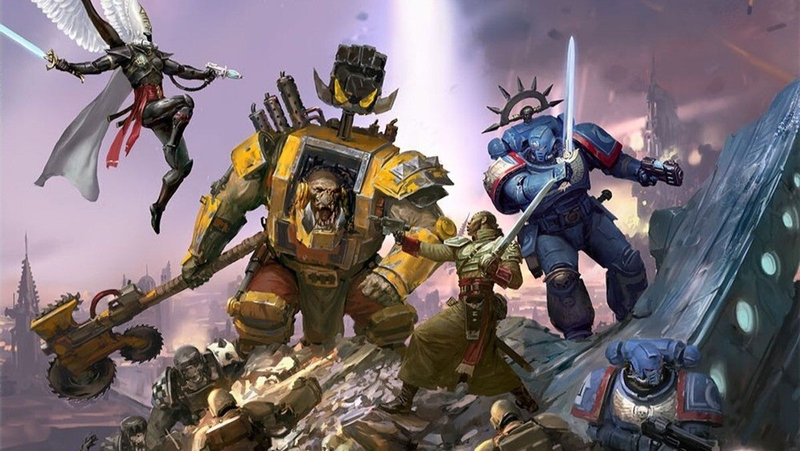
Yes. Creative Assembly's Total War: Warhammer 40,000 could change Total War's ranged combat by making individual soldiers, vehicles, and weapons make context-sensitive decisions instead of firing as one big, predictable block.
The latest Alpha Strike livestream showed a battle between the Imperium and the Orks, but the most interesting part was not the spectacle. It was the way ranged units appeared to pick targets, switch weapons, fire on the move, suppress enemies, and react to cover with much more tactical specificity than older Total War games.
The new ranged system is built around individual choices
In older Total War battles, ranged combat often feels like a stat battle between neat formations: archers or musketeers behind spears, with the winner determined by damage, armor, morale, and timing. Total War: Warhammer 40,000 looks like it is pushing farther into a more granular model where each warrior and vehicle can make different firing decisions during the same fight.
That means units can be built as combined arms forces rather than single-purpose blocks. The livestream described warriors switching between weapons depending on context, vehicles mounting different bolters or rocket pods, and some units using a “sweeping fire” option to spread damage across the largest group of attackers.
The biggest practical change is suppression. Instead of ranged units only dealing damage, they can also pressure enemies into weaker, less effective units. That matters because it turns shooting into battlefield control, not just damage output.
Other details point in the same direction. Line of sight appears to be calculated from individual soldiers rather than the unit as a whole, and the game tracks individual magazines. Small as those systems sound, they could make flanking, cover, and spacing feel much more important than they often do in traditional Total War battles.
Why the setting makes this feel less like a small tweak
Warhammer 40,000 is built around firepower. Space Marines, Imperial Guard, Orks, Eldar, and their enemies all bring different kinds of violence: boltguns, flamers, drop pods, tanks, artillery, and fast-moving killing machines. That is a very different foundation from Total War’s classic emphasis on formations, shields, charges, and morale.
Creative Assembly is still using Total War’s structure: armies move across a strategic map, then fight in real-time battles. But the alpha material suggests the studio is borrowing lessons from faster tactical games, especially systems around firing while moving, priority targeting, and flexible combined arms.
The livestream also highlighted a Sentry feature that lets players priority-target an approaching unit before it enters shooting range. In practical terms, that could reward battlefield planning as much as battlefield reflexes. A gunline unit that marks the right enemy at the right moment could blunt a charge before it becomes a disaster.
That is why this could matter for Total War players specifically. The franchise has always been about layers: economy, diplomacy, army building, and the real-time battle. If ranged combat becomes more about positioning, suppression, and timing, then the battle layer may suddenly carry more weight than it used to.
The tactical impact could be bigger than the visuals
Cover will probably become central, especially elevated cover. The livestream also showed buildings being dropped on units and craters being gouged into the battlefield for new firing positions. If those systems carry into the final game, terrain will stop feeling like decoration and start acting like a battlefield resource.
Firing on the move may also reshape how units behave. Space Marines look like they can strafe effectively, while Imperial Guard units seem more comfortable digging in. That kind of faction-specific behavior could make army composition feel less like choosing a stat package and more like choosing a way of fighting.
For players, the likely shift is from “how many dice do I roll?” to “where are my dice coming from?” Units that can defend in multiple directions, switch weapons, use cover, and suppress enemies could make battles feel more like tactical puzzles than simple clashes of unit rosters.
What could go wrong
The big question is whether this level of autonomy stays readable. If every soldier is choosing targets and weapons, players may need to understand more than usual to feel in control. Total War has always balanced simulation with legibility, and too much individual behavior could turn into battlefield noise.
There is also a pacing risk. Suppression, strafing, and firing on the move could make battles faster and more reactive, but they could also overwhelm players who rely on clear front lines and simple unit roles. The best version of this system should reward planning without demanding constant babysitting.
And alpha impressions come with a caveat. The direction is promising, but the final experience will depend on tuning, performance, faction variety, and how much control players retain over the simulation. The systems sound exciting, but the real test is whether they feel intentional once every faction is fighting through them.
Why this matters now
Total War: Warhammer 40,000 gives Creative Assembly a chance to make Total War feel less like a medieval battlefield with fantasy skins and more like a distinct war simulation. The franchise has long leaned into grand strategy, but its real-time battles still carry a lot of older assumptions about formation and weapon type.
That matters because Total War players are used to thinking in layers. If ranged combat becomes more dynamic, then army composition and map control may suddenly matter more than raw unit stats. A player who understands cover, suppression, and timing could gain an advantage even with a less obvious army list.
It also gives the franchise a clearer identity in a crowded strategy market. Games are increasingly judged by how quickly they let players make smart-looking decisions, and a 40,000 battlefield built around suppression, cover, and combined arms could stand out from more traditional real-time tactics.
What comes next
The next test is whether the Eldar, Orks, and other factions can bend these systems without breaking them. If each faction interprets suppression, firing on the move, and cover differently, Total War: Warhammer 40,000 could become one of the franchise’s most tactically varied entries rather than just another large-scale battle simulator.
For now, the strongest signal is simple: ranged combat is no longer just about lining up a unit and watching damage numbers fall. It is becoming a more granular fight over line of sight, timing, positioning, and pressure.
That is the part to watch, because Total War has always been strongest when it turns big systems into readable battlefield moments. If Creative Assembly can make all this complexity feel intentional rather than noisy, Total War: Warhammer 40,000 may do more than update the formula. It may change how Total War thinks about shooting.
Comments (0)
Loading comments…