
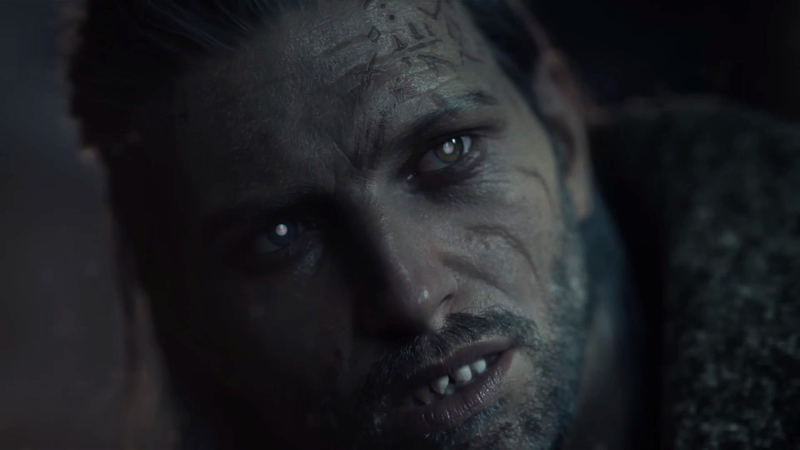
Konrad Tomaszkiewicz, the game director behind The Witcher 3: Wild Hunt, has drawn a hard line against the industry's obsession with sales targets. His new studio, Rebel Wolves, will measure the success of their debut RPG The Blood of Dawnwalker by player reception rather than unit counts — a direct challenge to how most publishers evaluate games today.
The Announcement
In an interview with GamesRadar+, Tomaszkiewicz stated plainly that "solely aiming for high sales is a great way to make a game fail." He argued that chasing commercial metrics forces developers to compromise creative vision, sand off rough edges, and design by committee — the exact ingredients that produce forgettable, focus-tested products. Instead, Rebel Wolves wants Dawnwalker judged by "the opinions of fans" and whether the game resonates with the people who actually play it.
The studio, founded in 2022 by Tomaszkiewicz and a handful of Witcher 3 veterans including narrative director Mateusz Tomaszkiewicz (his brother) and art director Bartłomiej Gaweł, has been notably quiet since its announcement. The Blood of Dawnwalker was revealed in early 2024 with a cinematic trailer showing a dark fantasy world where vampires rule and humanity survives in scattered settlements. No release window has been confirmed, though the team has hinted at a 2025 or 2026 target.
Why This Now
The timing isn't accidental. The AAA space has spent the last five years convulsing under the weight of live-service mandates, battle passes, and quarterly revenue targets. Studios like BioWare (Anthem), Arkane (Redfall), and countless others have shipped games visibly deformed by monetization requirements or engagement metrics. Meanwhile, single-player successes like Baldur's Gate 3, Elden Ring, and Cyberpunk 2077's redemption arc proved that players still show up — massively — for complete, authorial experiences without microtransactions or roadmaps.
Tomaszkiewicz lived through CD Projekt Red's transformation from scrappy underdog to public company answering to shareholders. The Witcher 3 succeeded because it was weird, specific, and uncompromising — qualities that often get sanded down once a studio goes public. Rebel Wolves is privately held, backed by NetEase but structured to retain creative control. That independence is the whole point.
Deconstruct the Impact
For players, this philosophy means Dawnwalker won't ship with a battle pass, seasonal content, or progression systems designed to maximize retention. It means narrative choices won't be diluted to accommodate co-op or live ops. The game can end. It can have rough edges. It can be about something instead of for everyone.
For the industry, Rebel Wolves becomes a test case: can a mid-sized studio (roughly 100 developers) produce a AAA-caliber RPG without publisher pressure? If Dawnwalker succeeds critically and commercially, it validates a model that many developers want but few can access. If it struggles, the "sales don't matter" rhetoric becomes harder to sustain.
The vampire setting also matters. The Witcher 3 drew from Slavic folklore; Dawnwalker leans into gothic horror with a day/night cycle that fundamentally changes gameplay. By day, humans hunt vampires. By night, the roles reverse. That mechanical asymmetry — if executed well — could distinguish it from the Witcher comparisons that will inevitably follow.
The Broader Trend
This isn't an isolated stance. Swen Vincke (Larian) has repeatedly said Baldur's Gate 3 succeeded because Larian ignored live-service trends. Hidetaka Miyazaki (FromSoftware) builds games that actively resist accessibility concessions. Even Sony, after Helldivers 2 and Concord showed the volatility of live-service bets, has signaled a return to single-player focus.
But there's a survivorship bias here. The studios saying "ignore sales" are the ones who can — because they have track records, financial cushions, or ownership structures that insulate them. A first-time indie developer doesn't have that luxury. Tomaszkiewicz's position is aspirational for most of the industry, not actionable.
Counterpoint and Skepticism
There's also a genuine tension between "measure by fan opinion" and "stay in business." The Witcher 3 sold over 50 million copies — it did achieve high sales, precisely because it was good. Commercial success and artistic integrity aren't mutually exclusive; they're often correlated. Framing them as oppositional risks romanticizing financial failure.
And "fan opinion" is notoriously fractured. Which fans? The ones who want a Witcher 3 clone? The ones who want a vampire Dark Souls? The ones review-bombing over performance issues? Rebel Wolves will still need to make decisions, and those decisions will please some players and alienate others. Pretending there's a unified "fan voice" is a convenient rhetorical shield.
There's also the NetEase factor. The Chinese publisher has been hands-off so far, but minority stakes come with expectations. If Dawnwalker misses internal milestones, that independence could be tested in ways no manifesto anticipates.
What Comes Next
The next meaningful signal will be gameplay — not trailers, not philosophy. Rebel Wolves has shown almost nothing of Dawnwalker in motion. The day/night mechanic, the combat system, the dialogue structure, the open world design: all unknown. Until players can see how the vampire/human duality actually plays, the studio's manifesto is just that — words.
Watch for a deep dive sometime in 2025. If the game launches and delivers on its promise — a focused, authored RPG with mechanical teeth — it becomes a reference point for every developer arguing against live-service mandates. If it launches and feels like The Witcher 3 with fangs, the "new philosophy" starts to look like branding.
Either way, Tomaszkiewicz has put a stake in the ground. In an industry where most leaders speak in quarterly forecasts, that alone is notable.




Comments (0)
Loading comments…