
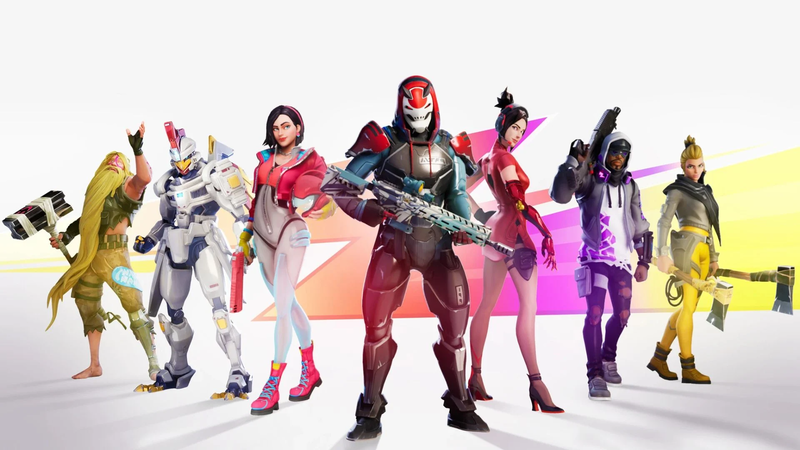
Image via Epic Games Category: General Why do battle passes make so much money?
Progression and rewards are the core of a battle pass.
Sourav Banik | Published FR: Jul 27, 2026 03:05 am Battle passes in video games are a standard practice nowadays.
Studios and publishers combine monetization with progression, habit formation, and long-term engagement in a way that feels rewarding rather than purely transactional.
They sell a season-long reason to keep logging in, completing objectives, and chasing rewards.
That mix of psychology, game design, and business logic turned Battle Passes into one of the dominant business models in modern gaming .
Table of Contents Why do battle passes make so much money?
Battle Passes are successful because they monetize momentum rather than a single purchase, which is much more powerful.
A player who buys a pass buys into a structured journey with clear goals and visible progress , alongside spending money on skins, emotes, or currency.
That makes the purchase feel more valuable than a one-off cosmetic because the rewards arrive over time.
Screenshot by Dot Esports They encourage players to return repeatedly, and repeated play increases both the value of the pass and the likelihood of future spending.
The model is also more transparent than loot boxes because players can usually see the rewards before paying.
As a result, battle passes can feel fairer to players while still giving publishers predictable recurring income.
What exactly is a battle pass?
A battle pass is a seasonal reward track that usually includes both free and premium tiers .
Players earn progress by gaining XP, completing challenges or simply playing matches, and that progress unlocks rewards at different tiers, like in Call of Duty, Fortnite, Apex Legends , and most other live-service games out there.
Most rewards are cosmetic, including skins, weapon blueprints, emotes, banners, and in-game currency.
Free tracks keep the broader player base engaged , while premium tracks offer the most desirable rewards, which usually directly drive revenue.
That structure lets devs market the pass to everyone while charging only the players who want the full reward path.
Unlike traditional DLC, which usually sells a fixed piece of content, a battle pass sells a time-limited progression loop that encourages consistent play across an entire season.
Screenshot by Dot Esports Before battle passes: How games made money Before battle passes became standard, publishers relied on several older post-launch monetization models.
Expansion packs were one of the earliest methods, especially in PC gaming, where developers sold major chunks of content months after release.
Later, downloadable content (DLC) and map packs became common on consoles, allowing studios to split additional missions, multiplayer content, or cosmetics into smaller paid releases.
Then came the season pass , which bundled several future DLC releases into one upfront payment.
That model gave players a roadmap of upcoming content, but it still revolved around fixed releases rather than a continuous engagement loop.
For games designed around regular play, publishers wanted a system that supported constant check-ins instead of occasional purchases.
Loot boxes answered part of that problem by introducing recurring microtransactions, but they also created major controversy.
Players often disliked paying for random rewards, and regulators in multiple regions began scrutinizing the gambling-like structure behind those systems.
Publishers needed a model that preserved recurring revenue with less backlash.
Battle passes emerged as that compromise.
They retained the steady income potential of live-service monetization, but replaced randomness with visible rewards and a stronger connection between spending and play.
Instead of asking players to gamble for a skin, they asked them to commit to a season.
The psychology behind battle passes The real reason battle passes work so well is psychological design .
At their core, they turn play into a system of clear goals and incremental rewards.
That structure is effective because players are more likely to stay engaged when they know what they are working toward.
A visible progress bar or tier track makes it something measurable, and that progress feels satisfying.
Screenshot by Dot Esports Goal setting is one of the most important parts of battle pass psychology.
Instead of leaving players to invent their own reasons to log in, the pass gives them daily, weekly, and seasonal targets.
These objectives reduce friction because they answer what to do next the moment a player enters the game.
Variable rewards also play a role.
Even if the overall reward track is visible, the pacing and type of rewards create anticipation.
Some levels give small items, while others unlock a headline cosmetic or premium currency, which keeps players moving toward the next milestone.
The sunk cost effect is another major factor.
Once players have spent money on a premium pass or invested several hours into the track, abandoning it feels wasteful.
Prior investment changes future decision-making, even when it should not matter.
A player may continue grinding not because the next reward is essential, but because stopping would mean leaving value on the table.
Loss aversion strengthens that effect .
People tend to feel the pain of losing something more strongly than the pleasure of gaining something equivalent, and battle passes are designed around that principle.
Because rewards are tied to a limited season, unfinished progress feels like a loss rather than a neutral outcome.
That time pressure turns optional play into urgent play, which is one reason seasonal passes are so powerful.
Graph by Dot Esports Completionism matters too.
Many players simply dislike leaving a progress track unfinished, especially when the rewards are visible and the percentage completed is always on-screen.
A half-finished battle pass represents effort already spent and rewards not yet claimed.
That makes the final stretch of a season especially effective at pulling players back in.
Finally, battle passes are strong tools for habit formation .
Because progress is tied to repeated login behavior, they encourage routines rather than isolated spending.
A player may start by wanting one skin, but end up building a weekly gaming schedule around finishing challenges with friends.
At that point, the battle pass has stopped being just a monetization layer and become part of the game’s core loop.
Why battle passes benefit developers From the developer side, battle passes solve several business problems at once.
The first is revenue predictability .
Instead of relying only on launch sales or irregular cosmetic purchases, studios can count on seasonal spikes when new passes arrive.
That recurring cadence makes forecasting easier and helps justify the long-term support live-service games require.
The second advantage is retention .
A player who buys a battle pass has a built-in reason to keep returning over the course of a season.
That improves active player numbers, keeps matchmaking healthy, and sustains community interest between major content drops.
In live-service games, retaining players can be as important as acquiring them.
Battle passes also make content planning easier.
Seasonal tracks give developers a framework for building cosmetics, challenges, events, and marketing around the same schedule.
Instead of dropping content unpredictably, studios can build a repeatable cycle that players understand and anticipate.
Screenshot by Dot Esports Why players keep buying them Players keep buying battle passes because many of them genuinely like what the model offers.
Compared with buying individual cosmetics from a store, a premium pass can look like a much better deal because it bundles multiple rewards into a single purchase .
Even cautious spenders can justify the pass if it includes enough desirable items or returns some premium currency along the way.
There is also the satisfaction of progression .
Many players enjoy the feeling that every match contributes to something tangible, even if the reward is purely cosmetic.
A battle pass gives multiplayer games an extra layer of purpose, especially during slower weeks.
Social identity matters as well.
Cosmetic rewards are signals.
Exclusive skins and seasonal items can communicate dedication, taste or participation in a particular moment of a game’s history.
That said, the model is not successful only because it manipulates players.
Many players enjoy battle passes because they add structure, incentives, and a clear sense of forward motion.
When the rewards are strong and the grind feels reasonable, the system can enhance enjoyment.
How Fortnite popularized the modern battle pass Fortnite is not the origin of the battle pass, but it is the game that made the format mainstream .
Valve’s Dota 2 Compendium in 2013 and later battle pass systems established key ideas around tiered rewards, event-driven progression and paid participation.
Those early versions were tied more closely to esports events and a specific PC audience than to the broader mainstream market.
Fortnite changed that by attaching the battle pass to a free-to-play phenomenon with massive global reach.
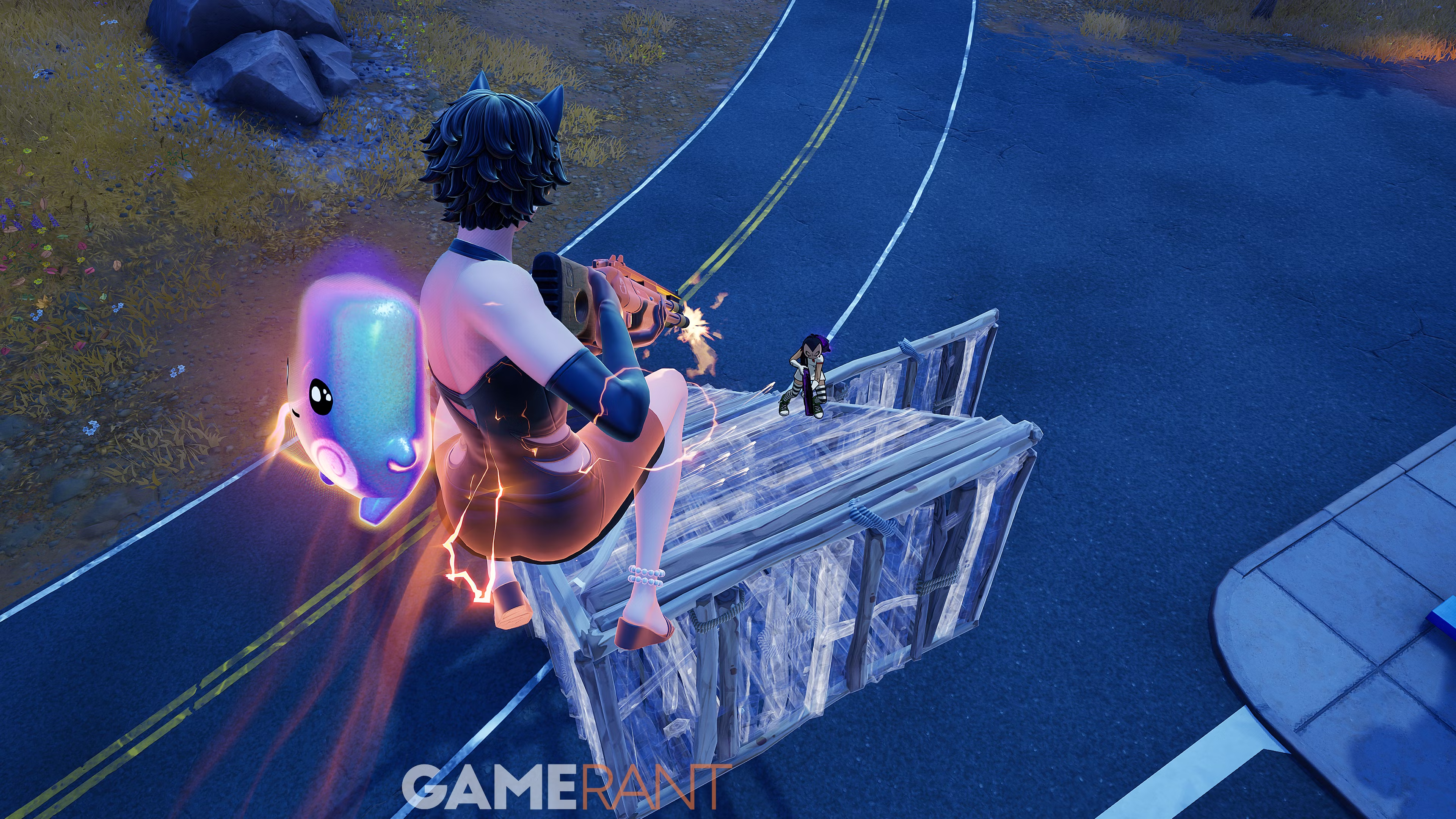
Epic Games turned the seasonal pass into a central feature of the game’s identity, combining progression, cosmetics, weekly challenges and a visible seasonal reset.
Once Fortnite proved the battle pass could drive both engagement and revenue, the rest of the industry moved fast.
Call of Duty, Apex Legends, VALORANT, Diablo IV, Halo Infinite and Overwatch all adopted seasonal reward systems that borrowed the same core logic, even if each game adjusted the pacing and rewards to suit its own audience.
The wider lesson was that players would build seasonal habits around them.
Are battle passes becoming less effective?
Battle passes are still powerful, but there are signs that the model is losing some of its edge.
One reason is player fatigue .
As more live-service games compete for time , players are increasingly unwilling to commit to multiple seasonal grinds at once.
What once felt exciting can start to feel like a checklist spread across too many games.
Time pressure is another issue.
A pass only feels rewarding if players believe they can finish it, and that breaks down when a season is too short or the grind is too heavy.
In those cases, the model can create frustration instead of motivation.
Some developers have responded by experimenting with permanent or less time-sensitive passes, reducing fear of missing out in exchange for a more player-friendly system.
This does not mean battle passes are disappearing.
It means the easy version of the model is no longer enough.
Players understand the tricks now, so future passes will need to feel more flexible, more respectful of time, and more generous in reward design.
Screengrab via Blizzard Entertainment What’s next after battle passes?
The future of live-service monetization will probably build on battle passes rather than replace them outright.
The most likely next step is flexibility : systems that let players complete passes at their own pace, return to old tracks, or choose from several progression paths.
That keeps progression while reducing burnout pressure.
Subscription hybrids are another possibility.
Some games may combine battle passes with broader membership systems that include premium currency, bonus rewards, or access to multiple tracks.
Others may rely more heavily on personalized offers and challenge systems shaped around play habits.
That kind of data-driven design could make progression feel more relevant, though it may also raise new concerns about how aggressively games optimize monetization.
Whatever comes next, the lesson of battle passes is clear: the most successful monetization systems are not the ones that simply charge money, but the ones that make spending feel connected to identity, routine and progress.
If future systems can keep those benefits while reducing fatigue, they may be even more effective than the battle pass model that dominates today.
Why do battle passes make so much money?
They make money because they combine payment with progression, exclusive rewards, and repeated engagement, which turns a one-time purchase into a season-long habit.
Who invented the battle pass?
The modern roots are usually traced to Valve’s Dota 2 Compendium and later battle pass systems, while Fortnite is the game most often credited with popularizing the format globally.
Why do players buy battle passes?
Players buy them for value, progression, status, exclusive cosmetics, and the satisfaction of working toward clear seasonal goals.
Are battle passes replacing DLC?
In many live-service multiplayer games, they have replaced a large part of the role once played by DLC and season passes, though premium expansions remain important in other genres.
Which game popularized battle passes?
Fortnite is widely seen as the game that popularized the modern battle pass and showed how effective it could be at scale.
Are battle passes profitable?
Yes, they are profitable because they support recurring revenue, retention and long-term engagement while often generating less backlash than loot boxes.
Dot Esports is supported by our audience.
When you purchase through links on our site, we may earn a small affiliate commission.
Learn more about our Affiliate Policy You Should Also Read Category: General When is Beast of Reincarnation launching?
Release date, platforms, gameplay, system requirements Shreyansh Katsura Shreyansh Katsura Jul 27, 2026 Category: General Gentle Mates is launching a physical trading card game about itself Todd Mason Todd Mason Jul 24, 2026 Category: General CS2’s new Major sticker system is cutting team revenue by up to 90% Todd Mason Todd Mason Jul 23, 2026 Category: General Top 5 new Gacha Games to play in 2026 Shreyansh Katsura Shreyansh Katsura Jul 22, 2026 Category: General Faker named South Korea’s Cyber Gambling Prevention Ambassador by national police Todd Mason Todd Mason Jul 22, 2026 Popular 1 Category: General When is Beast of Reincarnation launching?
Release date, platforms, gameplay, system requirements Shreyansh Katsura Shreyansh Katsura Jul 27, 2026 2 Category: PUBG PUBG Esports World Cup 2026: Schedule, results, standings, teams, and how to watch Sourav Banik Sourav Banik Jul 27, 2026 3 Category: Mobile Legends MLBB MSC 2026 at Esports World Cup: Schedule, results, brackets, teams, and how to watch Jeremiah Sevilla Jeremiah Sevilla Jul 26, 2026 4 Category: Final Fantasy Nintendo Everything we know about Final Fantasy XIV Switch 2 edition: Trial, crossplay, subscription Elizbar Ramazashvili Elizbar Ramazashvili Jul 26, 2026 5 Category: Marvel All Marvel Rivals pick rates: Most popular heroes in Competitive and Quickplay Scott Duwe and others Scott Duwe and others Jul 26, 2026

Comments (0)
Loading comments…