
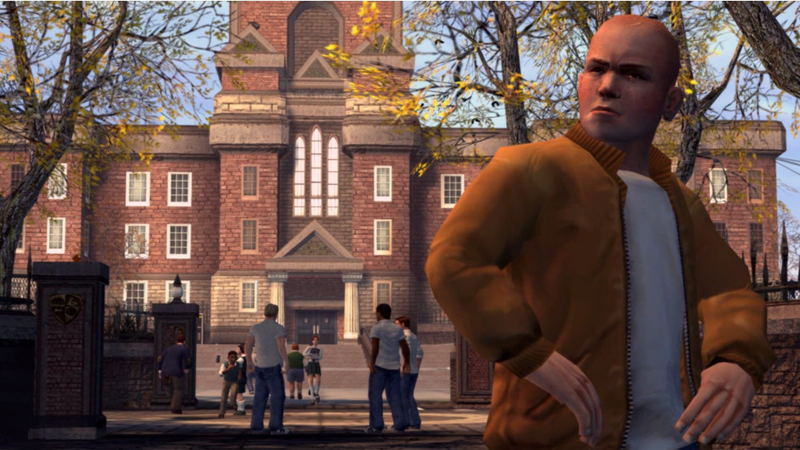
Dan Houser, the co-founder who helped build Rockstar Games into the industry's most influential open-world studio, says Bully remains "unlike any other" game in the genre two decades after its release. The comment arrives as the 2006 classic approaches its 20th anniversary — a milestone that has the game's cult following once again asking why Rockstar never returned to Bullworth Academy.
The Game That Didn't Fit the Template
When Bully launched in October 2006, Rockstar was riding high on Grand Theft Auto: San Andreas. The expectation, both inside and outside the studio, was that the next open-world game would be bigger, denser, more violent — more GTA. Instead, Rockstar Vancouver delivered a game set entirely within a New England boarding school, where the protagonist Jimmy Hopkins navigated cliques, attended classes, pulled pranks, and occasionally got detention.
No cars. No guns. No radio stations licensed from major labels. Just a year in the life of a troubled teenager at Bullworth Academy.
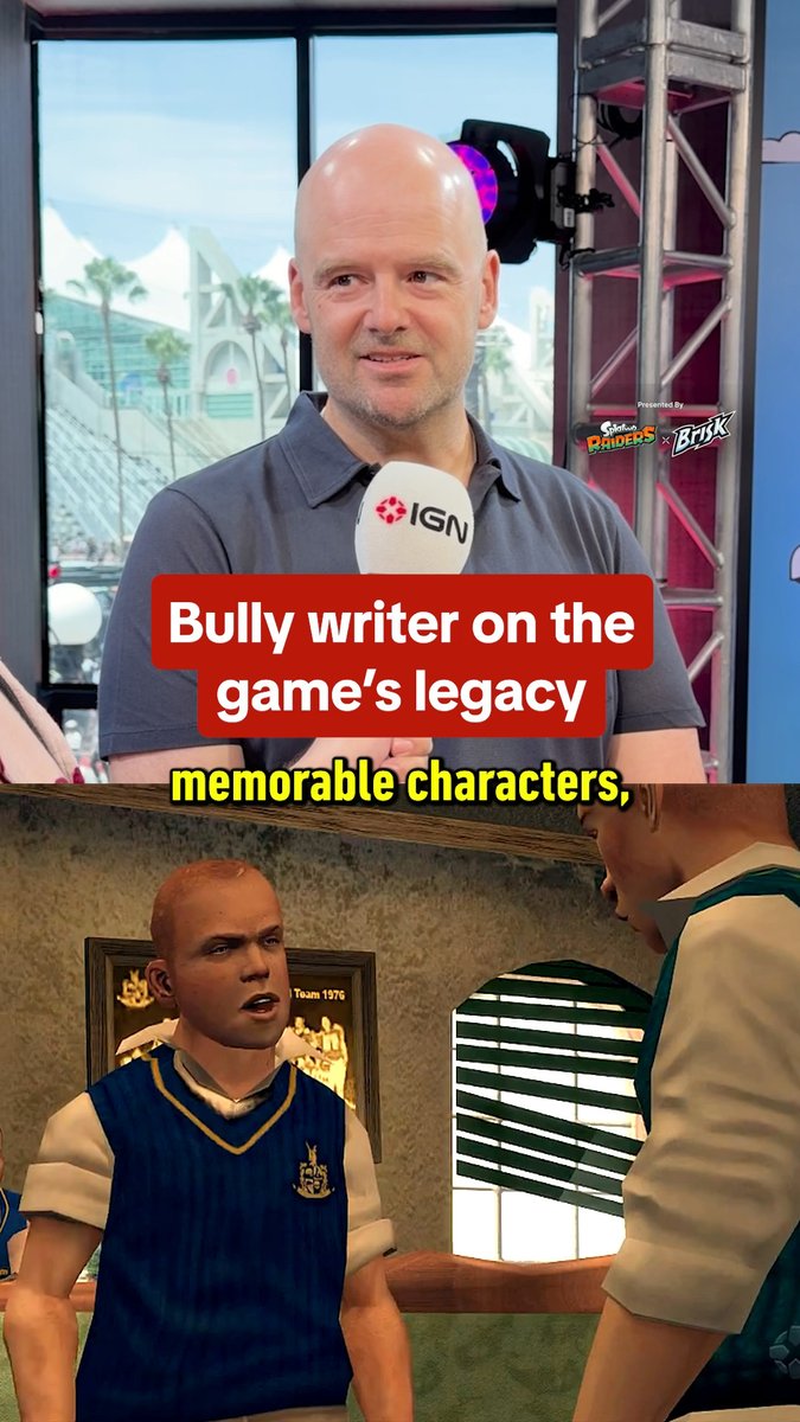
Rockstar co-founder and Bully writer Dan Houser looks back on what made Bully such a classic. In partnership with Aliens: Fireteam Elite 2, Alienware, BRISK x Splatoon Raiders #sdcc
 View on X →
Houser's recent reflection — surfaced during press for his new studio Absurd Ventures — underscores how unusual that pitch was even at Rockstar. "We wanted to do something that felt like a coming-of-age story," he said, "and the open-world structure let us tell it in a way that wasn't linear." The result was a map you could learn like the back of your hand: the dorms, the library, the gym, the carnival grounds beyond the fence. Seasons changed. NPCs remembered your reputation with each faction. You could skip class to race go-karts, but the truant officer would chase you down.
Why This Conversation Now
The timing isn't accidental. Houser left Rockstar in 2020 after a 21-year run that defined modern open-world design. His new venture, Absurd Ventures, is building what he describes as "narrative-driven action-adventure" projects across games, audio, and animation. When the co-architect of GTA III through GTA V looks back at Bully as a creative high point, it signals something about where he thinks the medium still has room to grow.
It also coincides with Bully's quiet persistence across platforms. The game never got a proper sequel, but it received a Scholarship Edition on Xbox 360 and Wii, a mobile port in 2016, and runs via backward compatibility on modern Xbox and PlayStation hardware. Each re-release brings a new generation to Bullworth — and each generation asks the same question: why hasn't Rockstar made another one?
What Made It Different Still Matters
The open-world genre has exploded since 2006. Assassin's Creed turned historical tourism into an annual franchise. The Witcher 3 proved narrative density could coexist with scale. Elden Ring and Breath of the Wild redefined player freedom. But Bully's core innovation — a small, dense, socially simulated world where systems interlock rather than simply coexist — remains rare.
Most modern open worlds are traversal spaces punctuated by icons. Bully was a social simulation first. The prefects patrolled halls dynamically. The nerds, jocks, greasers, and preppies had territories, schedules, and grudges. Completing a mission for one faction shifted the balance of power in the schoolyard. Classes weren't minigames — they unlocked gameplay mechanics (chemistry gave you firecrackers; shop class gave you a bike).
Rockstar co-founder and Bully writer Dan Houser looks back on what made Bully such a classic. In partnership with Aliens: Fireteam Elite 2, Alienware, BRISK x Splatoon Raiders #sdcc
View on X →That systemic density is exactly what Houser's comment highlights. "We built a world that reacted to you socially, not just geographically," he said. "The map wasn't the point. The relationships were."
The Industry Moved On — But Not Past This Problem
Rockstar's subsequent output doubled down on scale. GTA IV pursued photorealism and physics. GTA V built a Los Angeles so vast it became a platform unto itself. Red Dead Redemption 2 achieved a staggering level of environmental simulation. But none of them attempted what Bully did: an open world defined by social friction in a contained space.
Part of that is commercial reality. GTA Online generates billions annually. A boarding school simulator with no multiplayer component and no microtransaction economy doesn't fit the live-service template that now dominates AAA publishing. Even single-player focused studios have largely abandoned the "dense, reactive, small-scale open world" in favor of "large, traversal-heavy, content-dense" designs.
That's not a criticism — it's a business observation. But it explains why Bully feels like a road not taken. The industry proved you can sell 200 million copies of a massive crime sandbox. It never tested whether a smaller, weirder, more socially intricate open world could sustain a franchise.
The Skepticism Is Earned
Here's the uncomfortable truth: a Bully 2 in 2024 would face scrutiny the original never did. The game's premise — a rough-around-the-edges kid navigating a school full of caricatured stereotypes — would require careful handling to avoid the "edgy 2006 humor" trap. Several factions in the original game (particularly the "Townies" and certain racial caricatures) haven't aged well. A modern Rockstar, under intense cultural microscope, would need to either sanitize the setting or lean into satire sharp enough to justify the discomfort.
There's also the question of whether the team that made Bully still exists in any meaningful form. Rockstar Vancouver was folded into Rockstar Toronto in 2012. Key creative leads have scattered. Houser himself is gone. The institutional memory of how to build that specific kind of game — the class schedules, the faction AI, the seasonal progression — may simply not be there anymore.
What Comes Next
Absurd Ventures hasn't announced a Bully-like project. But Houser's emphasis on "narrative-driven action-adventure" and his willingness to cite Bully as a touchstone suggests he understands the appetite for open worlds that prioritize character and systems over square kilometers.
In the meantime, Bully remains playable, distinctive, and strangely unmatched. The fact that a 2006 PS2 game still feels like a design anomaly in 2024 says less about Bully and more about how risk-averse the open-world genre became once it proved it could print money.
If you've never played it, the mobile port is $15 and runs on a phone. The Xbox version is free with Game Pass. Two decades later, the school bell still rings on time.
Rockstar co-founder and Bully writer Dan Houser looks back on what made Bully such a classic. In partnership with Aliens: Fireteam Elite 2, Alienware, BRISK x Splatoon Raiders #sdcc
View on X →


Comments (0)
Loading comments…