
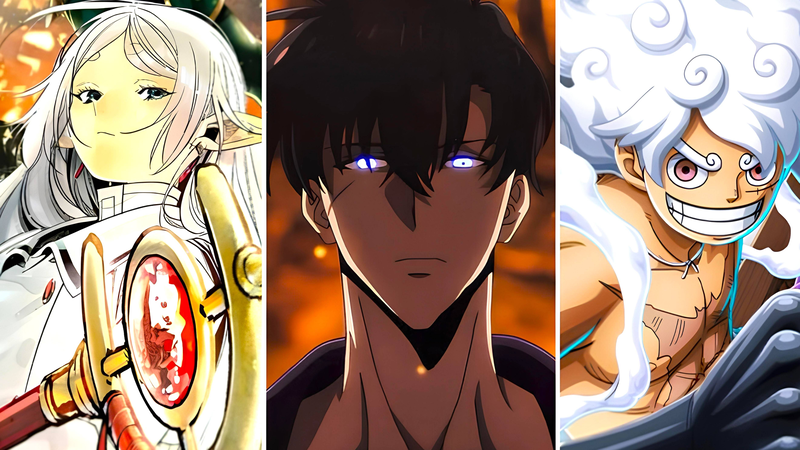
Short answer: Sung Jinwoo could beat most of anime's biggest shonen powerhouses because his Shadow Monarch abilities don't just make him strong; they change the rules of the fight. Dragon Ball, Naruto, and Bleach may define the genre, but Jinwoo brings regeneration, massive mana, an army of shadows, and a win condition that turns opponents into resources.
That's why the crossover debate keeps landing on him. The strongest sorcerers, quirks, mages, demons, Titans, Devil Fruit users, and shinobi all have terrifying tools, but Jinwoo usually has something more annoying: scalability.
Why Jinwoo Is a Different Kind of Power Fantasy

Solo Leveling frames power almost like a game. Jinwoo levels up, gains stats, clears dungeons, summons shadows, and keeps getting stronger through combat. That makes him feel different from many shonen heroes, who often rely on training arcs, emotional breakthroughs, inherited techniques, or one signature move pushed to its limit.
His Ragnarok form is the scary version of that idea. It isn't just a stronger transformation; it is the point where his army, mana, and combat instincts all become so overwhelming that defeating him requires more than raw power. In a straight duel, Jinwoo is already absurd. In a long fight, he becomes worse than absurd.
Why the Debate Arrives Now

Shonen franchises still dominate global anime conversations, but newer power fantasies have made audiences more willing to compare different rule systems. Solo Leveling sits right in that space: it borrows shonen spectacle, then adds game-like progression and dungeon-combat logic.
That gives Jinwoo a useful role in these debates. He is not just another overpowered protagonist. He is a measuring stick for what happens when a character can keep recruiting, upgrading, and adapting faster than the battlefield can punish him.
Jujutsu Kaisen's Cursed Techniques Face a Rules Problem
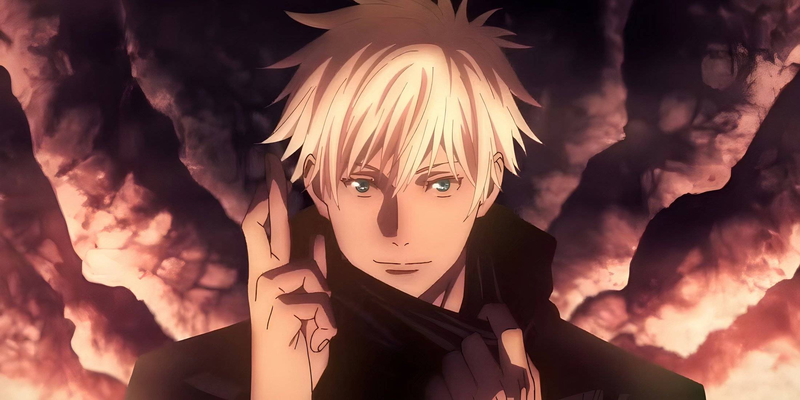
Jujutsu Kaisen has some of the sharpest power-scaling traps in shonen. Gojo Satoru, Yuta Okkotsu, Sukuna, and Kenjaku all operate through cursed energy, domains, binding vows, and specialized techniques that can decide fights before they properly start.
Jinwoo's advantage is that he does not need to win by cursed energy logic. His shadow army, regeneration, and sheer mana pool do not fit neatly into Jujutsu Kaisen's defensive language. A Domain Expansion is terrifying, but Jinwoo's biggest strength is that he can flood the field with bodies and keep replacing them.
Sukuna is the cleanest example. He has cursed techniques, domain mastery, and enough experience to outplay almost anyone, but Jinwoo's problem set is not just "hit harder." It is summon, overwhelm, regenerate, adapt, repeat. That makes the matchup less like a sword duel and more like a siege.
My Hero Academia's Quirks Hit a Body-Based Ceiling
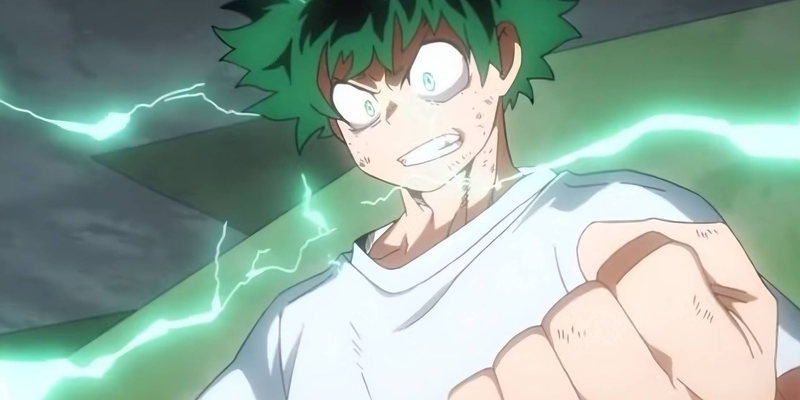
My Hero Academia builds its world around Quirks: inherited abilities that make every fighter feel unique. One For All gives Izuku Midoriya overwhelming physical force, while other characters can manipulate weather, copy abilities, control objects, or interfere with other powers.
Even at his strongest, Izuku still has to deal with Jinwoo's army. Millions of shadows create a practical problem no Quirk easily solves: they multiply the battlefield, force attention everywhere, and turn a one-on-one hero fight into a war.
That does not mean quirks are useless. A well-built hero could slow him down, isolate him, or exploit a weakness if one exists. The issue is sustainability. MHA fighters often need bodies, stamina, and timing. Jinwoo has near-infinite mana by shonen standards, plus an army that keeps changing the shape of the fight.
Frieren's Magic Knowledge Runs Into Shadow Monarch Logistics
Frieren: Beyond Journey's End is not a traditional shonen franchise, but it absolutely belongs in any conversation about anime power scaling. Frieren has centuries of magical knowledge, near-immortal endurance, and access to spells most people have never heard of.
Her biggest advantage is patience. She wins through preparation, memory, and the slow accumulation of power. Jinwoo's advantage is pressure. His necromancy gives him an army of shadows that can act with their own sentience, fight higher beings, and support him in ways that do not depend on spellbooks alone.
The matchup becomes less about who knows more magic and more about who controls the battlefield. Frieren may have the better ancient toolkit. Jinwoo has the better numbers game.
Demon Slayer's Sun Strategy Becomes a Resource Problem
Demon Slayer is built around narrow win conditions. Demon fighters have brutal regeneration, blood demon arts, and inhuman speed, but sunlight remains one of the genre's cleanest counters. The Demon Slayer Corps survives by pushing demons toward that limit.
Jinwoo can turn that into a problem for the demons. His shadow army could surround Muzan's forces, block movement, and trap them until sunrise does the rest. He could also use poison-infused daggers or overwhelming blade skill to pressure fighters before breathing styles fully take over.
Tanjiro, Nezuko, and the Hashira would still be dangerous. Demon Slayer is at its best when small groups survive impossible odds through discipline and teamwork. Jinwoo's danger is that the fight stops being a duel and becomes an occupation of the battlefield.
Attack on Titan's Size Advantage Does Not Scale
Attack on Titan gives Jinwoo some of the most visually overwhelming enemies in anime. Titans are massive, brutal, and built around simple terror: size, speed, and destruction. Eren's Founding Titan and the Rumbling push that idea to civilization-ending scale.
But Jinwoo's shadows have already fought giant magical beasts and otherworldly Titans inside Solo Leveling. That matters because Titan-level enemies are not just big targets; they are slow, heavy, and often dependent on overwhelming force rather than coordinated tactics.
The Rumbling would still be terrifying if it reached open ground. A million Wall Titans are not something you "outfight" in a normal sense. But Jinwoo's army could attack from every angle, exploit gaps, and turn the battlefield into a summoning war that Titans were not designed to handle.
One Piece's Devil Fruit Rules Give Jinwoo More Ways to Break the Board
One Piece is the hardest matchup to reduce to a simple power chart. The series has Haki, Devil Fruits, ancient weapons, Sky Islands, Sea Kings, Gear 5, and a world where battle logic can change depending on who the story needs to win.
Jinwoo's strongest advantage here is not that he is bigger than Luffy or stronger than Kaido. It is that he can change terrain, drown Devil Fruit users, and potentially interfere with enemy identity or form under Solo Leveling's rules. That is exactly the kind of battlefield control that makes One Piece harder to solve cleanly.
Haki complicates everything. If a character can hit intangible forces, curse objects, or bypass normal durability, Jinwoo no longer has an easy path. But if his shadow army and manipulation rules stay intact, One Piece fighters have to deal with a war that spreads across the map instead of a single decisive clash.
Naruto's Strongest Shinobi Still Need to Survive the First Wave
Naruto has some of the most explosive combat systems in anime. Naruto Uzumaki, Sasuke Uchiha, Hashirama Senju, Madara Uchiha, and the Otsutsuki all bring godlike tools, massive chakra reserves, sealing techniques, and reality-warping threats.
That is a lot of firepower. The problem for them is timing. If Jinwoo's shadow rules carry over, the fight does not need to begin with a clean duel. His army could turn fallen enemies into more shadows, then keep expanding the conflict faster than ninjutsu can clear it.
Madara and the Otsutsuki are the real stress test. They can challenge Jinwoo's raw power and survivability in ways most franchises cannot. But even there, the danger is the same: Jinwoo's strongest weapon is not one technique. It is the ability to make every victory shorter and every loss more expensive.
The Ruleset Problem Behind the Crossover Fun
The honest objection is that these matchups are almost impossible to judge fairly. Jujutsu Kaisen has Domain Expansion. One Piece has Haki. Naruto has sealing and god-tier chakra. Frieren has centuries of prep. Demon Slayer has sunlight. Attack on Titan has Titan biology. Each franchise protects its own logic with special rules.
That means Jinwoo is not automatically a win in every version of the crossover. A fighter with the right counter-rule, prep time, or narrative advantage could give him trouble. The better way to frame it is not "Jinwoo beats everyone because he is strong," but "Jinwoo is built to break most normal combat systems by turning them into resource wars." That is why the debate feels so convincing.
What Comes After the Shadow Monarch Debate
As Solo Leveling continues to reach wider audiences, Jinwoo will probably keep showing up in anime power-scaling conversations. That is less about proving he is objectively the strongest character ever and more about how well his design summarizes a modern power fantasy: game-like growth, endless scaling, and an army that makes every fight bigger than the hero.
The takeaway is simple. Sung Jinwoo may not beat every crossover under every rule set, but against most shonen franchises, his kit gives him too many ways to change the terms of engagement. In a genre built around heroes finding the one move that wins, Jinwoo's answer is usually to bring an army.


Comments (0)
Loading comments…