
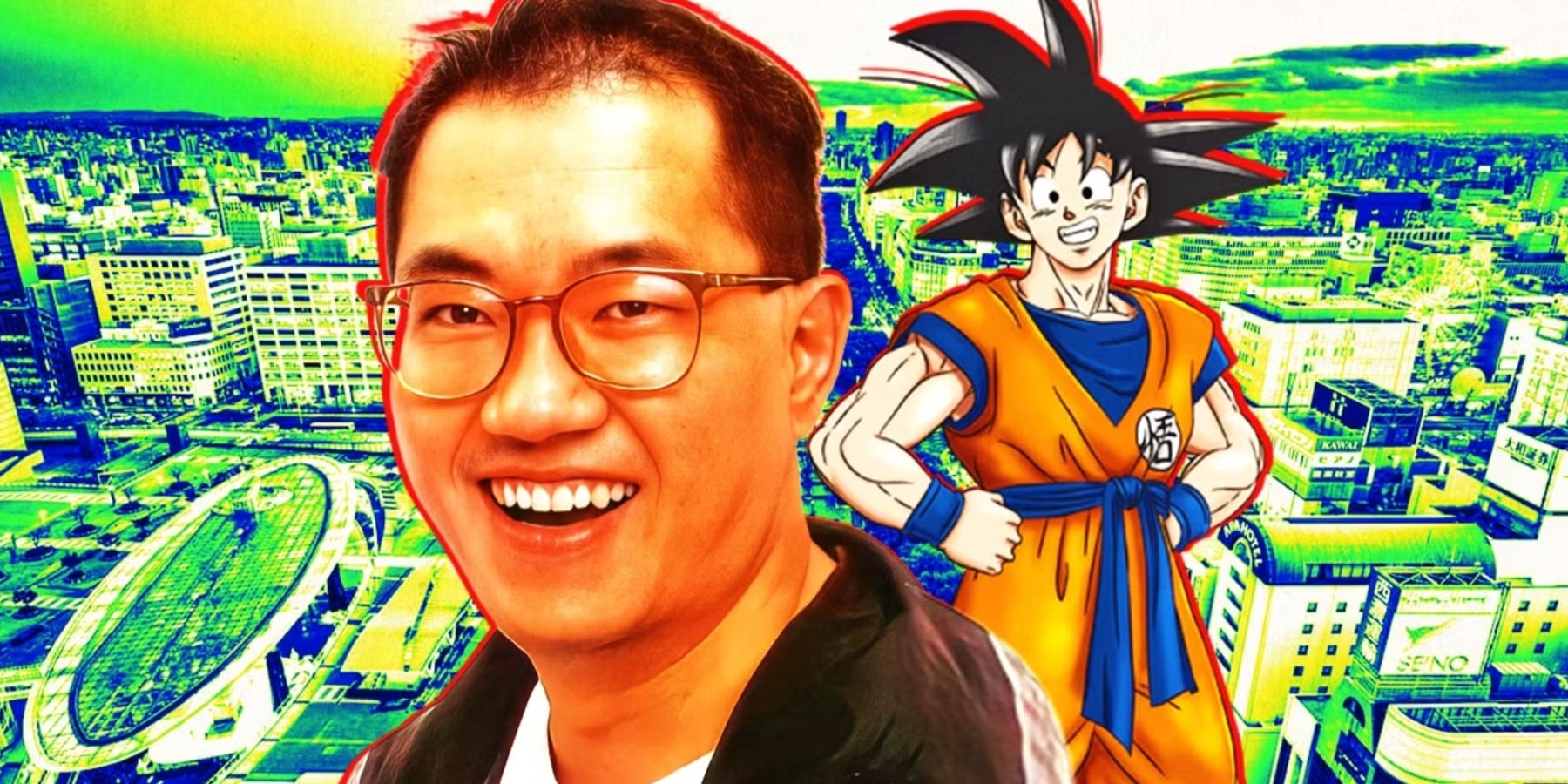
Akira Toriyama has been inducted into the Will Eisner Comic Industry Awards Hall of Fame at San Diego Comic-Con 2026, giving the Dragon Ball creator a long-overdue place in mainstream comics history.
The honor came through the Voters’ Choices category, placing Toriyama alongside Colleen Doran, Jeff Smith, and Chris Ware. It also marks 38 years since the Eisner Awards began, which makes the delay especially noticeable for someone whose work shaped so much of modern manga, anime, and pop culture.
This is not just a fandom nod. The Hall of Fame is a career recognition, the kind of honor that says an artist changed the language people use to tell comics. For Toriyama, that case is hard to argue against.
The Recognition Was Long Overdue
Toriyama was first nominated for the Eisner Hall of Fame in 2019, but he did not make the cut that year. That class included Jim Aparo, June Tarpé Mills, Dave Stevens, and Morrie Turner, all major figures in comics history.
Three years later, the voters finally caught up. Being selected through the Voters’ Choices route gives the induction a slightly different feel than the judges’ list, but it is still a serious institutional honor. The Eisner Awards are the comics industry’s equivalent of a major lifetime-achievement stamp, and Toriyama now has it.
The delay is still hard to justify. Dragon Ball became one of the defining battle manga of all time, while Dr. Slump helped establish Toriyama as a major creator before Dragon Ball even began. His influence is everywhere, from fight pacing to character designs to the way action comics sell momentum through clear, readable paneling.
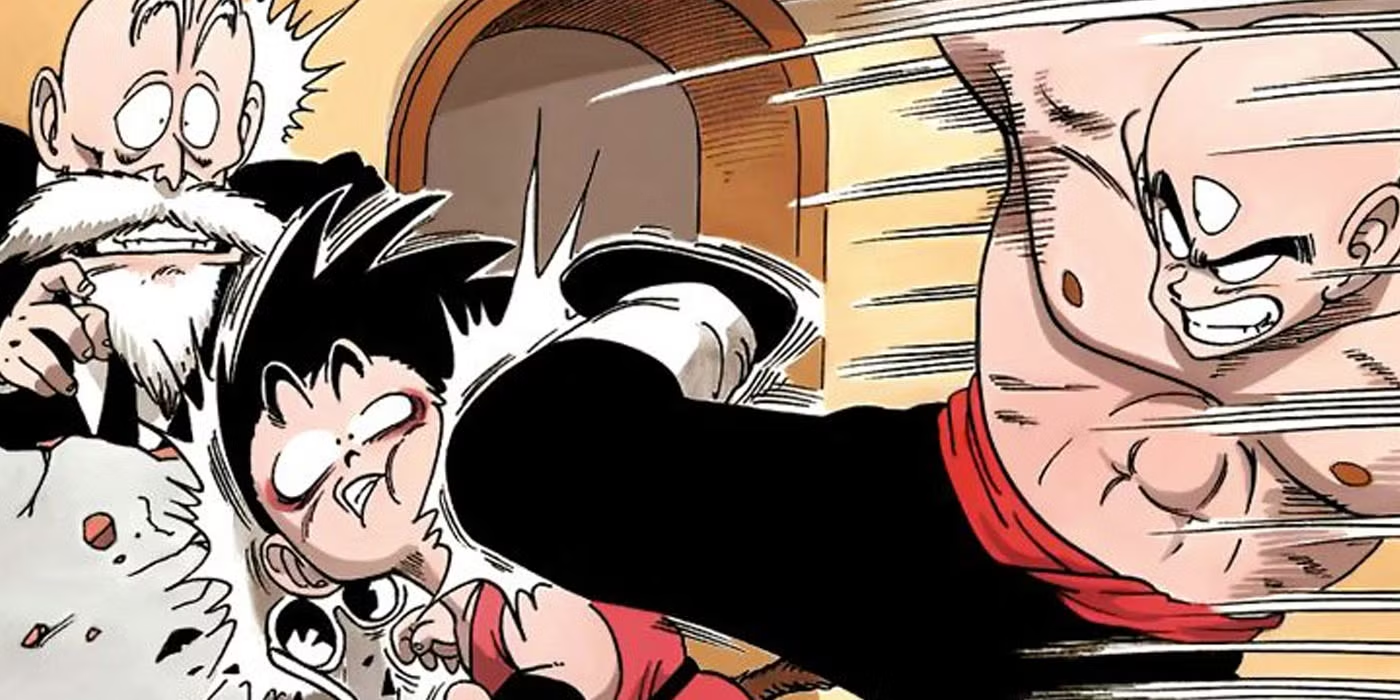
The Hall of Fame also comes after Toriyama had already received other major honors, including a Harvey Awards Hall of Fame induction in 2024 after his death. That earlier recognition mattered, but the Eisner spot is notable because it places him inside a Western comics institution that has historically been slower to treat manga as central rather than supplementary.
Why the Eisner Spot Lands Now
There is a timing angle here, too. Dragon Ball is still a living franchise, with Dragon Ball DAIMA keeping the TV side of the property active and introducing new viewers to the broader Toriyama universe. That makes the induction feel less like a retrospective and more like an acknowledgment of a franchise ecosystem that is still expanding.
Toriyama’s path was not instant. He started publishing in 1978 with Wonder Island, which struggled with Weekly Shōnen Jump. Dr. Slump turned things around in 1980, and Dragon Ball, which began in 1984, became the work that carried his name worldwide.
By the time Dragon Ball ended in 1995, Toriyama had already built a career that stretched from gag manga to fantasy adventure to sci-fi action. The later works, including Neko Majin, Sand Land, and Jaco the Galactic Patrolman, show how much range he had beyond the series that made him famous.
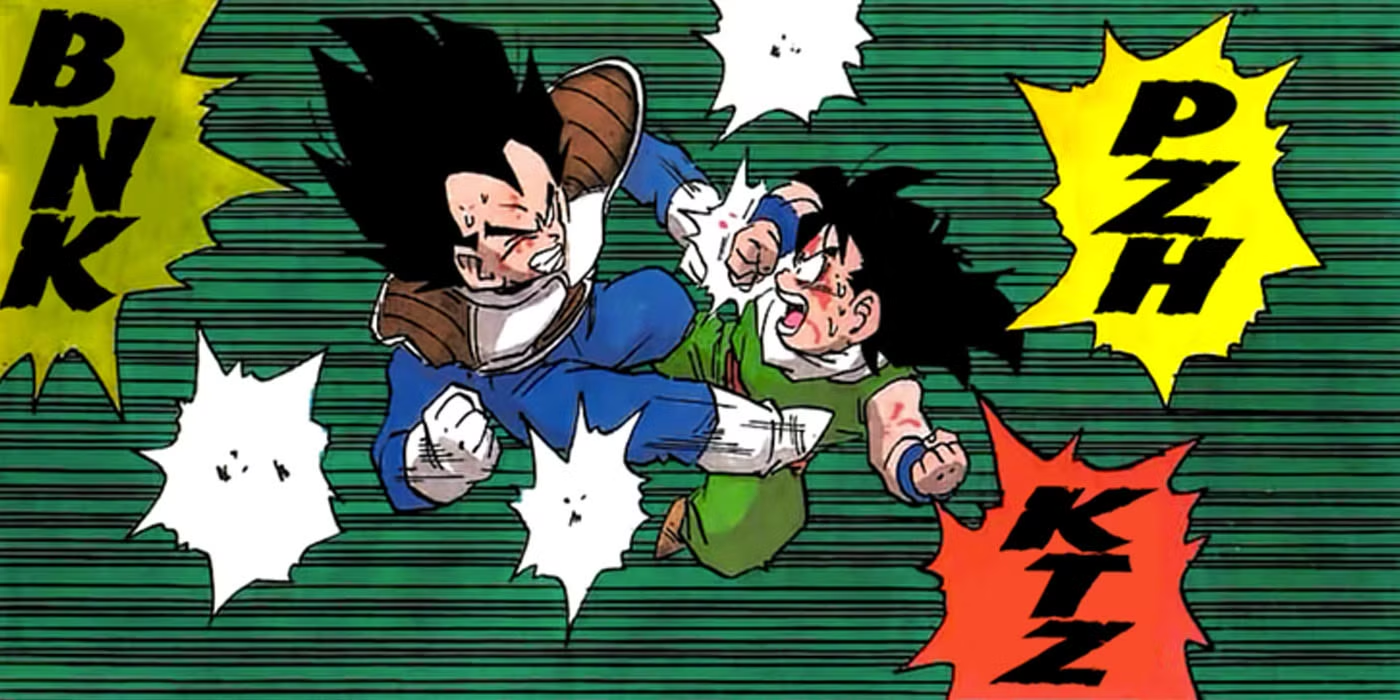
That range matters because Hall of Fame voters are not just honoring one hit series. They are recognizing a body of work that helped define how manga could move, how action could be staged, and how characters could become icons without losing emotional clarity.
What Toriyama Changed in Comics Storytelling
Toriyama’s best work has a very specific rhythm. The panels are clean, the action is easy to follow, and the comedy lands because the characters are simple enough to read but specific enough to feel alive.
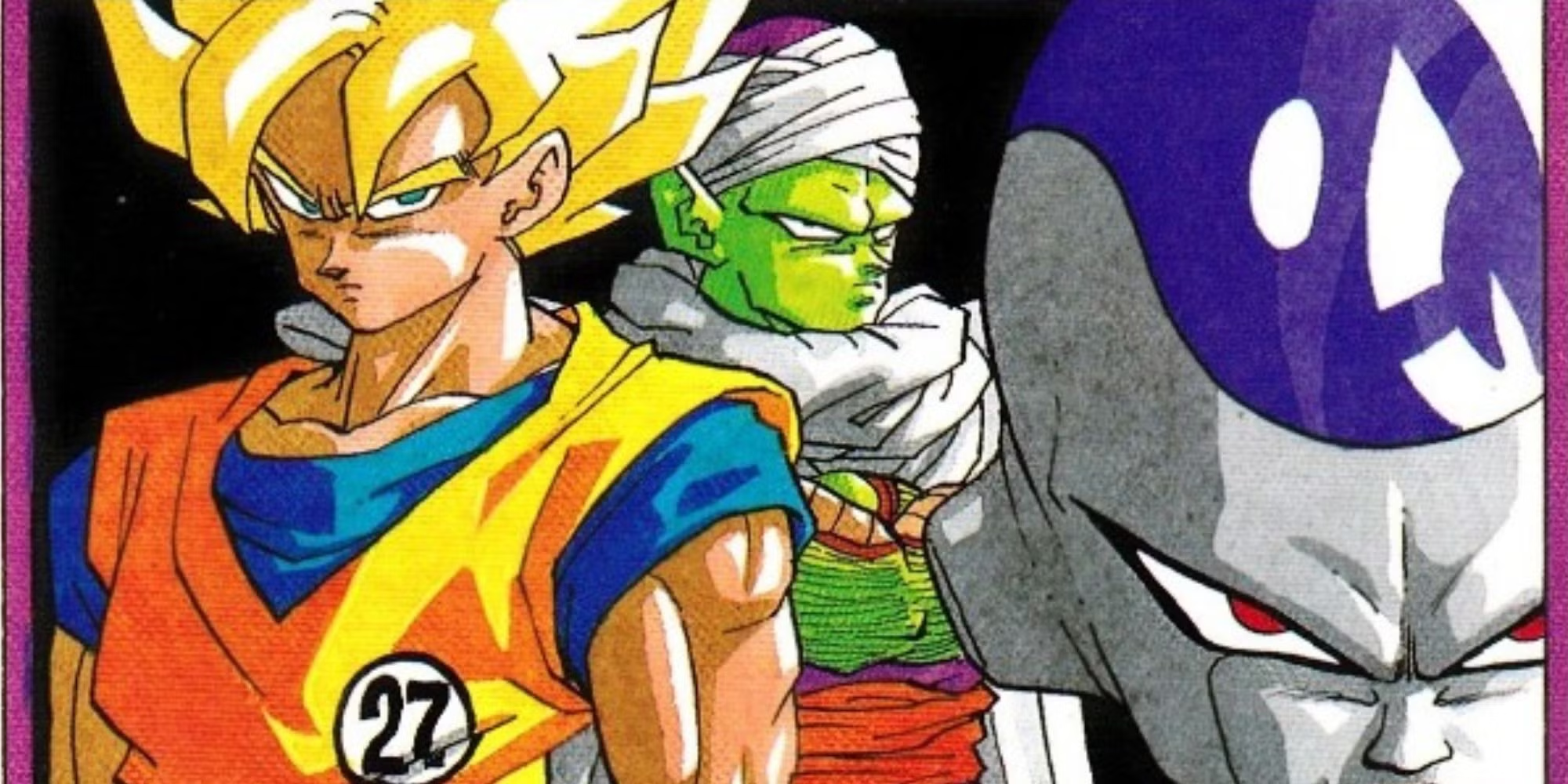
That clarity helped make Dragon Ball accessible to readers who might never have picked up another manga. It also helped shape the battle manga template that followed: the big transformation, the power-up, the rival who becomes a friend, the tournament arc, the final push where everyone keeps getting back up.
Those ideas now feel so embedded in anime and manga that they can be easy to take for granted. That is part of why the Eisner recognition matters. Toriyama did not just create a popular franchise; he helped define a visual grammar that countless creators borrowed, adapted, and pushed forward.
Japanese Creators Keep Arriving Too Late
Toriyama joins a small but important group of Japanese creators already recognized by the Eisner Hall of Fame, including Osamu Tezuka, Kazuo Koike, Goseki Kojima, Katsuhiro Ōtomo, Rumiko Takahashi, Moto Hagio, Keiji Nakazawa, Shigeru Mizuki, Junji Ito, and Go Nagai.
This year’s class is especially meaningful because Go Nagai also entered through the Judges’ Choices. Nagai’s work includes Devilman, Getter Robo, Mazinger Z, and Cutie Honey, series that helped shape horror, tokusatsu-adjacent spectacle, mecha culture, and the idea of manga as a foundation for broader media franchises.
Having both Toriyama and Nagai honored in the same year sends a stronger signal than a single induction would. It suggests that the Eisner Awards are finally treating manga’s global influence as too large to ignore, even if that recognition still arrives decades late.
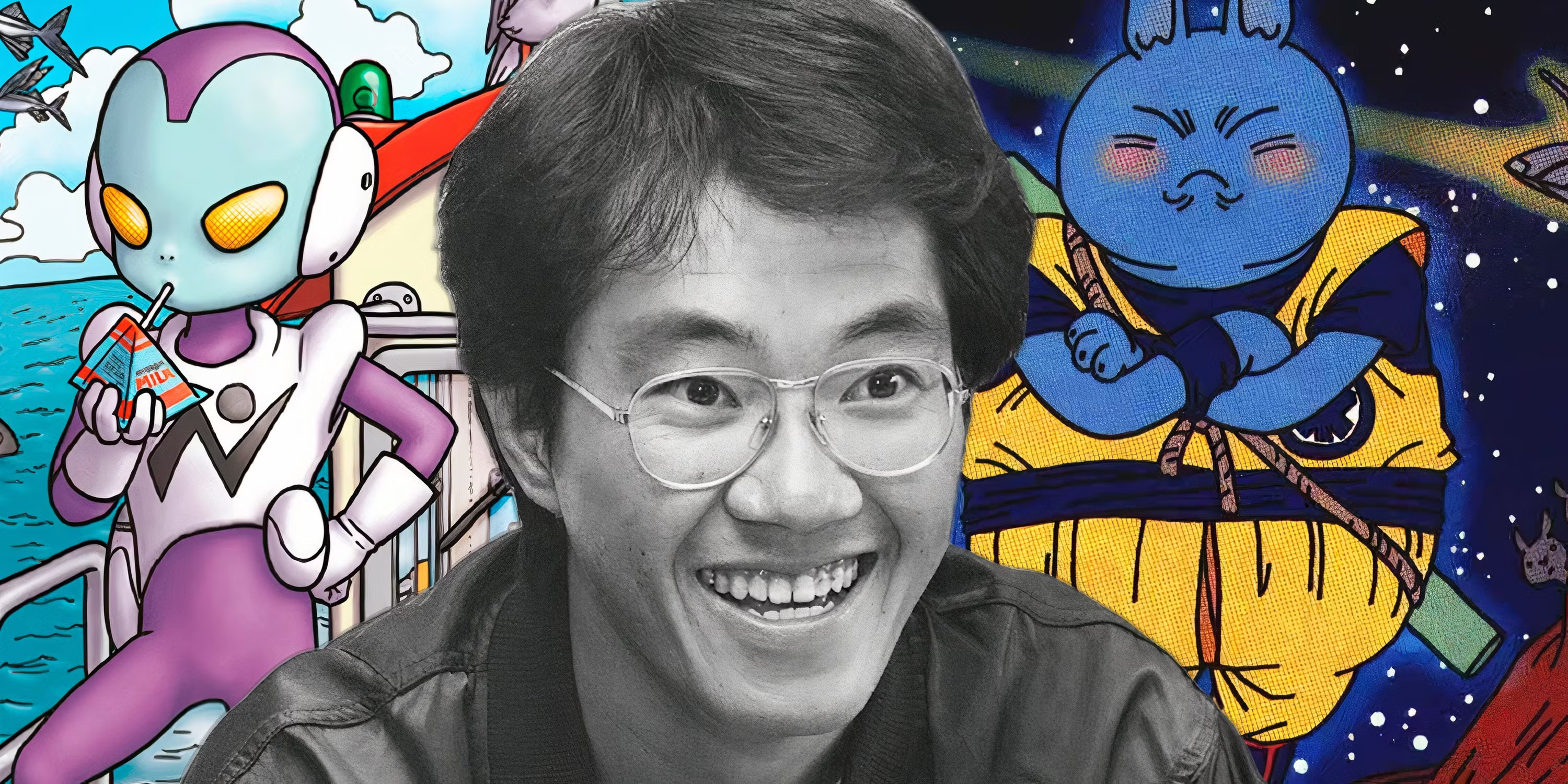
The irony is obvious: Western comics institutions often celebrate influence, and Toriyama’s influence is everywhere. Yet the path to that recognition required decades of proof that manga was not a niche import but one of the main forces shaping modern comic storytelling.
If you were hoping this means the Eisner Awards will suddenly become a regular home for Japanese creators, the answer is probably more complicated. One strong class does not erase years of uneven recognition, and Hall of Fame inductions are rarely enough to change how an institution operates on their own.
But the symbolism is still meaningful. The Eisner Awards are now recognizing manga creators not only as beloved foreign artists, but as core parts of comics history. That shift matters for readers, publishers, translators, and anyone trying to explain why manga belongs at the center of the medium.
What comes next should be watched carefully. More Toriyama recognition would be nice, especially for the later works that never got the same global attention as Dragon Ball. More Japanese creators in Eisner categories would be bigger. The real test is whether this honor leads to broader institutional attention, not just a plaque on a wall.
Toriyama’s induction is late, but it is still important. Dragon Ball’s creator has been part of the global comics conversation for decades, and the Eisner Hall of Fame is only now catching up to what readers already knew.


Comments (0)
Loading comments…