

Hasbro is pulling back from its ambitious 2022 plan to become a major video game publisher, recording a $56 million write-down across its games portfolio and cancelling several projects scheduled for 2028 and beyond. The impairment charge, announced during the company's second quarter 2026 financial results call, signals a strategic retreat from the spending spree that followed Baldur's Gate 3's success. But two high-profile games — the sci-fi RPG Exodus and the recently revealed Warlock: Dungeons and Dragons — remain on track for 2027 releases.
The $56 Million Reality Check
Hasbro CEO Chris Cocks broke the news to investors, explaining that the company has "reviewed our portfolio and updated our plans for Hasbro's digital future." The $56 million non-cash write-down covers capitalized costs from several cancelled games that were slated for 2028 and beyond. It's a sharp pivot from 2022, when Hasbro declared it would become a major game publisher, opening studios and greenlighting projects at a pace that now looks unsustainable.
"Over the last several quarters, we have reviewed our portfolio and updated our plans for Hasbro's digital future," Cocks said. "That work included cancelling several games scheduled for release in 2028 and beyond and recording a $56m non-cash write down this quarter for related capitalised costs."

What's Safe: Exodus and Warlock in 2027
Despite the cuts, Cocks confirmed that both Exodus and Warlock have "entered their finishing phases" and remain on schedule for 2027. Exodus, a Mass Effect-like sci-fi RPG from Archetype Entertainment, extends Hasbro's role-playing strength into science fiction. Warlock, based on one of Dungeons & Dragons' most popular classes, expands the D&D gaming universe in a new direction.
"Exodus extends our role-playing strength into science fiction. Warlock expands on one of the most popular classes in D&D. Both meet the bar we are setting for owned publishing: big audience potential, strong genre fit, franchise potential and meaningful opportunities beyond the initial game." — Chris Cocks, Hasbro CEO
Both titles represent what Cocks calls "high-conviction" projects — games with clear franchise potential and strong genre fit. That's the new bar for Hasbro's internal publishing: no more speculative bets on unproven ideas.
The Projects That Didn't Make the Cut
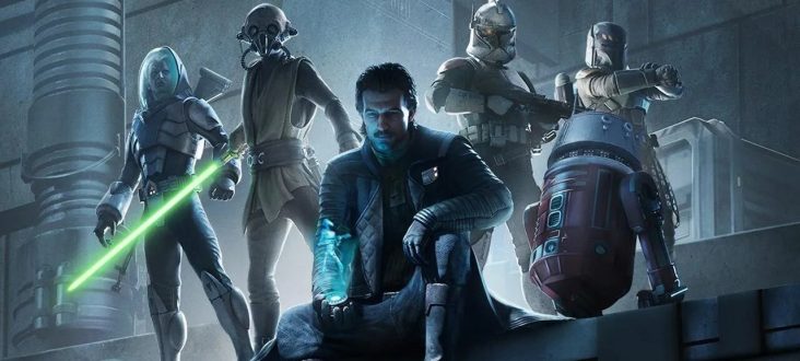
One of the higher-profile cancellations was the next game from God of War 3 and Star Wars Jedi: Fallen Order director Stig Asmussen. Asmussen founded a new studio, Giant Skull, in 2024, and was developing a single-player D&D action game. That project is now dead, though the team continues pitching new ideas to Wizards of the Coast while searching for another publisher.
Hasbro has also not addressed the fate of the G.I. Joe Snake Eyes game, which it said in February hadn't been cancelled despite the closure of its developer. The silence is telling.
Why the Retreat Now?
The market forces at play are straightforward. The post-Baldur's Gate 3 gold rush created unrealistic expectations. That game, developed by Larian Studios and published under Wizards of the Coast's license, was a cultural phenomenon — but it was also an anomaly. Hasbro's leadership appears to have believed they could replicate that success by throwing money at multiple projects simultaneously.
They were wrong. The AI arms race in game development, rising production costs, and a saturated market for licensed games have made the publisher landscape brutal. Hasbro's move mirrors what we've seen across the industry: major players consolidating around their proven franchises and cutting everything else.
Cocks cited Magic: The Gathering Arena, Monopoly Go, and Baldur's Gate 3 as examples of games that succeeded in their niches. Notice the pattern: two are mobile/live-service titles, and one was developed externally by a studio that famously refused to make a sequel. Larian's decision to walk away from Baldur's Gate 4 — an Exodus developer revealed the idea was floated and shot down — leaves a massive hole in Hasbro's lineup.
The Baldur's Gate 3 Sequel Problem
Despite Baldur's Gate 3 being one of the biggest games of the decade, a sequel remains conspicuously absent. Hasbro has been "talking to lots of partners" for over two years, but nothing has materialized. Larian's refusal to make Baldur's Gate 4 — the studio has moved on to new AI: The Somnium Files series-style projects — leaves Hasbro searching for a developer willing to take on one of the most anticipated sequels in RPG history.
That search has been fruitless so far. The Exodus team reportedly rejected the idea of working on Baldur's Gate 4, preferring to build their own sci-fi universe. It's a reminder that the best developers have options, and they're not always interested in servicing someone else's IP.
What "Lower-Conviction Projects" Means for Developers
Cocks explicitly said Hasbro is moving away from "lower-conviction projects" and "reducing our annual spend base." In plain English: fewer games, fewer studios, fewer risks. The company will concentrate investment behind Magic, D&D, owned platforms, partner-led economics, and "a concentrated number of high-conviction owned titles."
For the developers who lost their projects, this is cold comfort. Hasbro has already laid off many of the staff attached to the cancelled games. The industry-wide bloodletting continues, and Hasbro's retreat is just the latest example of a publisher overcorrecting after a period of overexpansion.
The Skeptical View
There's a legitimate question about whether Hasbro's "high-conviction" strategy will work any better. Exodus is an unproven IP from a new studio. Warlock is a D&D spinoff in a genre (action-RPG) that's crowded with competitors. Both are targeting 2027, which means they'll launch into a market that will look very different from today.
Hasbro's track record with video games is mixed at best. For every Baldur's Gate 3, there are multiple cancelled projects and failed experiments. The company's strength has always been in tabletop and licensing — not in-house game development. Betting everything on two titles feels less like a strategy and more like a necessity born from a burned budget.
What's Next
For now, all eyes are on Exodus and Warlock. If both deliver in 2027, Hasbro's pivot will look prescient. If one or both stumble, the company's gaming ambitions could shrink further. The broader lesson is already clear: the Baldur's Gate 3 effect was a one-time lightning strike, not a sustainable business model. Hasbro is learning that lesson the hard way, and it's costing them $56 million and countless developer jobs to figure it out.



Comments (0)
Loading comments…