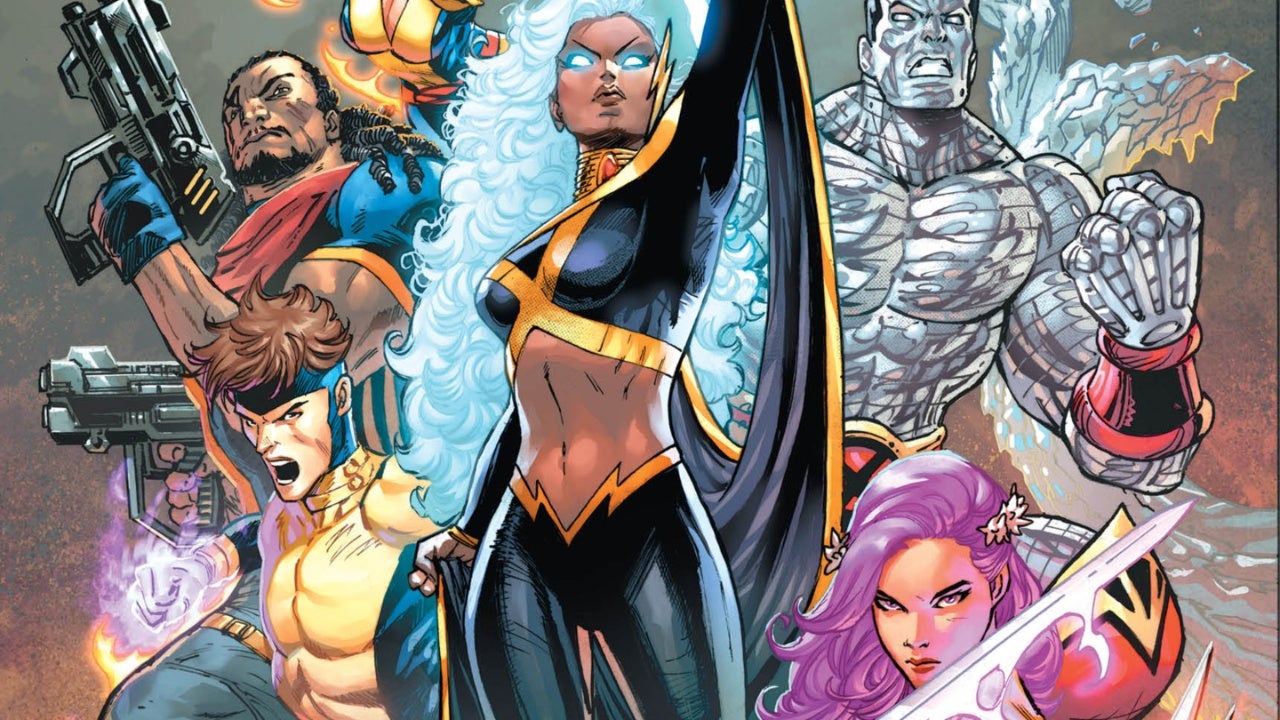
Marvel Comics is launching Maximum X-Men this December, a new ongoing series that positions Storm's mutant strike force as the planet's primary line of defense after Avengers: Armageddon leaves Earth's Mightiest Heroes shattered. The book, written by Chris Yost with art by Tony Daniel, spins directly out of the June 2026 event that Marvel has compared to 2004's Avengers: Disassembled in scope and consequence.
The roster reads like a greatest-hits lineup: Wolverine, Colossus, Bishop, Iceman, Psylocke, Firestar, and Justice. Their first mission pits them against a full-scale Negative Zone invasion — Annihilus, or something the solicitation teases as "far, far worse." Maximum X-Men #1 hits shelves December 2026.
The Announcement
The reveal came during Marvel's Avengers: Armageddon panel at SDCC 2026, where the publisher framed the X-Men's elevation as a direct response to the Avengers' absence. "Mutants by birth, heroes by choice" is the tagline, and it signals a deliberate thematic shift: the team isn't stepping up because they're mutants, but because they're the ones willing to do the job. Yost, coming off his X-Force run, knows how to write high-stakes paramilitary mutant ops. Daniel's art brings the requisite blockbuster scale.
Also unveiled: Chip Zdarsky's Avengers art teasing a major Punisher role in the book's second arc, and Joshua Williamson's Iron Man moving to a double-shipping schedule in December with parallel "Incarcerated Iron Man" and "War Machines" storylines. The Punisher integration suggests Marvel's street-level vigilante is being positioned for a higher-profile role in the post-Armageddon landscape.
Why This Now
Avengers: Disassembled broke the team to rebuild it under Bendis. Armageddon appears to be playing a similar card but with a twist: instead of reassembling the Avengers, Marvel is handing the planetary-defense mandate to the X-Men. The timing aligns with the X-line's current creative momentum — X-Men (2024), Uncanny X-Men, and X-Force have all been critical hits. Giving the franchise the "world's premiere superhero team" slot capitalizes on that heat while the MCU's mutant integration looms on the horizon.
It also solves a narrative problem. The Avengers have carried the "Earth's Mightiest" brand for two decades. Removing them creates a vacuum that the X-Men — historically outsiders, protectors of a world that hates them — are dramatically suited to fill. The irony is the point.
Deconstruct the Impact
For readers, Maximum X-Men consolidates the franchise's heavy hitters into one book. No more tracking three titles to see what Cyclops, Storm, and Wolverine are doing. The roster balances veterans (Wolverine, Colossus, Iceman) with characters who've recently earned spotlight time (Bishop, Firestar, Justice). Psylocke's inclusion tracks with her elevated profile post-Hellfire Gala.
The Negative Zone hook is smart. Annihilus is a cosmic-tier threat that demands a heavy-hitting response, justifying the team's existence immediately. If the "something far worse" tease pays off — say, a connection to the Armageddon fallout — the book avoids feeling like a holding pattern.
For the broader line, this creates a clear hierarchy: Maximum X-Men is the flagship. Other X-books become supporting cast. That clarity has been missing since the Krakoa era ended.
The Broader Trend
Marvel's event-driven publishing model remains intact, but the pieces are shifting. Armageddon → Maximum X-Men mirrors Disassembled → New Avengers, but with mutants at center stage instead of Spider-Man and Wolverine joining Cap's crew. The Punisher's promotion in Avengers and Iron Man's double-shipping suggest Marvel is spreading its marquee names across fewer, higher-impact titles — a reaction to market contraction and reader fatigue with sprawling lineups.
The transmedia angle is impossible to ignore. With the MCU's Avengers: Doomsday and Secret Wars films approaching, and mutant integration confirmed, positioning the X-Men as Earth's primary defenders in comics creates synergy without demanding 1:1 adaptation. The comics lead; the films follow selectively.
Counterpoint
The "elite strike force" premise is familiar. X-Force, Uncanny X-Force, Marauders, X-Men Red — all variations on Storm or Wolverine leading a proactive mutant team. The risk is redundancy. Yost's X-Force worked because it leaned into black-ops moral ambiguity. Maximum X-Men frames itself as public-facing heroism. If the distinction blurs, the book becomes just another X-team title with a better roster.
Double-shipping Iron Man also carries burnout risk. Williamson's run has been strong, but two issues a month tests creative stamina and reader wallets. Marvel's recent double-ship experiments (Amazing Spider-Man, Batman at DC) have produced mixed results.
What Comes Next
Watch the Armageddon fallout in June. The specifics of how the Avengers "fall" will define what Maximum X-Men actually inherits — a world that trusts mutants, one that fears them more, or one that simply has no other choice. The Negative Zone invasion in issue #1 will show whether Yost and Daniel are building a long-term status quo or a bridge to the next event. And keep an eye on the Punisher: if he sticks in Avengers past his arc, Marvel may be testing a darker, more lethal core roster for whatever team eventually reclaims the Avengers name.
For now, the X-Men have the conch. December will show if they keep it.


Comments (0)
Loading comments…