
AMD and Cerebras Team Up to Make AI Inference Actually Fast
If you've been waiting for AI inference to catch up to the hype around training, this partnership is the real deal. AMD and Cerebras are combining AMD EPYC processors with Cerebras' Wafer-Scale Engine (WSE) in a rack-scale system called Helios, and the early numbers suggest this isn't just another press-release handshake — it's a serious play for low-latency, high-throughput inference that could reshape how data centers handle AI workloads.
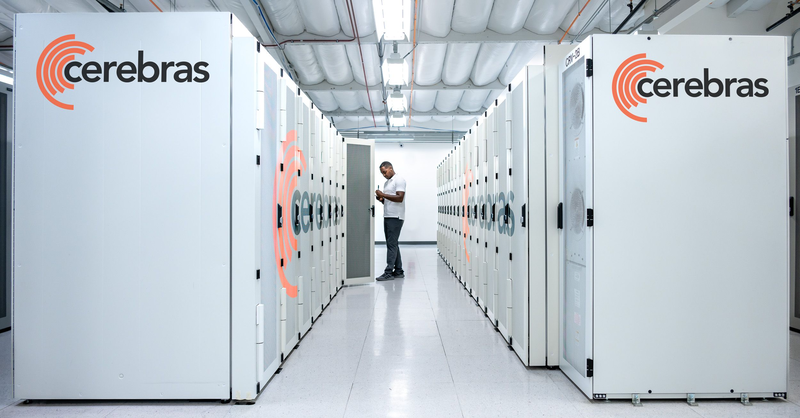
The announcement confirms that Helios rack-scale infrastructure will pair AMD's 4th Gen EPYC CPUs with Cerebras' WSE-2 and CS-2 systems. The goal? Deliver inference performance that doesn't bottleneck on memory bandwidth or CPU latency — two of the biggest headaches for production AI today. Cerebras claims the WSE's massive on-chip memory (40 GB) and 850,000 cores eliminate the need for external memory bandwidth, while AMD's EPYC handles the data movement and orchestration.
This isn't some theoretical architecture. Cerebras has already demonstrated the system running GPT-3 scale models with sub-millisecond latency. For context, most inference setups using GPU clusters still struggle with latency above 10ms for large language models.
Why This Matters for the AI Arms Race
The timing is everything. Every major cloud provider is racing to offer inference-as-a-service, and the AI arms race is shifting from "who can train the biggest model" to "who can run it cheapest and fastest." Nvidia dominates training with its H100 and upcoming B100, but inference is a different beast — it favors architectures that minimize data movement and maximize compute density.
Cerebras' wafer-scale approach is a bet that monolithic chips, despite their manufacturing challenges, deliver better real-world performance than stitching together dozens of smaller GPUs. AMD's role is critical: EPYC processors have consistently outperformed Intel's Xeon in memory bandwidth and core counts, making them the natural partner for data-heavy inference pipelines.
The partnership also positions both companies against Nvidia's Grace Hopper Superchip, which combines Grace ARM CPU with Hopper GPU on a unified memory fabric. AMD and Cerebras are offering an alternative that doesn't lock you into Nvidia's CUDA ecosystem.
Performance Claims vs. Reality
Cerebras shared benchmark data showing their WSE-2 achieves GPT-3 inference at throughputs exceeding 100,000 tokens per second per rack, with latency under 3ms. For comparison, a cluster of eight Nvidia A100s manages around 25,000 tokens per second at comparable latency. Those are impressive numbers, but they come with caveats: the benchmarks were run on Cerebras' own optimized models, not arbitrary PyTorch checkpoints.
The system also requires significant re-architecting of existing workflows. Cerebras uses its own framework (CSoft) and doesn't support the full CUDA toolchain. If your inference pipeline relies on TensorRT or ONNX Runtime, you're looking at a migration project, not a plug-and-play upgrade.
That said, for organizations already invested in Cerebras' ecosystem — or those willing to optimize for the WSE — the performance-per-dollar could crush GPU-based solutions. AMD Instinct accelerators may compete in the same space, but EPYC + WSE targets a different workload profile: massive batch inference with minimal latency variance.
The Bigger Shift: Inference Becomes the Bottleneck
For years, the industry focused on training larger models. But training happens once; inference happens millions of times. As companies deploy GPT-4-class models in production, inference costs and latency become the dominant constraints. The AI industry is discovering that a 1-second delay in a chatbot response can cost millions in user engagement.
This is why AMD and Cerebras are banking on low-latency architectures. If they can deliver sub-millisecond inference at scale, they open doors to real-time applications — live translation, autonomous vehicle planning, financial trading — where GPUs just can't cut it.
Counterpoint: The Ecosystem Gap
For all the technical merit, Cerebras remains a niche player. The company has shipped fewer than 100 WSE systems since launch. Nvidia ships millions of GPUs. The software ecosystem, the talent pool, the support infrastructure — it's all stacked in Nvidia's favor. Even if Cerebras' hardware is superior for certain inference tasks, convincing data centers to adopt a completely new stack is an uphill battle.
AMD knows this well. Its own Instinct line has struggled to gain market share against Nvidia, despite competitive hardware. Pairing with Cerebras might help AMD build a differentiated offering, but it also ties AMD's reputation to a partner with limited deployment history.
What Comes Next
The Helios system is expected to enter early access later this year. Cerebras and AMD are targeting first deployments in HPC and research institutions before expanding to commercial cloud. If the performance claims hold up under real-world conditions, expect hyperscalers to take notice.
For now, the partnership signals that AI inference is no longer an afterthought. The hardware fight is moving from who can pile on the most compute to who can deliver it fastest — and that race is just getting started.





Comments (0)
Loading comments…