
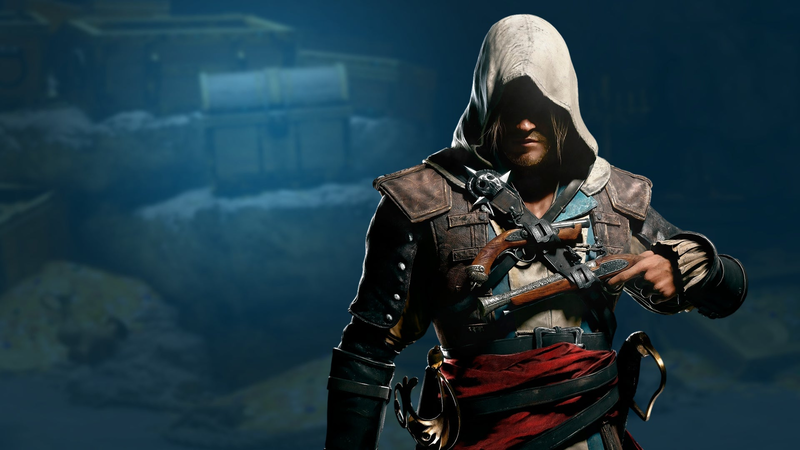
Ubisoft says Assassin's Creed Black Flag Resynced has sold 3.5 million copies in its first 14 days, exceeding the company's annual expectations for the remake before the month is even over.
The numbers were already moving fast: 2 million copies in the opening few days, then 3 million within a week. Now Ubisoft is treating the launch as proof that a beloved older Assassin's Creed game can still generate serious sales when rebuilt for modern systems.
Why a 14-year-old pirate game matters now
That is the useful context: Black Flag is not just an old game with a shiny title. The 2013 pirate adventure is widely treated as one of the series' strongest entries, and Resynced is a lower-risk way for Ubisoft to sell that reputation to new players and lapsed fans.
The market rewards recognizable IP right now. Big launches are expensive, live-service promises are harder to keep, and fans are pickier than ever. A polished remake of a catalog favorite can deliver a lot of demand without asking players to bet on a brand-new universe.
The PS5 Pro immersion trailer is not just decoration. It shows Ubisoft trying to make a 2013 game feel like a current-generation showcase, not a nostalgia tax.
“The strong launch of Assassin's Creed Black Flag Resynced in early July by Vantage Studios is an encouraging proof point,” Ubisoft co-founder and CEO Yves Guillemot said. “The game is the highest-rated Assassin's Creed title since the original Black Flag, and we are very pleased with the praise it received from players.”
The rest of the financials are less pretty
But the report is not a simple victory lap. Ubisoft's Q1 net bookings reached €256 million, down 9% year over year, even if they landed slightly above the company's guidance.
The lift around Invincible: Guarding the Globe, an idle squad RPG set in the Invincible universe with a new story separate from the comics or Amazon TV show, appears to be a bigger surprise than Assassin's Creed. Rainbow Six Siege, meanwhile, performed in line with expectations.
That split matters. It suggests Ubisoft is not seeing broad-based momentum across its whole catalog; it is seeing specific titles do better than expected while the rest of the business remains uneven.
The numbers are not just a sales note. They are a strategy note, and they point to a publisher leaning harder on proven brands while trying to stabilize a more complicated portfolio.
The success arrives during cuts
The reorganization language is also specific. Guillemot said Ubisoft's new operating model continues to take shape, including Christoph Hartmann leading Creative House 2, a unit focused on “battlefield-driven experiences.”
That points to a publisher narrowing its ambitions: fewer broad portfolios, more focus on military and action franchises that can justify big teams. It also sounds like another version of the same corporate phrase Ubisoft has been using all year: concentrate resources where the upside is clearest.
The most visible target is Ubisoft Barcelona, where workforce reductions have sparked employee action. That sits alongside prior reports of two studio closures, another restructuring, and around 380 jobs expected to be lost.
This is now the third round of layoffs at Ubisoft this year. Red Storm Entertainment lost more than 100 people in March, and earlier restructurings shuttered Halifax and Stockholm studios.
The success of Resynced is therefore double-edged. It gives Ubisoft a headline and validates a remake strategy, but it also gives executives another example of where to concentrate resources while trimming less obvious projects.
Will one hit stop the restructuring?
Probably not immediately. Ubisoft's transformation still sounds like a portfolio cleanup, not a return to expansion. If Black Flag Resynced performs well, it may slow the bleeding, but it does not erase the need to close, merge, or shrink teams.
For employees, a hit remake is not a safety net. It can make a company healthier on paper while also making the next round of cuts easier to justify as “strategic.”
Player impact: more remakes, fewer unknowns?
For players, the upside is straightforward: Ubisoft may keep investing in high-quality remakes of catalog favorites. That could mean more polished versions of older games, better performance, and fewer half-finished re-releases.
The downside is also predictable. A company that gets rewarded for catalog revivals can become less willing to fund unfamiliar projects, especially when they need years and a large team to reach market.
That is the tension inside the Black Flag headline. It is good news for Assassin's Creed fans and a useful sales benchmark for publishers, but it is also a reminder that commercial confidence often travels with cost-cutting.
The next chapter is remake strategy
The next thing to watch is whether Resynced becomes a repeatable Ubisoft playbook. If the remake keeps selling, expect more catalog-heavy launches and more language about focusing on “high-potential” opportunities.
If it fades after the nostalgia wave, Ubisoft may treat it as one-off proof that legacy IP can still carry a quarter. Either way, the company's story is now less about Black Flag alone than about how much of its future it wants to rebuild from the past.
Black Flag Resynced has proven that Assassin's Creed still has punch. Ubisoft's next challenge is deciding whether to use that punch to build new games, or simply keep selling the best parts of old ones.



Comments (0)
Loading comments…