
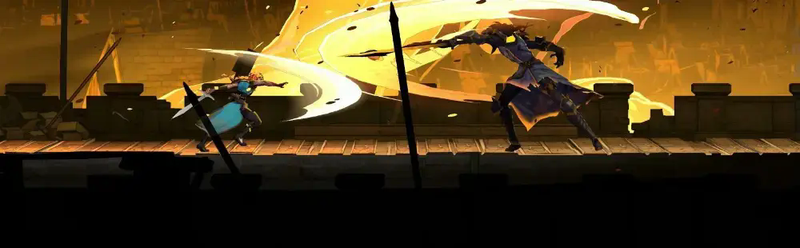
Castlevania: Belmont's Curse will run at 30 frames per second on Nintendo Switch while targeting 60 fps on PlayStation 5, Xbox Series X|S, and PC when it launches October 15.
Konami updated the game's official site with platform-specific performance targets this week, confirming what many suspected: the Switch version takes a significant frame rate hit compared to its current-gen counterparts. The standard edition requires 8 GB of storage (4 GB on Switch), while the Midnight Edition needs 10 GB (6 GB on Switch).
The Switch Tax Is Real
This isn't surprising — it's the reality of developing for hardware that launched in 2017. The Switch's Tegra X1 chip was mid-range mobile silicon even at launch, and seven years later, it struggles with modern engine demands. A 30 fps target suggests the developers prioritized visual fidelity over frame rate, or simply couldn't optimize further without cutting content.
What's notable is the file size difference: the Switch versions are roughly half the install size of other platforms. That typically means compressed textures, lower-resolution assets, or both. Early eShop screenshots already look soft, which aligns with aggressive compression to fit the smaller footprint.
Backward Compatibility Questions
The elephant in the room: Switch 2. Konami explicitly notes this is a "Nintendo Switch 1 game," and it's unclear whether backward compatibility on Nintendo's next console will unlock 60 fps or simply lock to the 30 fps ceiling. Nintendo's backward compatibility approach has historically been literal — games run as they did on original hardware unless patched. Don't count on a free performance boost.
For comparison, the ASUS ROG Ally runs a full Windows environment on Z1 Extreme silicon and handles 60 fps in far more demanding titles. The Switch's fixed 30 fps target underscores how far portable PC hardware has leapfrogged Nintendo's hybrid in raw performance.
Who This Actually Affects
If you're playing on PS5, Xbox Series X|S, or a decent gaming PC, you get the intended 60 fps experience. The 30 fps Switch version is a compromise for portability — a valid choice, but one that changes how a fast-paced action game feels. Castlevania's combat has historically relied on precise timing and reaction windows; halving the frame rate effectively doubles input latency and reduces visual clarity during motion.
That matters more here than in a turn-based RPG. This is a series built on whip-crack precision.
The Broader Pattern
This split — 60 fps on current-gen and PC, 30 fps on Switch — has become the default for multiplatform releases in 2024. Developers aren't optimizing for Switch anymore; they're porting down to it. The gap between Switch and everything else has widened to the point where maintaining parity requires fundamental design compromises, not just resolution scaling.
We're seeing the same dynamic with ASUS ROG Ally and Steam Deck, where the same game runs at 60 fps on handheld PC hardware but 30 fps on Switch. The industry has effectively bifurcated: "Switch version" and "everywhere else version."
Skepticism Warranted
Konami's track record with recent Castlevania collections hasn't been flawless. The Castlevania Advance Collection launched with audio bugs and input latency issues on Switch that took months to patch. The Dominus Collection had similar problems. A 30 fps target on paper doesn't guarantee a stable 30 fps in practice — frame pacing, drops during effects-heavy scenes, and loading hitches are all common on Switch ports of modern engines.
And the "soft" eShop screenshots? That's usually a sign the final build wasn't ready when marketing assets were due. It's not a good look two months before launch.
What to Watch
Pre-orders are live on Switch eShop now. The real test comes at launch: whether the 30 fps holds steady, whether a day-one patch addresses the visual softness, and whether Konami commits to a Switch 2 patch that unlocks the frame rate cap. Until then, the platform hierarchy is clear — if you have access to PS5, Xbox Series X|S, or PC, that's where Belmont's Curse will play as intended.




Comments (0)
Loading comments…