
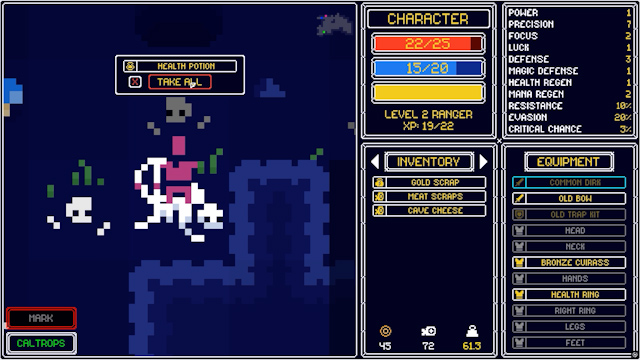
A Short Hike proved indie games don't need massive scope to hook players, and now Deep Down Below is opening beta sign-ups for its own spin on the formula: a turn-based roguelike dungeon crawler where you fight upward through procedurally generated caves, managing light, loot, and three distinct classes in runs designed to be lost — and learned from — repeatedly.
The Announcement
The beta registration page went live this week with a simple pitch: pick a class, descend into darkness, and survive long enough to see the surface again. Three archetypes anchor the build — each with unique ability trees that unlock across runs — while procedural cave systems rearrange corridors, enemy placements, and loot tables every descent. Combat is strictly turn-based, played out in limited-light environments where positioning and resource management matter more than reflexes. Potions, equipment, and temporary buffs drop throughout runs, but inventory space forces hard choices about what to carry and what to leave behind.
Why This Now
Roguelikes have been riding a sustained wave since 13 Sentinels: Aegis Rim showed strategy hybrids could find mainstream traction, and the Steam Next Fest circuit has turned public betas into de facto marketing campaigns. Deep Down Below arrives as the genre splits: on one side, action-heavy titles like Hades clones; on the other, a resurgence of deliberate, grid-based crawlers that feel closer to tabletop sessions. The developer — a small team without prior commercial releases — is betting that transparency during development builds a more invested community than a surprise launch.
Deconstruct the Impact
For players, the beta offers early access to a progression system designed around failure as a teaching tool. Each run feeds permanent unlocks — new abilities, starting gear, shortcut options — so even a quick death advances the meta-game. The three-class structure suggests replayability hinges on build experimentation rather than pure randomization, a design choice that could differentiate it from peers where class choice barely shifts the run texture. If the procedural generation holds up across dozens of hours, the game joins a short list of crawlers where map knowledge doesn't trivialize repetition.
For the developer, the beta serves dual purpose: stress-testing procedural logic across hardware configurations (a known pain point for AI-assisted level generation) and gathering telemetry on which class paths players actually pursue versus which they ignore. That data shapes post-launch balance patches before they're needed.
The Broader Trend
Indie roguelikes have become the genre's R&D lab. Major publishers — Activision Blizzard included — now scout successful betas for acquisition or publishing deals, while platforms like ASUS ROG Ally create new form-factor expectations for turn-based games that play well in handheld sessions. Deep Down Below's limited-light mechanic also taps into the "fog of war" design trend popularized by titles like Darkest Dungeon, where information scarcity drives tension more than enemy density.
Counterpoint
Beta fatigue is real. Steam's "Request Access" button has become a low-effort wishlist substitute for many players, inflating sign-up numbers without guaranteeing engaged testers. Procedural generation, meanwhile, often promises infinite variety but delivers infinite sameness — same room templates, same enemy behaviors, same loot curves wearing different wall textures. And turn-based combat on a timer (even a generous one) can frustrate players accustomed to the genre's traditional "think as long as you want" pace. The limited-light gimmick risks becoming a visibility annoyance rather than a strategic layer if the UI doesn't communicate threat ranges clearly.
What Comes Next
The beta runs through Q1 2025 with monthly content drops promised — new cave biomes, a fourth class, and co-op support teased for the full release. Watch the first patch notes: they'll reveal whether the team treats player feedback as data or dogma. If Deep Down Below can make each failed ascent feel like progress rather than punishment, it earns a spot on the short list of crawlers worth the hundredth run. Sign-ups are open now; the first wave of invites ships before month's end.





Comments (0)
Loading comments…