
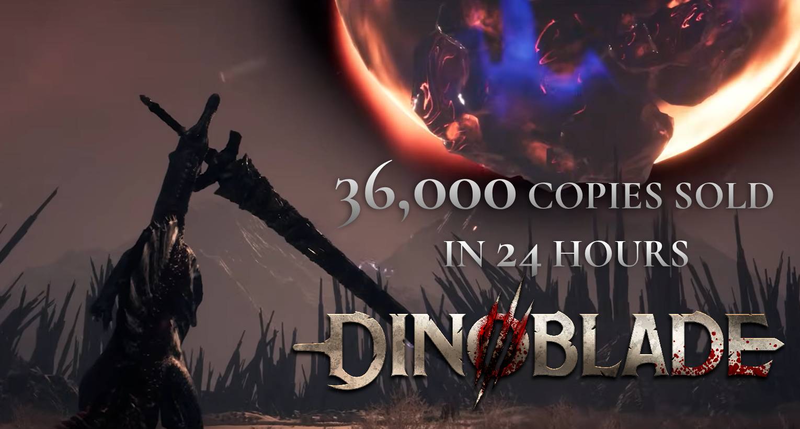
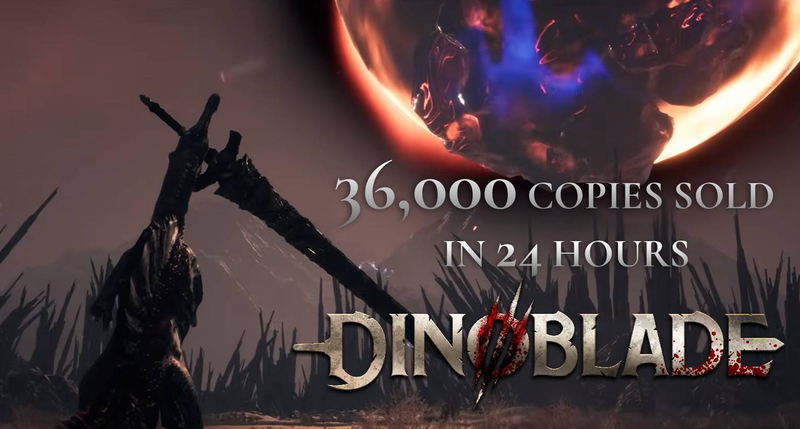
Dinoblade sold more than 36,000 copies on Steam in its first 24 hours, turning Team Spino’s dinosaur-sword action RPG into one of the platform’s most visible indie launches this week.
The number is the headline, but the more interesting part is how the game got here: a clear premise, 500,000 Steam wishlists, a founder with AAA action-game experience, and a launch week played out in public.
Team Spino was founded by Jean Nguyen, who is also a senior gameplay animator at Sucker Punch, the studio behind Ghost of Tsushima. That pedigree matters because Dinoblade is not being sold as a polished fantasy from nowhere; it is a small team project with a big-action background attached to it.
Nguyen described the launch as an “emotional rollercoaster” in a post on X, noting that he had been watching streams, shipping a patch for controller issues, and keeping an eye out for more hotfixes. That kind of post-readiness is part of what makes the launch feel less like a storefront event and more like a live community moment.
36,000 COPIES SOLD IN 24 HOURS
The last 24 hours has been an emotional rollercoaster. I loved watching the streams and I have also made a patch to fix controller issues. I'll be keeping my eyes ou
 View on X →
What Team Spino built
Dinoblade is an action RPG set in a prehistoric world, with players controlling a Spinosaurus that fights with swords. It is exactly the kind of premise that can survive a single screenshot or a short trailer, but it is also specific enough to feel like a real design identity rather than a generic dinosaur game.
The pitch is deliberately simple: you are the dinosaur, and the dinosaur is the weapon. That gives the game an immediate visual hook, but the harder part is making that hook feel good once players get inside the game.
That is where Nguyen’s background becomes relevant. Gameplay animation is not just about making attacks look flashy; it shapes how players understand weight, timing, danger, and reward. Dinoblade’s success suggests that the team has found a way to package a tactile action idea in a form Steam players can grasp instantly.
Why the launch landed now
Steam has become a marketplace where wishlists are almost as important as reviews. Dinoblade crossed 500,000 wishlists before release, and SteamDB showed it sitting at number 8 in wishlist activity at launch.
Those wishlists are not the same as sales, but they create pressure in both directions. They tell players that other people are interested, and they give Steam a signal that the game may be worth surfacing more aggressively around launch.
If you divide the reported 36,000 first-day sales by the 500,000 wishlist mark, you get a rough 7% conversion rate. That is not a complete picture, because wishlists can expire, duplicate, or sit inactive, but it is still a strong early signal for an indie release.
The timing also fits a broader Steam pattern: small, weirdly specific games can break through when the concept is legible at a glance. Meccha Chameleon’s massive Steam success showed that players are still willing to chase unusual indie premises when the pitch is sharp enough.
What the numbers actually mean
Dinoblade’s 36,000-copy launch is not just a vanity number for Team Spino. It gives the studio a real audience to talk to, patch for, and learn from during the most volatile part of release week.
SteamDB data showed more than 1,000 players online at the time of reporting, with a launch-day peak of 2,204 concurrent players. That is not AAA territory, but for a small indie action RPG, it is enough to keep the game visible in the right conversations.
The launch discount also matters. Dinoblade is priced at $17.99 on Steam, with a 10% launch-week discount for the first seven days, ending July 30. That is a modest nudge, not a fire-sale move, and it lowers the risk for players who are curious but not yet convinced.
Team Spino also asked players to leave Steam reviews, which is especially important for an indie project. A positive early wave can help discovery; a negative one can slow momentum just as quickly.
What this says about indie Steam launches
The biggest takeaway is that Dinoblade’s launch is not only about a dinosaur wearing the trappings of a traditional action RPG. It is about how indie teams now build trust before release: through wishlists, demos, public feedback, founder visibility, and a premise that can be explained without a paragraph.
Nguyen’s social post is useful because it shows the human side of that process. The team is not just celebrating a sales chart; it is responding to controller issues, watching streams, and trying to keep the first-day experience from falling apart under its own excitement.
There is also a competitive angle. Steam is crowded, but attention is not evenly distributed. A game with a strong visual hook can cut through the noise faster than a technically stronger game with a vague identity.
That does not mean Dinoblade has “won” the market. It means the team has cleared one of the hardest indie gates: getting strangers to care quickly enough to buy, play, and talk.
What could still go wrong
A first-day sales spike is useful, but it is not the same as long-term success. Launch-week sales often include wishlists, friends, launch discounts, novelty, and early curiosity from people who may not stick around.
The controller patch Nguyen mentioned is a reminder that Dinoblade is still being tested in real time. Controller support is especially important for action games, where timing and input clarity directly affect whether fights feel fair, heavy, and readable.
Steam reviews will be the next major pressure point. If players find the combat satisfying and the bugs manageable, Dinoblade could settle into a steady indie seller. If the reviews sour, the launch momentum could fade quickly.
There is also the question of retention. A peak of 2,204 concurrent players is promising, but the real test is whether the game can keep players engaged after the launch-week discount disappears.
What to watch next
- Steam reviews: Early sentiment will shape whether Dinoblade gets more than its first burst of attention.
- Patch cadence: Controller fixes, hotfixes, and small quality-of-life tweaks will matter most in the first weeks.
- Concurrent players: The peak was 2,204; the next question is whether that settles into a stable audience.
- Post-launch sales: The launch discount can drive trials, but reviews and word of mouth will decide the long tail.
For players, the practical takeaway is simple: Dinoblade is out now on Steam, priced at $17.99, with a launch-week discount that ends July 30. If you are curious, the discount makes it an easy experiment, but the reviews and controller patch notes are worth checking before treating it as a finished success.
For Team Spino, the first 24 hours are a starting gun, not a finish line. Dinoblade has proved that the pitch works. Now the game has to prove that the experience behind the pitch can keep up.
36,000 COPIES SOLD IN 24 HOURS
The last 24 hours has been an emotional rollercoaster. I loved watching the streams and I have also made a patch to fix controller issues. I'll be keeping my eyes ou
View on X →



Comments (0)
Loading comments…