
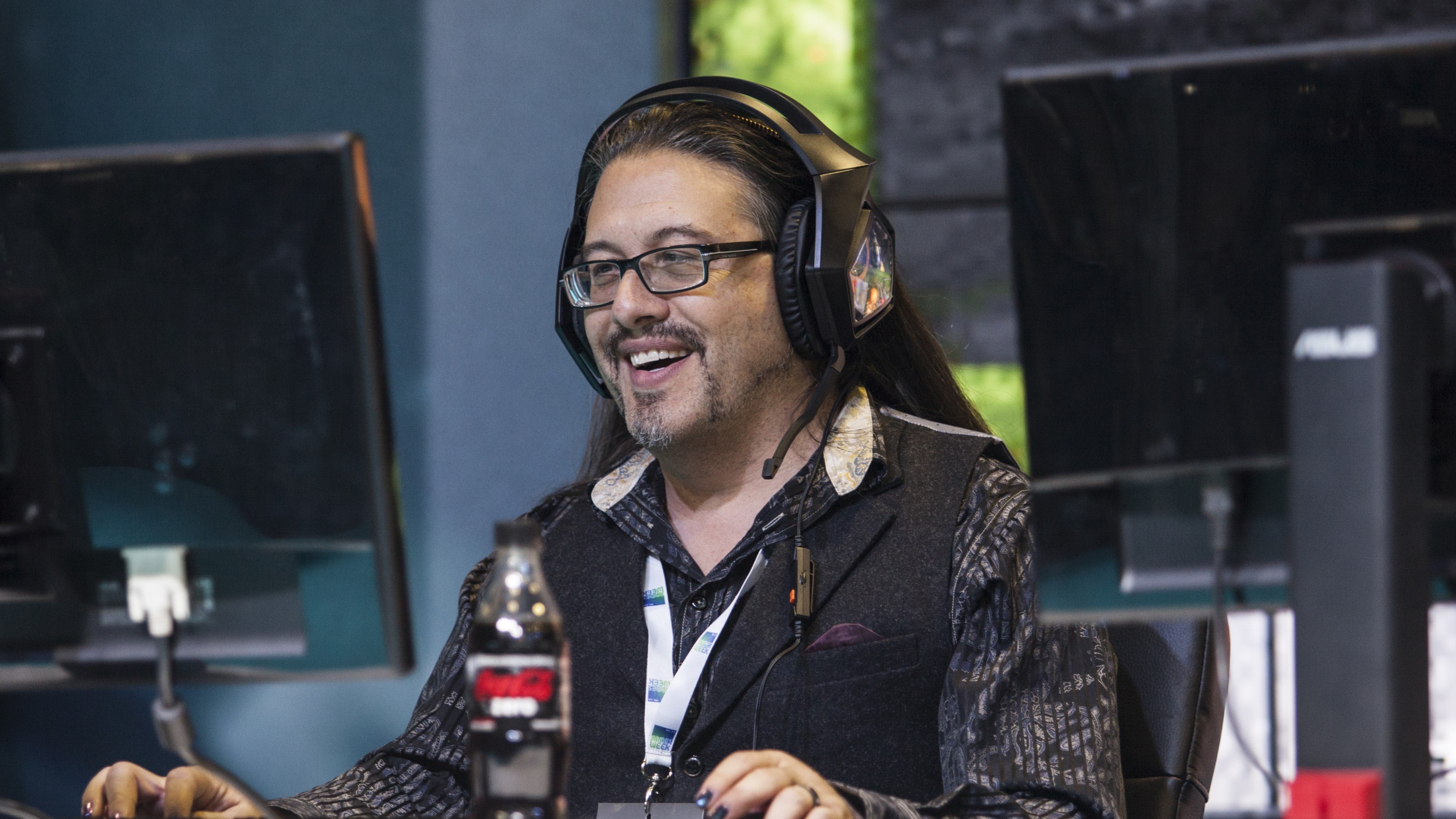
John Romero has seen the industry eat its young. He's watched studios rise and collapse, watched publishers pull funding from projects years into development, watched colleagues pack boxes while the logos they built stay on the loading screens. So when the co-creator of Doom, Quake, and Wolfenstein 3D titles a keynote "Why We Still Make Games," it's not a rhetorical flourish. It's a question he's been answering for thirty years — most recently when Microsoft cancelled his studio's unannounced shooter and laid off the team at id Software he helped build.
Romero will headline Gamescom Asia x Thailand Game Show this October in Bangkok, joining a speaker lineup that reads like a cross-section of where the industry actually lives right now: Nick Herman and Dennis Lenart from AdHoc Studio, fresh off the critical success of Dispatch; Zhen Fang, VP of International at Roblox; and Yoan Fanise, founder of DigixArt. The event runs October 29 through November 1 at the Queen Sirikit National Convention Center, expanded this year to four halls and 35,000 square meters. Nintendo, Bandai Namco, Capcom, and Sega will all have floor presence, alongside a significantly enlarged indie showcase for Southeast Asian developers.
The timing is deliberate. Last year's keynote from Glen Schofield — Dead Space co-creator, veteran of Visceral and Sledgehammer — declared the industry "broken, beaten, and battered." He retired less than twelve months later. Romero's talk arrives after Xbox's restructuring gutted Alpha Dog Games, Arkane Austin, Tango Gameworks, and Roundhouse Studios, and after id Software itself absorbed layoffs that Romero publicly mourned. "I know what it feels like to leave id while id goes on," he wrote. "It's a strange and painful thing to step away from a place that holds so much of your work, friendships and history."
Romero Games' cancelled shooter was reportedly years into development when Microsoft pulled funding in 2025. The studio had been one of the few independent teams publishing through Xbox's first-party umbrella — a model that looked like a lifeline for mid-sized developers until it wasn't. The cancellation follows a pattern: Microsoft acquires or partners with studios for creative breadth, then consolidates when the balance sheet demands it. Romero's keynote will almost certainly touch on this. He's one of the few people who can speak to both the founder's dream and the corporate reality that crushes it.
The Southeast Asian Inflection Point
Gamescom Asia's expansion matters beyond the headliners. The show has become the primary industry gateway for Southeast Asia — a region where mobile revenue dwarfs PC and console, but where a generation of developers raised on Doom and Quake are now building their own studios. Thailand's game industry revenue hit $300 million in 2023, growing 15% year over year. Indonesia, Vietnam, and the Philippines are on similar trajectories. The indie hall at Gamescom Asia isn't a side attraction anymore; it's the reason many regional developers attend.
Having Romero there — a figure who literally wrote the grammar of the first-person shooter — carries symbolic weight for developers who grew up modding his engines. It's also practical: Romero Games operates out of Galway, Ireland, but Romero himself has spent years mentoring indie developers globally. His perspective on surviving industry cycles translates across borders.
What the Speaker Lineup Actually Signals
Look past the names and the lineup tells a story. AdHoc Studio represents the narrative-focused, streaming-adjacent future — Dispatch was built for Twitch integration from the ground up. Roblox represents the platform-as-publisher model that's eating traditional development from below. DigixArt represents the European indie tradition of historically grounded, mechanically distinctive games (Valiant Hearts, Road 96). Romero represents the old guard that refuses to calcify.
Missing: anyone from the live-service AAA machine. No Destiny leads, no Call of Duty directors, no battle pass architects. That absence is noticeable at an event co-branded with Gamescom, which traditionally anchors the European AAA calendar. It suggests the organizer's thesis: the interesting conversations right now are happening at the margins — in indie, in platforms, in regions the West still treats as "emerging."
The Skeptic's View
Keynotes are marketing. Romero's talk will be inspiring — he's a gifted speaker who understands his own mythology — but inspiration doesn't fund games. The structural forces that cancelled his shooter and laid off his friends at id Software aren't solved by reflection. They're solved by unionization, by sustainable funding models, by publishers who plan beyond the next quarter. Southeast Asia's growth is real, but it's also concentrated in mobile gacha and web3 experiments that replicate the West's worst extractive tendencies. A bigger convention hall doesn't fix precarity.
There's also the question of audience. Gamescom Asia is a trade show first, public festival second. The developers who most need to hear "why we still make games" — the ones burning out at 3 AM in Jakarta or Manila or Bangkok — may not have the badge access to sit in that room.
What to Watch
Romero's keynote will be recorded. Watch it when it drops. But pay closer attention to the side conversations: the AdHoc team talking about Dispatch's post-launch reality, the Roblox VP explaining how they're courting traditional developers, the Southeast Asian indies in Hall 4 showing games that don't fit any Western genre category. That's where the industry's next grammar is being written — not on the main stage, but in the halls where the lights are dimmer and the stakes are personal.
Gamescom Asia x Thailand Game Show 2026 runs October 29 through November 1. If you're in the region, the indie hall alone justifies the trip. If you're not, the recordings will find their way online. Romero's question — why we still make games — doesn't have a single answer. The value is in watching how many different ways the people in that room are trying to answer it.



Comments (0)
Loading comments…