

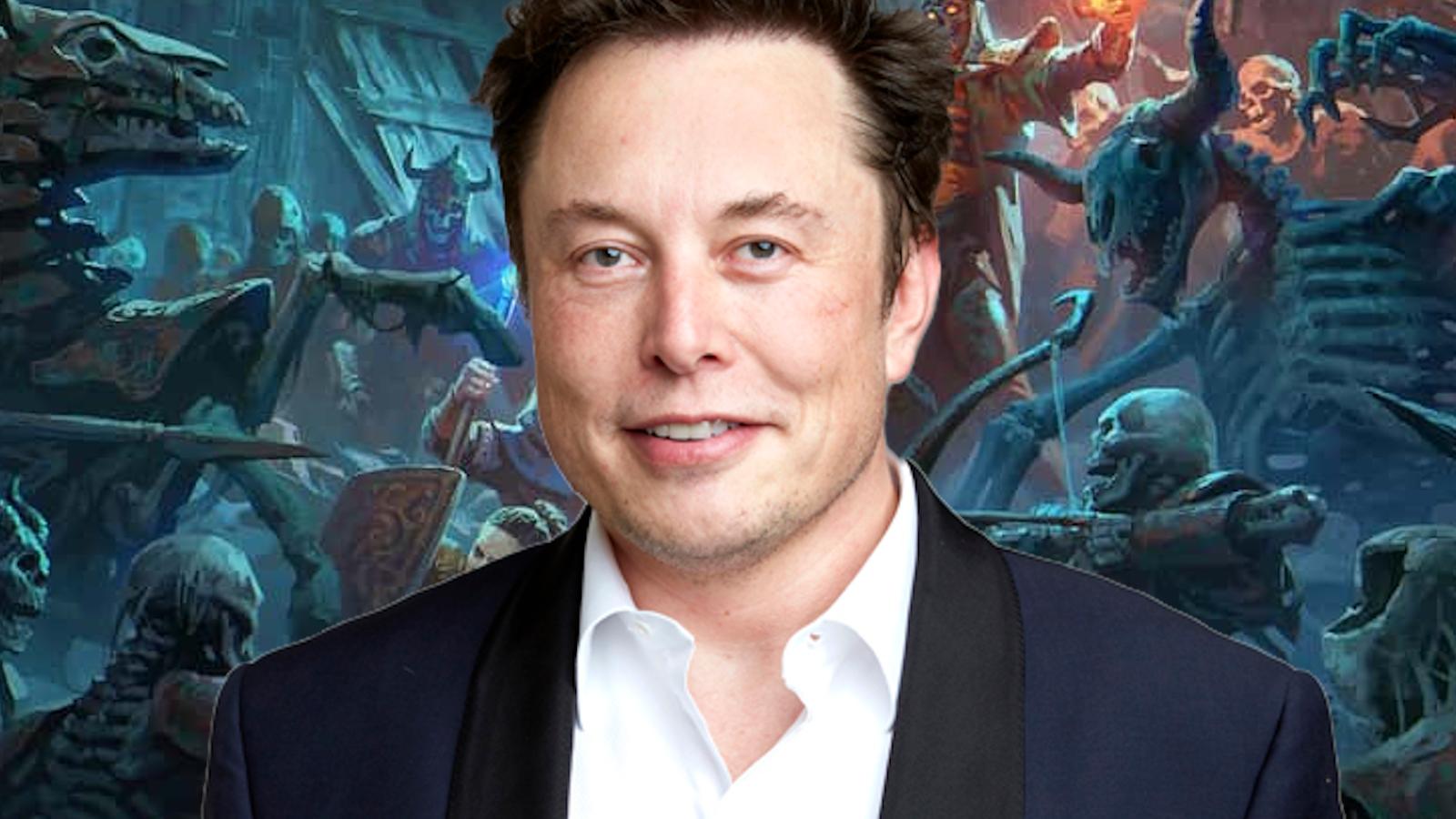
Elon Musk has vowed to release a fully AI-generated feature film adaptation of Homer's The Odyssey before the end of 2026, directly challenging Christopher Nolan's critically acclaimed theatrical version currently dominating cinemas. Musk claims the movie, built using his xAI company's Grok Imagine tool, will be "historically accurate and true to the art of Homer" — a pointed critique of Nolan's film, which has faced some backlash over its creative liberties with ancient Greek attire and casting.
The announcement comes just as Nolan's The Odyssey enjoys a remarkable run, holding a 94% score on Rotten Tomatoes and selling out screenings in the UK through September. The stark contrast between Nolan's meticulously practical filmmaking — complete with animatronic pigs, a puppet cyclops, and real actors portraying giants — and Musk's fully synthetic approach couldn't be starker.
What Musk is actually promising
Musk shared his plans in response to a three-minute AI-generated scene of The Odyssey created using Grok, the language model developed by his company xAI. "Before this year ends, Grok Imagine will make a full-length movie of The Odyssey that is historically accurate and true to the art of Homer," Musk wrote on X.
Grok Imagine is xAI's text-to-video generation tool, part of a rapidly expanding ecosystem of generative AI platforms competing with offerings from OpenAI, Google, and others. Musk has been vocal about his belief that AI will soon produce entire feature films, and this Odyssey project appears to be the highest-profile test case yet.
No release date, runtime, or distribution plan has been shared. The promise is characteristically vague — "before this year ends" leaves a window of roughly five months — but Musk has a pattern of making bold AI timeline claims and then iterating publicly as development progresses.
The Nolan comparison is the whole point
Musk has been a vocal critic of Nolan's The Odyssey in recent months, taking issue with what he perceives as historical inaccuracies in the film's costumes and casting choices. Nolan's film, which stars Matt Damon, Tom Holland, Zendaya, and Travis Scott, has been defended by historians who note that Homer's epic is a work of mythology, not a documentary, and that ancient Greek clothing was far more varied than popular depictions suggest.
Still, the criticism has given Musk an opening. By positioning his AI-generated version as the "historically accurate" alternative, he's tapping into a specific audience that values fidelity to source material over artistic interpretation — the same impulse that drives fan edits, lore-accurate mods, and exhaustive YouTube breakdowns of period costume errors.
Whether Grok Imagine can actually deliver on that promise is another question entirely. Current AI video generation tools struggle with consistency across long sequences, character continuity, and coherent narrative structure. A full-length feature film — typically 90 to 120 minutes — represents a massive leap beyond the short clips these systems currently produce.
What "historically accurate" means when AI is involved
The phrase "historically accurate" does a lot of work in Musk's promise. AI models are trained on existing data, including centuries of artistic depictions of ancient Greece, scholarly texts, and modern recreations. But generative systems are also prone to hallucination — confidently producing details that look plausible but are entirely invented. A Grok-generated Odyssey might render historically plausible armor while also giving Odysseus six fingers or placing a 21st-century wristwatch on Penelope.
There's also the question of what "true to the art of Homer" means for a model that has never read the original Greek, cannot experience emotional nuance, and has no concept of poetic meter. The Odyssey is not just a sequence of events — it's a foundational work of Western literature whose power comes from language, rhythm, and the weight of oral tradition. Reducing it to a series of "historically accurate" visual scenes may produce something that looks right but feels hollow.
The AI arms race in entertainment
Musk's Odyssey announcement is the latest escalation in the AI arms race reshaping the entertainment industry. Studios, tech companies, and independent creators are all racing to prove that generative AI can produce commercially viable long-form content. OpenAI's Sora, Google's Veo, and Meta's various video generation tools have all demonstrated impressive short clips, but none has released a full feature film.
Musk's advantage — if it can be called that — is vertical integration. xAI controls both the model (Grok) and the generation tool (Grok Imagine), and Musk has the resources to throw compute power at the problem until it works. He's also shown willingness to ship unfinished products and iterate publicly, which is exactly the approach needed for something as ambitious as a fully AI-generated movie.
But the broader industry is watching with skepticism. Traditional filmmakers and visual effects artists have raised concerns about job displacement, copyright issues around training data, and the fundamental question of whether AI-generated art can carry emotional weight. Nolan's film, made with practical effects and human actors, is in many ways a rebuttal to the idea that AI can replicate the texture of real filmmaking.
The skepticism is warranted
Let's be honest about the challenges here. Current AI video generation cannot maintain character consistency across a 90-minute runtime. It struggles with complex action sequences, coherent dialogue, and any form of narrative subtlety. The three-minute clip Musk responded to may look impressive in isolation, but scaling that to a full film introduces compounding errors that current systems can't manage.
There's also the question of audience appetite. Nolan's The Odyssey is succeeding in part because audiences can feel the weight of practical filmmaking — the real puppets, the real animatronics, the real performances. An AI-generated version, no matter how technically polished, may struggle to generate the same emotional investment. The uncanny valley doesn't just apply to faces; it applies to entire films.
Musk has previously claimed that AI will produce a "whole video game" by 2029, and his xAI subsidiary has been developing AI tools for game development as well. The Odyssey movie is part of a larger vision where generative AI becomes the primary content creation engine across entertainment. But between that vision and a finished film that people actually want to watch lies a vast ocean of technical hurdles.
What happens next
The most likely outcome is that Musk releases something — perhaps a short film, perhaps a feature-length experiment — that demonstrates what Grok Imagine can do while falling short of the "historically accurate and true to the art of Homer" standard he's set. The reaction will be split: AI enthusiasts will celebrate the technical achievement, while classicists and film purists will point out every inaccuracy and aesthetic failure.
But even a flawed release would mark a milestone. No major tech figure has yet delivered a full AI-generated feature film. Musk, for all his tendency to overpromise, has a track record of pushing ambitious projects across the finish line in some form. Whether that form is a coherent movie or a 90-minute tech demo remains to be seen.
For now, Nolan's The Odyssey continues its theatrical run, and Musk's version remains a promise on social media. The real story isn't about which adaptation is better — it's about whether AI can meaningfully participate in the oldest human art form of telling stories around the fire. We'll find out by the end of the year.
The conversation continued on social media:


Comments (0)
Loading comments…