
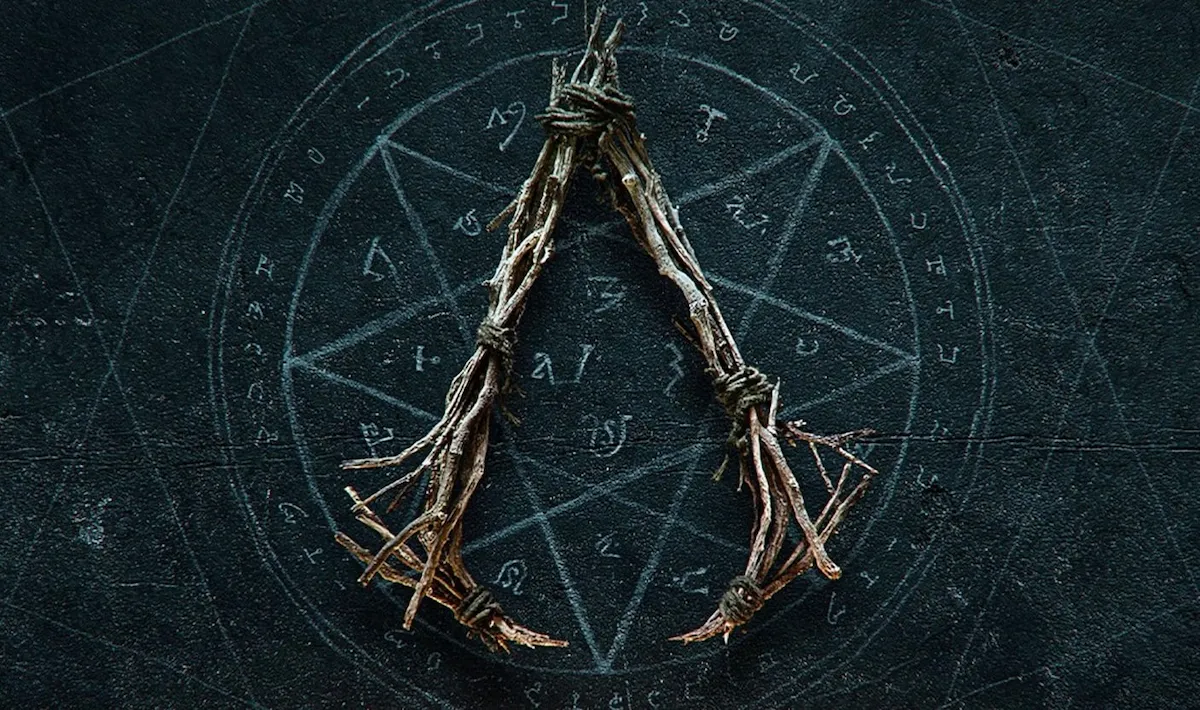
One thousand developers. Six weeks for feedback to reach the person who needs it. Clint Hocking didn't mince words describing the machinery behind Watch Dogs: Legion: "It very often feels like pissing upstream."
The former Assassin's Creed Hexe director laid out the math on FRVR's podcast this week. Hocking, who also steered Far Cry 2, Splinter Cell: Chaos Theory, and Watch Dogs: Legion before stepping down from Hexe in February 2026, contrasted the current reality with Chaos Theory's development. Back then, he could walk to a level designer's desk and talk. On Legion, a review meeting meant 30 people in a room — directors, producers, project managers — while the person who actually built the thing wasn't invited.
Feedback turned into tasks. Tasks waited for sprints. Six weeks later, the context had evaporated. Hocking's new indie studio, Build Machine Games, exists partly as a reaction to that scale.
The Meeting That Wasn't a Meeting
Hocking described a loop that will sound familiar to anyone who's shipped at a major publisher: you review a quest or location, ask when you'll see the changes, and hear "six weeks" because the implementer is booked on something else. By the time the iteration lands, the game has moved on. The director's intent degrades into a game of telephone played across time zones and org charts.
He couldn't discuss Hexe — NDA still active — but the implication hangs over the interview. This is the second director to exit that project. The first, Jonathan Dumont, left in 2023. Ubisoft hasn't shown the game since its 2020 teaser.
Why the Industry Keeps Scaling Up
Publishers chase scope because scope sells. Open worlds, live services, photorealistic assets — each layer demands more hands. Ubisoft's template, refined across Assassin's Creed, Far Cry, and Watch Dogs, treats development as a manufacturing pipeline. Specialization creates efficiency on paper. In practice, it creates the 30-person meeting where the builder is absent.
The AI tools now rolling into production pipelines promise to compress some of this. Concept art, dialogue variation, QA automation — studios are betting generative models can replace coordination overhead with compute. Whether that's the AI arms race paying off or just new bottlenecks remains unproven.
What Breaks at 1,000 People
Communication paths scale quadratically. A 50-person team has 1,225 potential connections. A 1,000-person team has nearly half a million. No process survives that math unchanged. The "six weeks" Hocking cited isn't bureaucracy for its own sake — it's the minimum latency of a system where no single person holds the map.
Players feel the result. Quest logic that contradicts itself. World events that don't acknowledge each other. Patches that fix one thing and break two others because the dependency graph lives in a spreadsheet nobody owns. Legion's "play as anyone" system was technically ambitious; its narrative seams showed the strain of distributed authorship.
The Counterpoint: Small Teams Still Ship
Among Us launched with three developers. Animal Well was largely one person. Balatro started as a solo project. The industry's biggest surprises keep coming from teams small enough to fit around a table. That's not nostalgia — it's evidence that coherence scales inversely with headcount.
But Assassin's Creed isn't Among Us. Players expect cities, not rooms. The question isn't whether 1,000 people can make a game. It's whether the current organizational model — inherited from film production, layered with agile terminology — can deliver coherence at that scale. Hocking's answer: it feels like pissing upstream.
What Comes Next
Build Machine Games hasn't announced a project. Hocking's track record suggests something systems-driven, player-expressive, probably not open-world. Meanwhile, Hexe sits in limbo — Ubisoft's most mysterious project, now directorless twice over. The NDA will expire eventually. When it does, the upstream story gets a second chapter.
For now, the number to remember is six weeks. That's how long intent takes to become action at 1,000 people. Every studio chasing that headcount is fighting the same physics.





Comments (0)
Loading comments…