
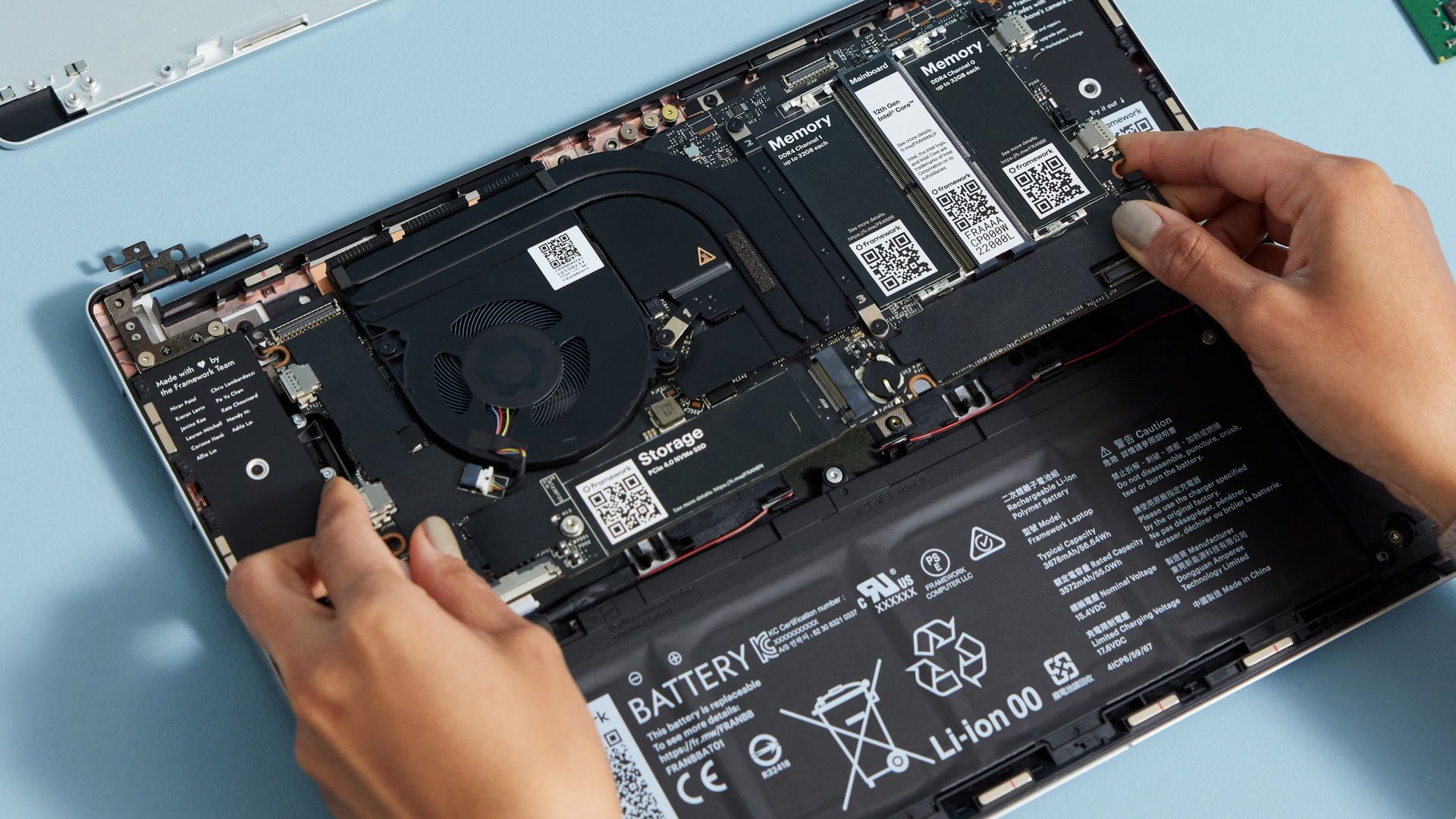
Framework has confirmed that the cost of memory modules for its upgradeable laptops has more than doubled, a spike the company describes as "far beyond anything we had predicted." The price increase, driven by its supplier's pricing changes, means that a 32GB DDR5 RAM module that previously cost around $40 now runs closer to $80 or more, directly impacting anyone looking to upgrade their Framework 13 or Framework 16 laptop.
The Announcement: A Sudden, Sharp Price Hike
In a forum post, Framework detailed that its memory supplier had raised prices on DDR5 SO-DIMM modules to levels "more than double" what the company had paid for its previous shipments. The company was transparent about the cause, stating the increase was not a decision Framework made, but one it was forced to pass along to customers. The new pricing is now reflected on Framework's marketplace, where individual memory modules and complete laptop configurations have seen a noticeable uptick.
The specific numbers paint a grim picture for budget-conscious upgraders. A 32GB (2x16GB) kit, a common upgrade path for gamers and professionals, has effectively doubled in cost. This isn't a minor fluctuation; it's a structural change in the bill of materials for one of the PC industry's most celebrated modular designs.
Why This Now: The Market Forces at Play
This isn't a random event. The global memory market has been volatile for the past year, driven by a confluence of factors. The primary culprit is the surging demand for high-bandwidth memory (HBM) used in AI accelerators and data centers. Companies like Samsung, SK Hynix, and Micron have been reallocating production capacity away from consumer-grade DDR5 and toward the far more profitable HBM3 and HBM3E chips needed to power the AI arms race.
This production shift has constricted the supply of standard DDR5 memory, driving up spot prices. Framework, which operates on much thinner margins and smaller procurement volumes than giants like Dell or Lenovo, is especially vulnerable to these wholesale price swings. The company's commitment to using standard, socketed memory modules—a cornerstone of its repairability ethos—means it cannot simply solder cheaper memory onto the motherboard to absorb the cost.
Deconstructing the Impact: Who Gets Hurt?
The most immediate impact is on existing Framework owners who planned to upgrade their RAM. The entire value proposition of a Framework laptop is that you can buy a base model and upgrade components over time. With memory costs doubling, that "upgrade later" promise becomes a significantly more expensive proposition.
New buyers are also affected. While Framework hasn't raised the base price of its laptops, the cost of configuring a system with more than the minimum 8GB of RAM has effectively increased. This muddies the value calculation for a laptop that already carries a premium over similarly specced, non-upgradeable alternatives.
- Existing owners: Face higher costs for planned upgrades, potentially delaying or canceling them.
- New buyers: See a higher effective price for a well-configured machine.
- Framework's reputation: Risks being tarnished by a cost increase it cannot control, undermining its core message of long-term value.
The Broader Trend: Modularity Meets a Harsh Reality
Framework's predicament is a case study in the tension between right-to-repair ideals and the brutal realities of the global semiconductor market. The company's entire business model is built on the premise that standard, replaceable parts will remain affordable and available. When that premise breaks down—as it has with DRAM pricing—the entire ecosystem wobbles.
This isn't unique to Framework. The entire PC industry is grappling with higher memory costs. AMD's Ryzen 7000 and 8000 series processors, which require DDR5, have seen motherboard and memory kit prices remain stubbornly high. But Framework is uniquely exposed because its identity is so tightly coupled with the idea of component-level upgrades. A Dell XPS buyer might grumble about a price hike; a Framework buyer might feel the company's core promise has been broken.
Counterpoint and Skepticism
There's a legitimate question here about how much Framework could have done to mitigate this. The company's forum post was transparent, but some in the community are skeptical that the price increase is purely a pass-through. The cynic's view is that Framework is using a market-wide trend to pad its margins on a high-volume accessory, knowing that loyal customers have few alternatives for compatible, validated RAM.
Furthermore, the price hike underscores a fundamental weakness in the modular laptop concept: you are at the mercy of the broader supply chain. If you buy a soldered-RAM MacBook Air, your memory cost is fixed at purchase. With a Framework, you are exposed to future market volatility. For some, this is a feature (you can choose when to buy). For others, it's a bug (you can be surprised by a sudden cost spike).
What Comes Next
Framework has not indicated when or if prices will come back down. The company is likely hoping that the DRAM market cycles back toward a glut, as it has in the past, which would allow it to lower prices again. In the meantime, the company is advising customers to consider third-party DDR5 memory, as long as it meets the specifications for the Framework 13 and 16 motherboards.
For the broader industry, Framework's warning is a canary in the coal mine. If a company built entirely around modularity and affordability is struggling to keep memory costs under control, it suggests that the era of cheap, plentiful DDR5 may be on hold for a while. The AI: The Somnium Files series may not be affected, but the rest of us are about to pay more for RAM.





Comments (0)
Loading comments…