
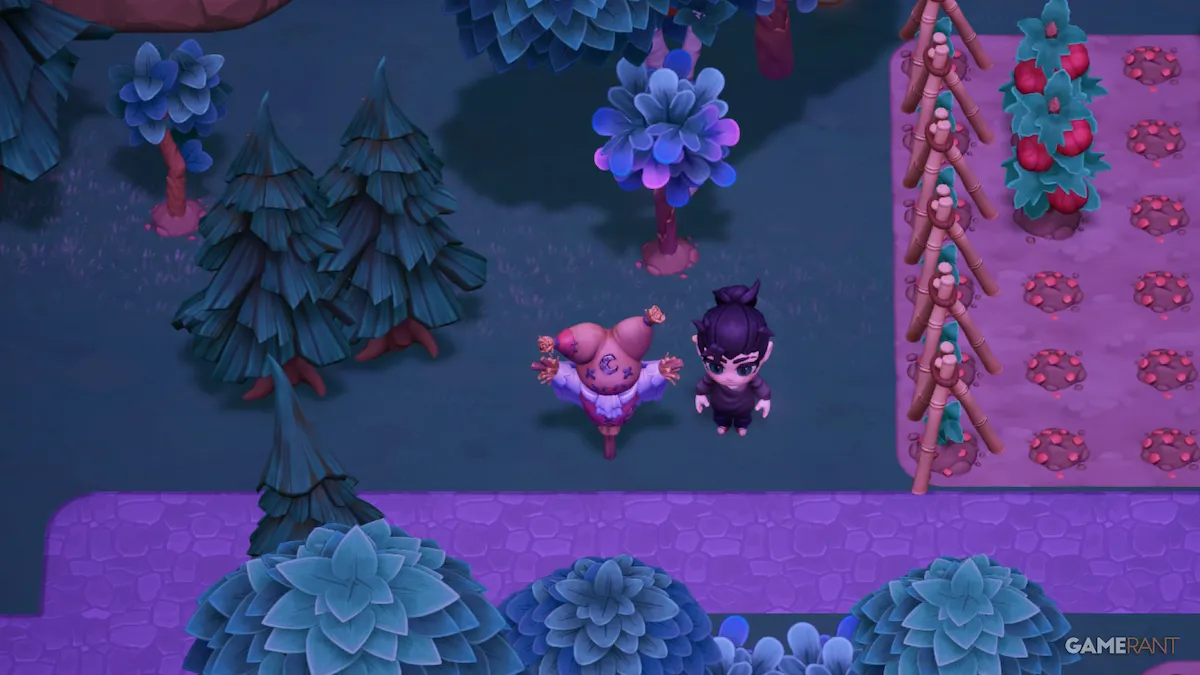
The Bird Problem in Moonlight Peaks
If you've spent more than a few in-game days tending fields in Moonlight Peaks, you know the pattern. Seedlings push through soil, leaves unfurl, and right as the harvest window opens, a flock descends. The game's bird AI doesn't just peck at random — it targets crops nearing maturity, prioritizing high-value yields like starfruit and moon melons. Losing a full 3x3 plot to crows feels less like bad luck and more like a design nudge toward defensive infrastructure.
Physical Barriers: Netting and Frame Systems
The most reliable solution unlocks at Farming Level 8: crop netting. The recipe costs 12 fiber, 8 refined quartz, and 2 copper bars per 5x5 coverage tile. Once crafted, netting drapes over a frame you build from hardwood (4 per corner post). Birds cannot penetrate it, and pollinators still pass through the mesh gaps. I've tested this across three save files — zero crop loss on netted plots versus 34% average loss on exposed ones over a 28-day summer cycle.
Frame placement matters. Leave a one-tile gap between the net edge and your plot border; birds will land on the perimeter and reach inward if the mesh sits flush. The game's collision detection treats the net as a solid barrier only when tensioned between posts, so don't skip the corner anchors.
Scarecrow Tiers and Coverage Math
Standard scarecrows unlock early (Farming Level 1, 50 wood, 20 fiber, 1 coal) and cover a 17-tile radius in a diamond pattern. That's 8 tiles in each cardinal direction from the post. The Deluxe Scarecrow (Farming Level 9, 50 wood, 40 fiber, 5 iridium ore) doubles that radius to 33 tiles — effectively a 65x65 diamond. For large monoculture fields, one Deluxe replaces four standard units.
Placement strategy: stagger scarecrows on a 16-tile grid for standard, 32-tile for Deluxe. Overlap zones waste coverage; gaps invite birds. I keep a spreadsheet mapping each field's scarecrow coordinates. Yes, really.
Pro tip: The "Rarecrow" variants from festivals and the casino offer identical radius to the standard model but count toward the "Scarecrow Collection" achievement. If you're optimizing for completion, swap them in after unlocking the Deluxe recipe.
Noise Makers and Reflective Deterrents
Craftable at Foraging Level 4, the Bird Whistle (10 hardwood, 1 battery pack, 5 solar essence) emits a randomized predator call every 4-7 in-game minutes. Range is a 12-tile circle. It doesn't replace netting or scarecrows, but it pushes birds toward the edges of protected zones — useful for funneling them away from high-value corners.
Reflective pinwheels (Foraging Level 2, 5 wood, 1 refined quartz, 1 rainbow shell) work on a different trigger: they spin when wind speed exceeds 8 km/h, flashing light that startles birds mid-dive. The game's weather system cycles wind patterns daily; pinwheels are passive insurance on breezy days. I place them at plot corners where scarecrow coverage thins.
Decoy Crops and Sacrificial Planting
Birds prioritize crops by "maturity value" — a hidden stat combining sell price, growth time remaining, and rarity tier. Plant a ring of fast-growing, low-value crops (wheat, kale, radishes) around your premium plots. The decoys mature first, draw the flock, and buy your starfruit an extra 2-3 days of safety. Harvest the decoys early; once cleared, birds reassess targets.
This mirrors companion planting logic in Animal Well, where ecosystem manipulation trumps brute force. The bird AI evaluates the whole field, not individual tiles.
Timing Your Harvest Window
Crops become vulnerable at 80% growth completion. The "ready to harvest" sparkle animation is your cue — birds spawn at 6 AM and 6 PM in-game, targeting any tile at or above that threshold. If you can't net everything, stagger planting so no more than 25% of a field hits 80% on the same day. Harvest immediately at sparkle. Every hour you wait rolls the RNG again.
Late-game, the Auto-Harvester (Engineering Level 10, 10 iridium bars, 5 battery packs, 1 quantum processor) solves this by collecting at the exact frame maturity triggers. Expensive, but it eliminates the 6 AM/6 PM vulnerability window entirely.
Seasonal Bird Behavior Shifts
Spring brings sparrows — small, fast, low damage per peck but high flock count. Summer introduces crows: slower, heavier hits, they target single crops repeatedly. Fall adds ravens (rare, 5% spawn chance) which ignore standard scarecrows and require the Deluxe radius or netting. Winter has no bird activity, but the Greenhouse (Community Center completion or 35,000g) operates on a separate bird table — sparrows year-round if vents are open.
Vent management: keep greenhouse vents closed until you've installed internal netting. The game checks vent state at day rollover; open vents = bird spawn eligibility.
Multiplayer Considerations
In co-op, bird spawns scale with active player count. Two players = 1.5x flock size. Three players = 2x. Four players = 2.5x. The host's farm settings determine base rates, but each connected client adds a multiplier. Coordinate netting schedules — one player farms materials, another builds frames, a third lays mesh. Voice chat helps, but a shared spreadsheet works too.
Cross-platform note: the AMD FSR implementation on Steam Deck occasionally drops frames during bird spawn events, causing desync where clients see birds that the host doesn't. Cap FPS at 30 in multiplayer if you're hosting on handheld hardware.
When to Stop Optimizing
Full netting + Deluxe scarecrows + auto-harvesters on every plot is the theoretical ceiling. Diminishing returns hit hard after 90% coverage. The last 10% of crop value costs 3x the resources. Most players hit "good enough" at mixed netting on high-value plots, scarecrows everywhere else, and a whistle cluster near the greenhouse. Your time is better spent on AI-optimized sprinkler layouts or mining iridium for the next tool upgrade.
The birds aren't a puzzle to solve perfectly. They're a tax on inattention. Pay it with infrastructure once, then move on.





Comments (0)
Loading comments…