LATNA Saga: Survival of a Sword King is the strongest Solo Leveling-style hit Japan could realistically line up right now, but only if the anime adaptation finally shows up and handles the slow-burn power fantasy properly.
The pitch is simple: a Korean isekai manhwa with a protagonist who starts weak, hides his real strength, earns his growth through brutal training, and turns every early humiliation into future payoff. That is not a new recipe by itself, but LATNA Saga has the ingredients that made Solo Leveling travel so well: progression, spectacle, a clear underdog-to-overpowered arc, and enough mystery to keep readers checking in.
The short answer is yes, it looks built for the audience that flocked to Sung Jinwoo. The bigger question is whether Studio Pierrot and South Korea’s RDCH can turn that manhwa into an anime event instead of another quietly announced adaptation that never quite lands.
What Studio Pierrot and RDCH actually announced
Studio Pierrot and RDCH announced the LATNA Saga: Survival of a Sword King anime adaptation on Oct. 31, 2024, shortly after the two companies formed a three-year joint production committee in Japan. The project is based on the Korean manhwa Latna Saga: The Survival Sword King, with the story by Lim Kyung-bae and writing by Kwon Soon-kyu.
At the time, the deal was framed as more than a one-off adaptation. Pierrot and RDCH said they wanted to jointly produce and invest in animation aimed at the global market, while also exploring more Japanese manga and Korean webtoon adaptations. That matters because it suggests the studio was not just picking up another fantasy title, but trying to build a pipeline for stories with international reach.
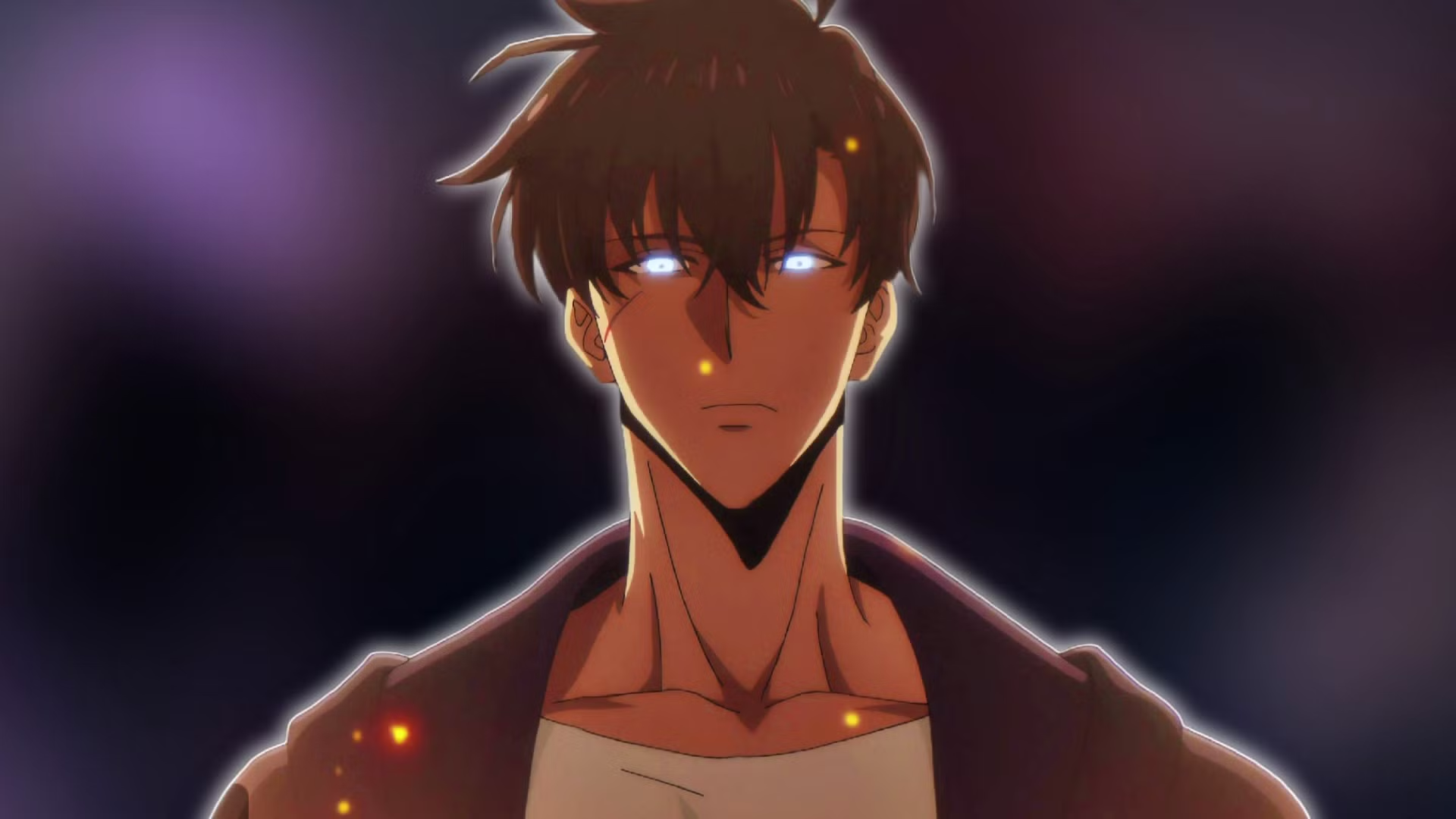
More than a year later, the adaptation still does not have a key visual, trailer, release date, or clear production update. That silence is the main reason LATNA Saga is more of a promising candidate than a confirmed hit. Anime announcements can look exciting in January, then disappear into the same black hole as half the seasonal slate.
Why this timing makes sense for anime right now
The anime market is hungry for global fantasy IP, and Korean manhwa has become one of the cleanest sources. Solo Leveling proved that a non-manga origin story could become an anime phenomenon without needing decades of magazine history behind it. LATNA Saga arrives at the exact moment studios are looking for the next big fantasy property that can travel across Japan, Korea, and streaming audiences.
Studio Pierrot also has a useful reason to chase this lane. The studio is riding the success of Bleach: Thousand-Year Blood War, preparing for Black Clover Season 2, and working into the Boruto: Two Blue Vortex anime. That is a strong fantasy slate on paper, but it also means Pierrot needs another franchise that can carry the same “endless training, huge reveals, big battles” energy.
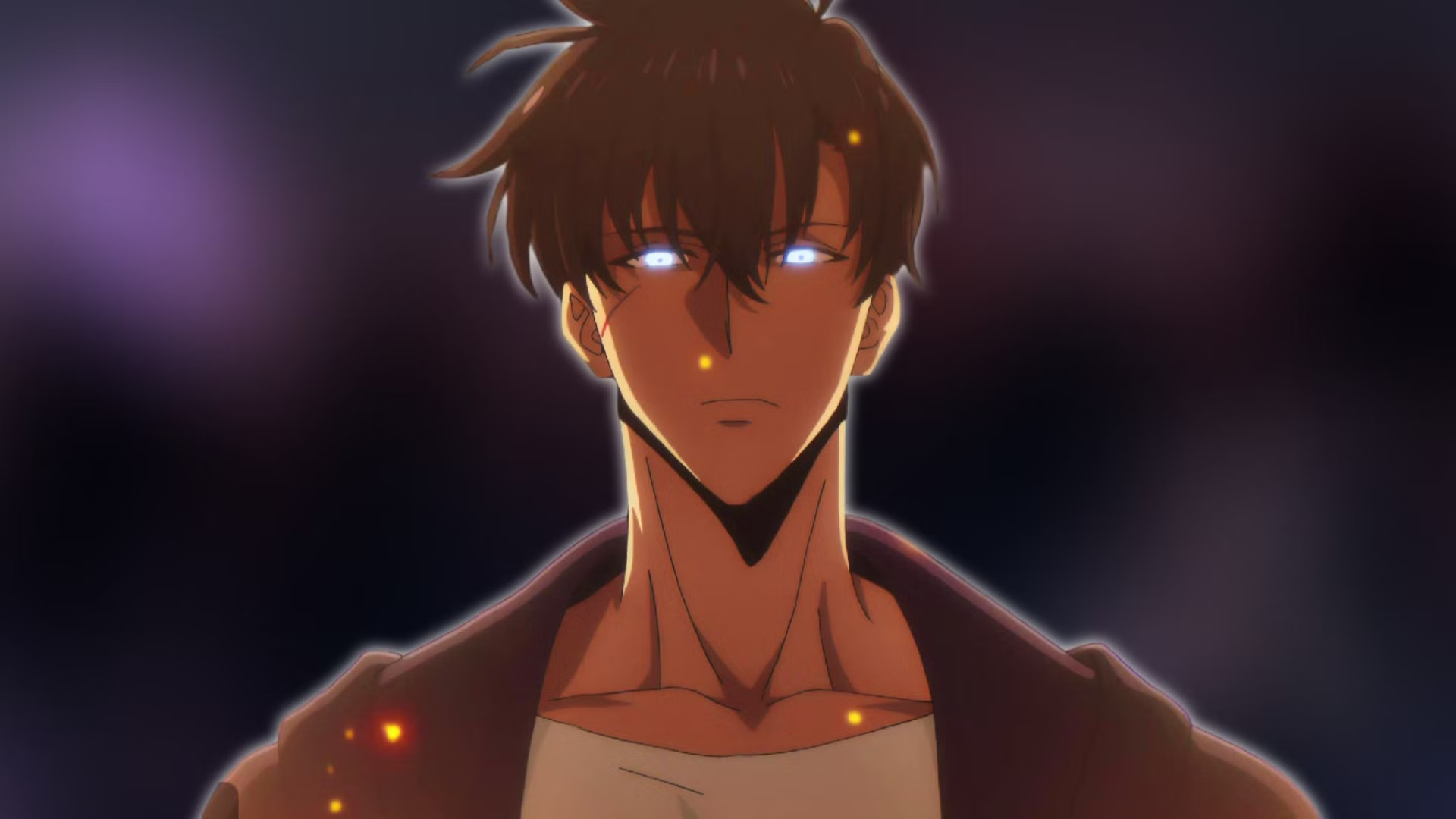
LATNA Saga gives it that without feeling like a direct copy. The manhwa is very much an isekai manhwa, but its best hook is not just “weak guy gets strong.” It is the delay between Ryu Hanbin’s actual power and the moment everyone else realizes how far out of their depth they are.
What LATNA Saga gives Solo Leveling fans
The biggest appeal is that Ryu Hanbin feels like a protagonist built for the same kind of viewer satisfaction that made Sung Jinwoo click with millions of fans. Jinwoo works because his power fantasy is clean, visual, and brutally efficient. Ryu Hanbin works differently, but he hits a similar nerve: the audience knows he is dangerous before the story world catches up.
That hidden-power structure is especially useful for an anime adaptation. It creates natural cliffhangers, character reactions, and payoff moments. If Ryu solves a fight while pretending to be much weaker than he is, the scene does not just show strength. It turns strength into drama.
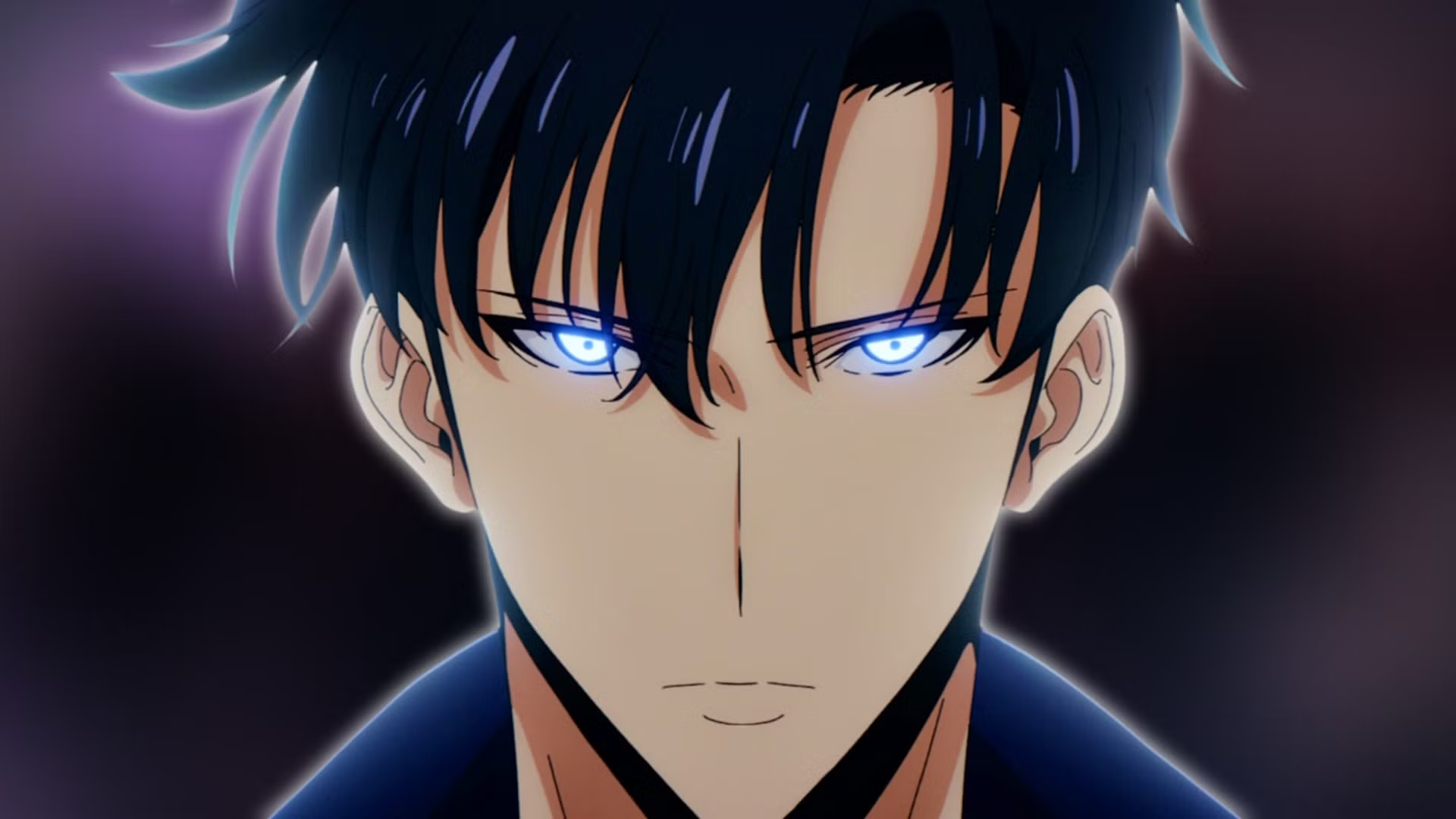
The supporting cast matters too. LATNA Saga has built its reputation on characters who feel like they belong in the world rather than standing around to admire the main character. For a manhwa built around a powerful protagonist, that is the difference between a fantasy that feels crowded and one that feels lived in.
There is also room for the kind of world-building that Solo Leveling only touched lightly. The manhwa spends time on larger mysteries, dangerous enemies, and conflicts that threaten the fate of the world. That gives an anime adaptation a chance to be bigger than a streak of flashy battles, which is exactly what the genre needs.
The bigger market shift is Korean manhwa entering anime
LATNA Saga is part of a broader move, not an isolated experiment. Korean manhwa adaptations such as Omniscient Reader’s Viewpoint and Tomb Raider King have already shown that readers outside Japan are willing to follow stories from webtoon platforms and bring them into anime. The audience is there, and the studios are starting to treat that as a strategy.
This also gives studios a way out of genre fatigue. The isekai boom made a lot of stories feel interchangeable: reincarnated hero, new world, overpowered shortcut, familiar quest. LATNA Saga still uses those tools, but it leans harder into progression, hidden strength, and long-term escalation. That is not a complete escape from the formula, but it is a more specific version of it.
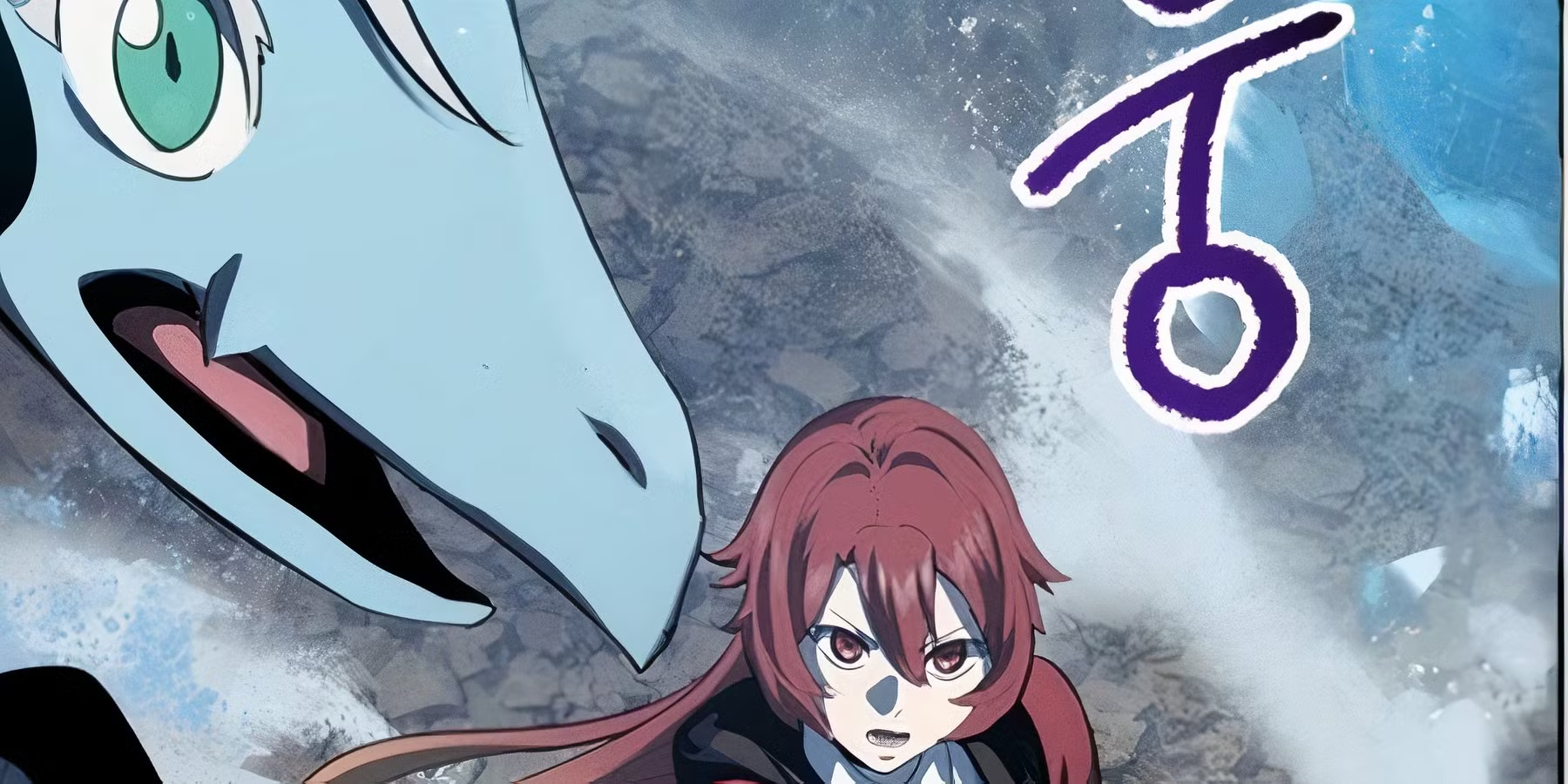
For fans, this could mean more anime that feel shaped by webtoon pacing: fast reveals, dramatic power spikes, and chapters designed to end on big emotional hooks. For studios, it means competition for the next global fantasy franchise is no longer limited to traditional manga or light novels. The next big thing may already have a scroll-based origin.
The catch is that the anime has gone quiet
That silence is the real problem. LATNA Saga has the right ingredients, but ingredients do not make a meal. Without a trailer, staff reveal, release window, or production confirmation, the adaptation is still more promise than proof.
There is also a Studio Pierrot-specific risk. The studio has a deep fantasy pedigree, but its recent track record is uneven. Bleach: Thousand-Year Blood War succeeded because it leaned into spectacle, mystery, and modern pacing. Black Clover has fans who love its relentless energy and others who found its repetition draining. LATNA Saga needs the first kind of discipline and avoids the second kind of sprawl.
If the anime rushes the manhwa’s early arcs, it could lose the one thing that makes Ryu Hanbin’s journey work: the buildup. Hidden power only stays exciting when the audience understands what is being held back. Cut too much, and the story becomes another guy getting strong and smashing the next monster before anyone has time to care.
What to watch next
The next update matters more than the announcement did. A key visual would prove the project is still alive. A trailer would show whether the adaptation understands the manhwa’s tone. A release window would tell fans whether this is a serious franchise push or just another production committee photo opportunity.
For now, LATNA Saga: Survival of a Sword King is the closest thing on paper to a successor for Solo Leveling-style anime hype. It has the power fantasy, the manhwa momentum, and a protagonist built for slow-burn payoff. The only thing missing is the one thing anime fans cannot watch in advance: proof that it actually works on screen.


Comments (0)
Loading comments…