

Yes, the four John Wick films feel like a hidden fantasy world because they turn modern crime into myth: gold coins become enchanted currency, hotels become castles, assassins become oathbound knights, and Keanu Reeves’ John Wick becomes a walking legend with a gun.
That is why the series is worth revisiting now, especially with all four films streaming on HBO Max before the run leaves on July 31. The practical hook is simple, but the better watch is slower: treat the movies less like a revenge action franchise and more like a secret civilization quietly operating beneath airports, subway stations, hotel lobbies, and boardrooms.
Fantasy has always loved the idea that another world is hiding under our own. Narnia is behind a wardrobe, Hogwarts is hidden inside the ordinary world, and Spirited Away turns a bathhouse into a portal for gods, spirits, and hungry demons. John Wick works the same way, just with tailored suits instead of cloaks.
Keanu Reeves has spent much of his career orbiting these hidden realities. Constantine finds supernatural rot under Los Angeles. The Matrix reveals that reality itself is a cage. But John Wick is the most complete version of that idea, because the hidden world is not a single secret program or one monster-filled doorway. It is everywhere.
The Continental Is a Castle, the High Table Is a Court

Here’s the thing: the John Wick movies are easy to underestimate because they look like action films, not fantasy epics. There are no dragons, no spells, and no creatures waiting in the forest. The magic has simply been translated into ritual, money, architecture, and manners.
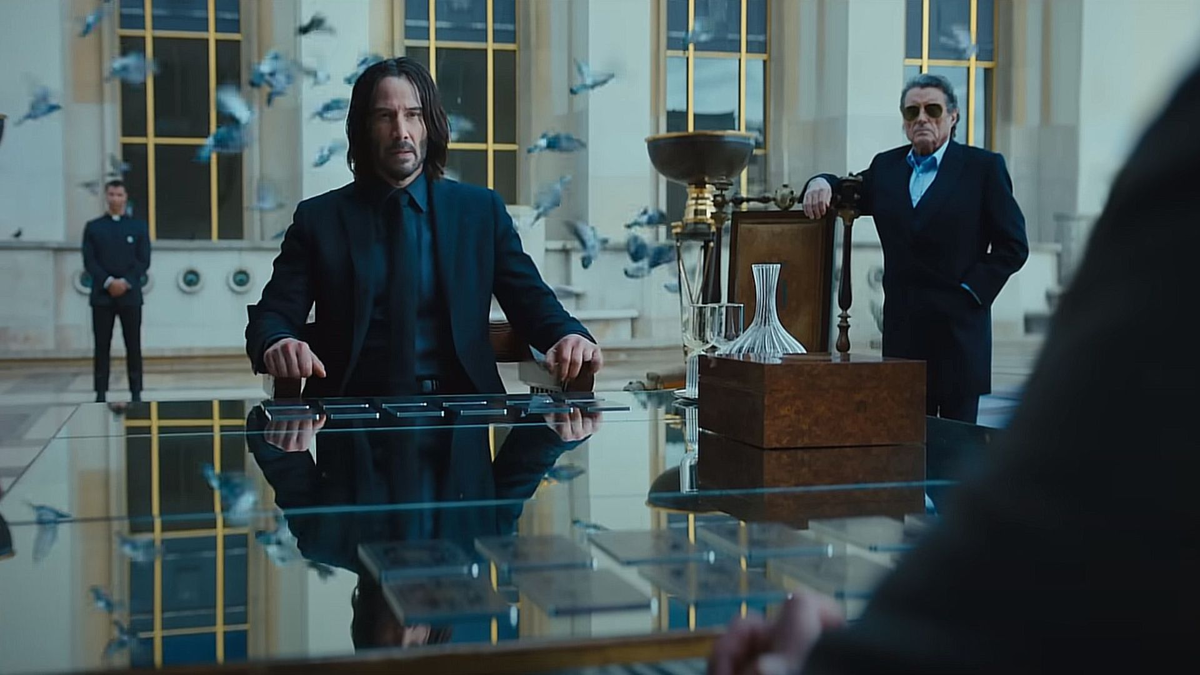
The gold coins are not just a cool prop or a stylish payment system. In the logic of the series, they are closer to enchanted currency, proof that the assassin economy is real and ancient. The oath markers work the same way: they are not paperwork, they are curses with signatures.
The Continental hotel is the biggest clue. It is not just where people sleep before a job. It is neutral ground, a sanctuary, a place with laws so absolute that breaking them carries consequences worse than death. If you strip away the marble floors and velvet ropes, that is a castle. If you strip away the business cards and coin purses, it is also a kingdom.
Above it all sits the High Table, which feels less like organized crime and more like an immortal royal court. The members do not need to explain why their authority matters. The world already bends around them. That is classic fantasy grammar: the throne exists before the hero arrives.
What makes the series work is that director Chad Stahelski rarely stops to explain all of this. He trusts the audience to absorb the rules through behavior. A concierge knows the code. A tailor knows the rules. A doctor knows who is allowed to heal and who is being hunted. These are not background characters; they are the merchants, priests, and heralds of a world that has been running for centuries.
The Franchise Gets Bigger Without Explaining Itself

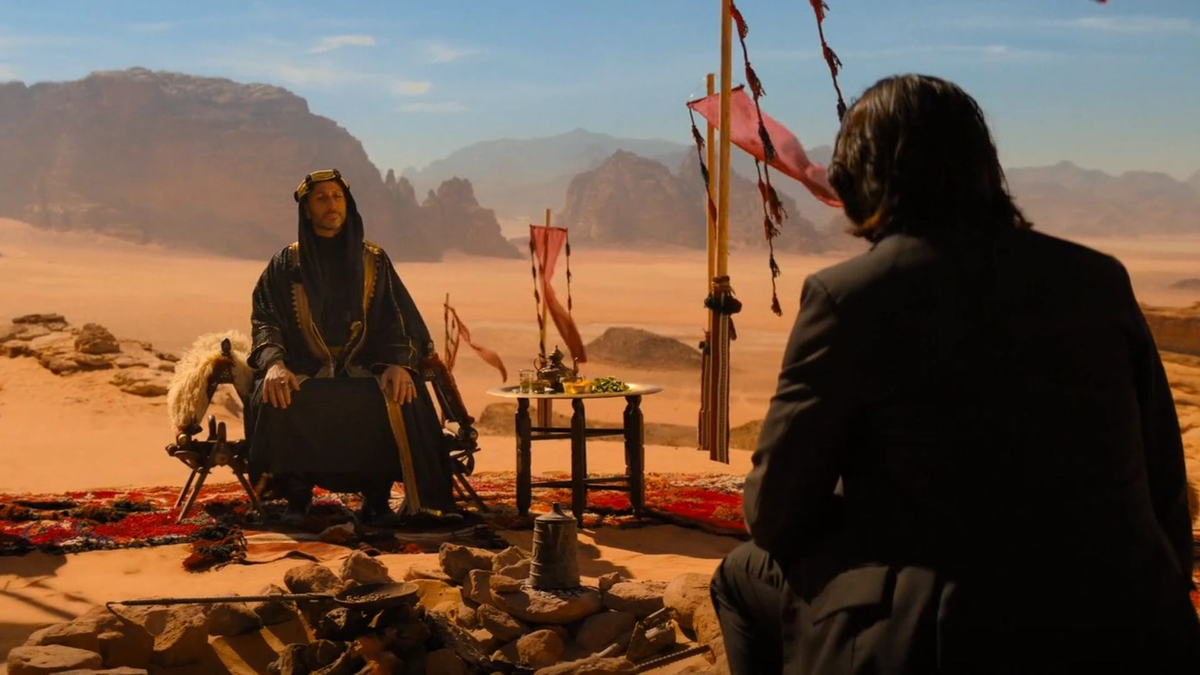
Each sequel widens the map without breaking the illusion. John Wick: Chapter 2 makes Rome feel like the political heart of the assassin empire. John Wick: Chapter 3 – Parabellum sends John into the Moroccan desert in search of someone who feels less like a mob boss and more like a mythic ruler. John Wick: Chapter 4 spreads the world across Osaka, Berlin, Paris, and New York, with each city having its own guardians, customs, and politics.
That geographic expansion is what separates the franchise from a lot of action sequels. The films are not just sending John to new places to fight bigger fights. They are revealing that the hidden society has depth, territory, and history. Every city feels like a kingdom connected by the same ancient laws.
This is also why the movies feel larger than John himself. A good fantasy world should feel like it existed before the story began, and John Wick succeeds because the audience never gets the full rulebook. The rules appear when they matter: sanctuary rules, coin rules, debt rules, punishment rules. The world feels older because it refuses to become fully teachable.
The action becomes sharper because of that structure. John is not only dodging bullets. He is crossing invisible borders, breaking sacred laws,



Comments (0)
Loading comments…