
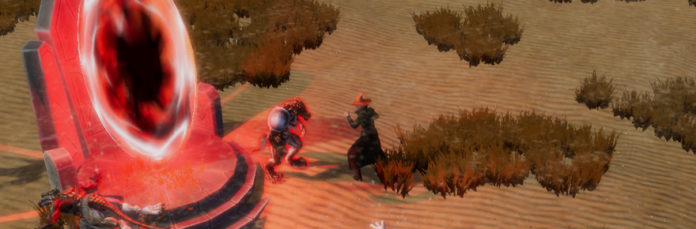
Legends of Aria Eternal has opened playtesting to all previous backers, and eligible supporters will get a free copy when the rebooted sandbox MMORPG launches.
The rebooted version of Legends of Aria, led by original developer Derek “Supreem” Brinkmann, began letting prior supporters into the playtest last week. That group includes Steam buyers, original Kickstarter backers, and holders of the Citizen’s Pass subscription.
To enter the test, previous backers need to use the email tied to their Citadel account and follow the provided next steps. It is a familiar indie MMO promise, but here it matters: the people funding the reboot are getting first access, and they are not being asked to pay again for the finished game.
What changed in Legends of Aria Eternal
The playtest is not just a login exercise. Brinkmann has brought back all 24 pre-profession abilities as boss-loot skill books, made artifacts craftable, added merchant selling to the economy, and introduced weekly in-game taxes and IDOC to player housing.
There are also multiple new guidance quests and clearer separation between PvP and PvE zones. For a sandbox game, that kind of structure is not boring housekeeping; it is the difference between a pile of systems and a place where players can actually understand what to do next.
That is the first sign that LOA Eternal is trying to solve the problems that usually kill sandbox MMOs: unclear progression, weak economic l
Why this reboot needed a playable test now
Legends of Aria has spent years in a strange middle ground: old enough to carry nostalgia, new enough to still be rebuilding. A reboot like this cannot live on fan memory alone, especially in a market where sandbox MMOs now compete with polished survival games, live-service projects, and cheap convenience.
The timing makes sense. Brinkmann has been quietly iterating on the reboot, and the playtest gives him a controlled group to pressure-test the biggest promises before the full launch. It is also a trust move. The game’s most important audience is not random hype; it is the people who backed the original and stayed around long enough to care what happens next.
Who benefits most? The backers, obviously. They get early access, a free final copy, and a chance to shape the game before release. Brinkmann also benefits because he gets feedback from players who have a personal stake in LOA Eternal succeeding.
Who is left out? New players. There is no public beta yet, and the playtest is tied to prior ownership. That keeps the community small, but it also means LOA Eternal still has to prove it can grow beyond the people already invested in its history.
The community is small, but it is moving
Activity inside the playtest does not sound like a full MMO launch. Discord channels are present, but they are not constantly buzzing. Even so, players are helping each other, discussing discoveries like a player character jail, and offering suggestions directly to Brinkmann.
That last part is important. In a smaller sandbox MMO, feedback is not buried in corporate update pipelines. If the lead developer is actively responding to playtesters, the test can become a real design tool rather than a marketing window dressing.
The early signs are modest, not explosive. But for LOA Eternal, modest is still better than silence. A sandbox needs bodies in the world, players testing the economy, and enough confusion to reveal what needs fixing.
The big question is durability
The playtest opens the door, but it does not answer the hardest part: can Legends of Aria Eternal keep players engaged after the novelty wears off? The return of old abilities and the addition of merchant selling show that the game is rebuilding around player activity. Housing taxes and clearer PvP/PvE boundaries suggest Brinkmann is trying to create reasons for players to participate instead of just existing in the same space.
That is the core challenge for legacy MMOs. The old community may be willing to help, but the game still has to offer enough structure, content, and momentum to keep that help from turning into one more abandoned sandbox.
What comes next for LOA Eternal
The next things to watch are the full launch date, whether the test expands beyond previous backers, and how much of the current playtest content survives into release. The economy, housing taxes, guidance quests, and zone separation will matter most once players stop poking the systems and start using them.
For now, this is a focused backer test, not a public relaunch. But for the people who backed Legends of Aria all along, it is the clearest sign yet that LOA Eternal is moving from reboot promise to playable reality.





Comments (0)
Loading comments…