
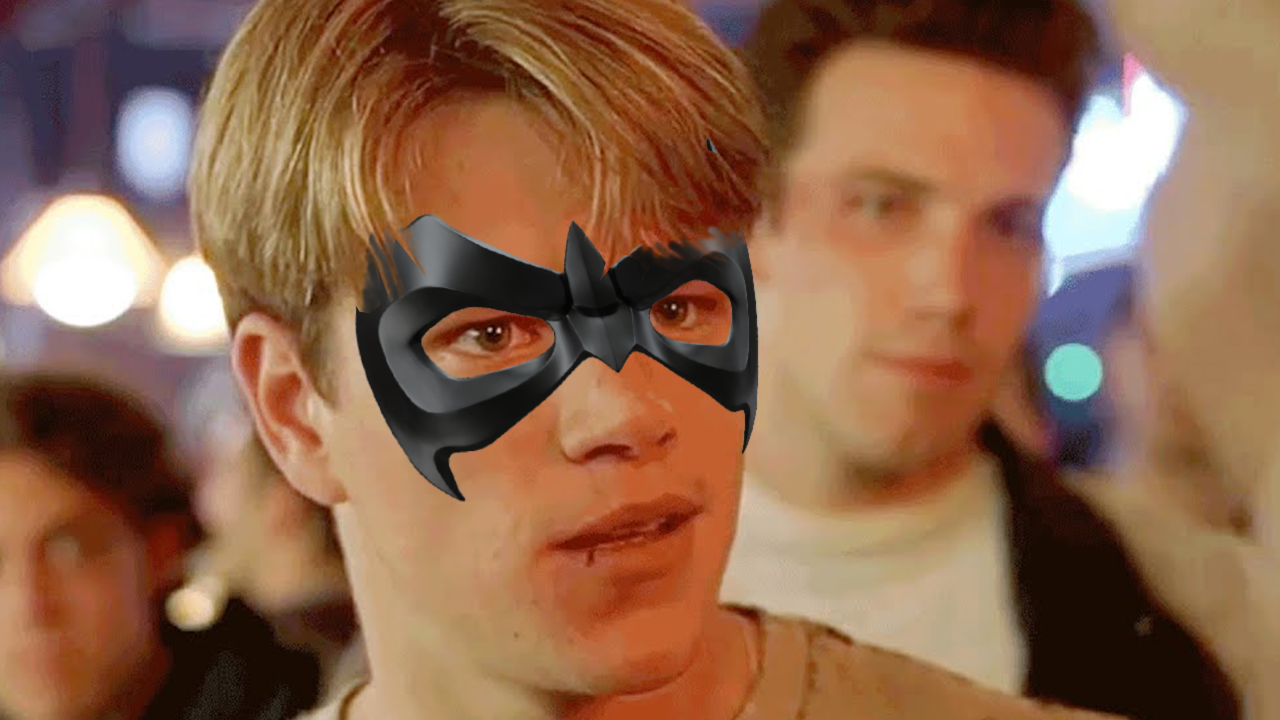
Matt Damon once read lines for Robin in a room so locked down he wasn't even given a Batman scene. No sides, no context — just a generic snippet from some other script, the kind of secrecy that makes you wonder if the casting director was protecting a national security asset rather than a superhero sidekick. The story comes from a recent Happy Sad Confused appearance, where Damon traced the outline of a career that almost included a cape.
The first audition landed during Tim Burton's tenure. Robin never materialized in either Batman (1989) or Batman Returns, so Damon's tape joined the pile of what-ifs. Then came 1993. Joel Schumacher was prepping his neon-drenched Batman & Robin, George Clooney was suiting up, and Damon found himself among the final three for the Boy Wonder. He screen-tested. He flew in. He even called his agent and offered to work for a quarter of what Chris O'Donnell was asking.
Here's the kicker: Damon knew O'Donnell. They were friends. He watched him on set later, already wearing the suit. "They always intended to give it to Chris," Damon said. The studio just wanted leverage. A negotiating tactic disguised as a casting call.
The Leverage Game

It's a familiar story in Hollywood, and honestly, not far off from how some publishers treat developer contracts. Fly in the alternatives, create the illusion of choice, secure the preferred candidate at a discount. Damon laughed about it on the podcast — "I was like, 'I want the job!'" — but the mechanics are worth noting. The industry runs on leverage, whether you're negotiating a Robin suit or a AI upscaling middleware license.
Damon didn't get the part. He got something better: a decades-long collaboration with Christopher Nolan, stretching from Interstellar to Oppenheimer to this year's The Odyssey. IGN called it a "must-watch cinematic experience," which feels like the kind of quote you'd see on a Amazon product page for a 4K steelbook.
Near-Misses and the Roles That Shape Us

Superhero casting lore is full of these sliding-door moments. Tom Cruise as Iron Man. Jake Gyllenhaal as Spider-Man. Damon as Robin. Each one reshapes the texture of a franchise in ways we can only simulate. In gaming, we see it with voice actors — Troy Baker almost didn't take Joel in The Last of Us; Jennifer Hale wasn't the first pick for Commander Shepard. The alternate timelines are a genre unto themselves.
What makes Damon's story land differently is the honesty. He didn't frame it as a tragedy. He named the studio tactic, acknowledged his friend got the gig, and moved on. That clarity — the ability to see the machine for what it is — might be why Nolan keeps calling.
The Nolan Pipeline
Speaking of Nolan: his ensemble casts read like a masterclass in trust. Christian Bale, Michael Caine, Cillian Murphy, Damon himself — actors who understand the assignment because they've seen the machinery up close. Damon's Robin audition was a masterclass in rejection. He learned how studios operate, how leverage works, how to keep showing up.
That's the throughline. Not the cape he didn't wear, but the career he built instead. The Odyssey hits theaters this year. No green tights required.
"I remember calling up and I was, like, 'I'll work for a quarter of what that dude's working for.' I was like, 'I want the job!'" — Matt Damon
If you're curious what a Damon-led Robin might have looked like, fire up an Android emulator and dig into the Batman & Robin tie-in games from '97. The pixel art doesn't care about contract disputes. It just renders the suit.
Damon's fine. Nolan's fine. O'Donnell got paid. The only real loser? The universe where we got to see Matt Damon say "Holy rusted metal, Batman!" with a straight face. Some timelines are just better left unrendered.



Comments (0)
Loading comments…