
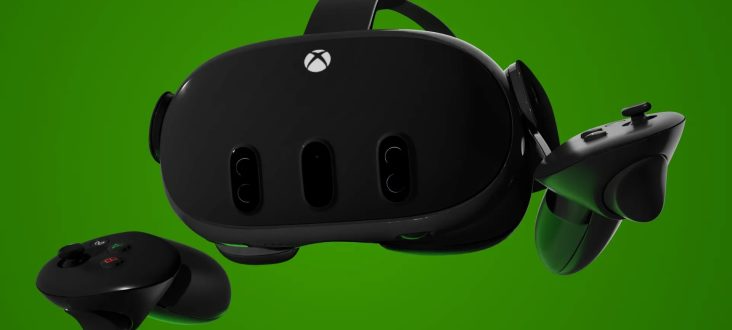
If you own a Meta Quest headset and have been staring at your Horizon+ subscription wondering if you're really getting your money's worth, Microsoft has just thrown a free Game Pass into the equation. Starting now, Meta Horizon+ members get access to Microsoft's Game Pass Starter Edition at no extra cost. That's the cheaper, pared-back version of Game Pass that Microsoft launched a couple of months ago as a bundle-friendly option.
Before this, the Starter Edition was only a free add-on for Discord Nitro subscribers. Now it's spreading to Meta's VR ecosystem, which makes a certain kind of sense if you squint. Meta Horizon+ is basically PlayStation Plus for the Quest platform—you pay a monthly fee and get a handful of free VR games to claim each month. Adding Game Pass to that mix makes the subscription feel a bit more substantial, even if the implementation is a little weird.
So what do you actually get?

Here's the catch, and it's a doozy: you can't install any of these Game Pass games directly onto your Quest headset. The Starter Edition is strictly for cloud streaming via Xbox Cloud Gaming, and it comes with a 10-hour monthly time cap. That's enough for a weekend binge of Vampire Survivors or a few sessions of Among Us, but you're not going to sink 60 hours into Fallout 4 without bumping into that limit.
If you want to actually install the games natively, you'll need a PC or an Xbox console. That makes the whole "free Game Pass on your VR headset" thing feel a bit like getting a free pizza that you can only smell through the window. You can play it, but only through a streaming connection that's inherently limited.

What's in the Starter Edition?

Game Pass Starter Edition includes access to around 50 titles. That's a solid library, even if it's a fraction of what the full Game Pass subscription offers. The lineup includes heavy hitters like Fallout 4, Fallout 76, Grounded, Deep Rock Galactic, Among Us, DOOM Eternal, and Vampire Survivors. It's not the full buffet, but it's a respectable selection of games that cover most genres.
For context, the standard Game Pass subscription gets you access to hundreds of titles, and the PC-specific version includes day-one access to new releases. Console players need to spring for Game Pass Ultimate to get that day-one benefit. The Starter Edition is clearly positioned as the entry-level tier—good enough to get you hooked, but limited enough to make you want to upgrade.
Why is Microsoft doing this?
Microsoft has been aggressively bundling Game Pass Starter Edition with any subscription service that will take it. First Discord Nitro, now Meta Horizon+. The strategy is pretty transparent: get Game Pass in front of as many eyeballs as possible, even if those eyeballs are currently inside a VR headset. It's a classic freemium funnel—give people a taste, and hope they upgrade to the full subscription.
The move also makes sense from a cross-platform perspective. Microsoft has been pushing Xbox Cloud Gaming as a way to play Xbox games on any screen, and VR headsets are just another screen with a fancy strap. The Quest's Android-based operating system already supports the Xbox Cloud Gaming app, so the technical lift here was minimal. It's basically flipping a switch on an existing partnership.
The bigger picture
This is part of a broader trend where subscription services are starting to bundle with each other. We've seen it with Netflix and mobile carriers, with Spotify and Hulu, and now with Game Pass and VR platforms. The economics of standalone subscriptions are getting tougher, so companies are looking for symbiotic relationships where both parties benefit from shared user bases.
For Meta, this makes Horizon+ a more attractive proposition. The VR market is still niche, and Meta has been struggling to convince people that a monthly subscription for VR games is worth it. Adding Game Pass to the mix gives Horizon+ a tangible value-add that extends beyond the VR ecosystem itself. It's a way of saying, "Hey, even if you're not playing VR this month, you're still getting something for your money."
For Microsoft, it's another distribution channel for Game Pass. The company has been clear that it wants Game Pass on every screen, and VR headsets are just another screen. The 10-hour time cap on the Starter Edition is a deliberate friction point—it's enough to get you invested in a game, but not enough to let you finish it without upgrading to a full subscription.
What's next
We'll likely see more of these cross-subscription bundles as the market matures. Game Pass Starter Edition is clearly designed to be a loss leader—a cheap entry point that can be tacked onto other services without much overhead. Don't be surprised if it shows up as a perk for other subscription platforms in the coming months. It's a small move, but it's another step toward a world where your subscription services are all tangled up with each other like a bag of charging cables.



Comments (0)
Loading comments…