
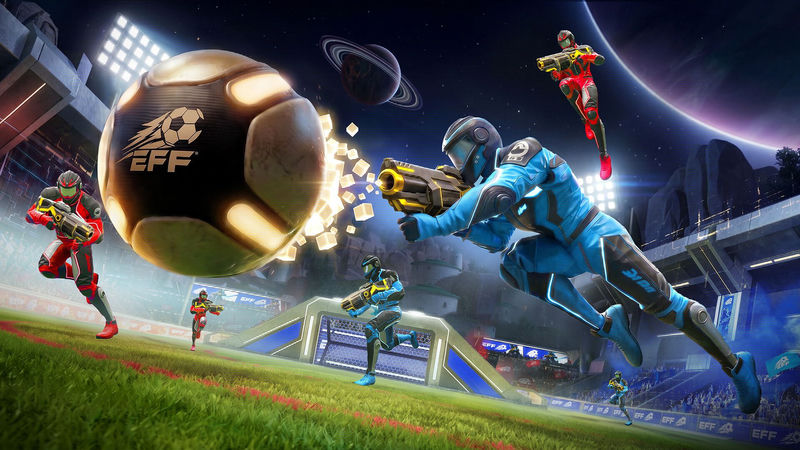
MindsEye has multiplayer and a grenade football mode now, which means the tiny remaining community finally has a reason to open the launcher beyond nostalgia and a few suspiciously empty lobbies. What changed? MindsEye now includes multiplayer support and a grenade football mode.
The update does not sound like a full re-release, and there is no huge campaign, mode roster, or major platform push attached to it. That is fine. Sometimes the most important thing a game can add is not another skin, but a reason to play with someone else.
The Update Adds Multiplayer and Grenade Football
MindsEye has spent years in that awkward Steam Early Access shadow where a game can be playable, strange, and still not quite living. Its appeal has always leaned into oddball shooter energy: twitchy combat, weird mechanics, and a little bit of “why does this work?” momentum.
Adding multiplayer is not a minor quality-of-life decision. A multiplayer update changes the fundamental question from “what can this game do?” to “can it find enough people to do it with?”
The grenade football mode matters for the same reason, just in a looser way. It takes a weapon that normally exists to punish someone for standing in the open and asks players to use it like a ball.
That is a simple design trick, but it changes the emotional texture of the match. A grenade is no longer just a threat. It becomes a delivery system, a mistake, or a miracle, depending on whether it lands in the right goal.
The update is less about scale than proof of life.
Why a Grenade Football Mode Fits a Small Shooter
The industry has gotten much better at treating small communities as valuable. For a niche game, the goal is not always to become the biggest thing in the room. It is to become the thing people remember when they want a strange, replayable, friend-group-friendly experience.
Grenade football is built for that exact use case: bad calls, cheap goals, and enough randomness that one round can become a story. It gives players something they can understand immediately without needing a lore lecture or a ranked system.
This is also a response to the crowded shooter market. Arena shooters have to compete with polished veterans, live-service juggernauts, and free-to-play shooters that can spend a fortune on matchmaking, events, and content.
A small studio cannot outspend those companies, but it can out-weird them. That is where a mode like grenade football becomes strategically useful, even if it looks silly at first glance.
Who Benefits From the Update
The obvious beneficiaries are the players who are already there. They get a way to play with others, a new reason to experiment, and a mode that can turn a few friends into a temporary audience for each other.
For creators and community members, novelty modes are also valuable because they create moments that do not require a perfect meta or a massive lore drop. A weird grenade score can do more for visibility than another balance patch nobody clicks on.
The less obvious loser is expectation management. A small update can create excitement, but it can also raise the bar for matchmaking, server stability, and ongoing support.
If the game cannot find enough players, even a clever mode may become a lobby full of people saying “anyone online?” in the least helpful way possible.
Small Games Are Becoming Social Rituals
This is part of a bigger pattern in games: small titles survive by becoming social rituals rather than endless content machines. A mode like grenade football gives the game a repeatable hook, something players can explain in one sentence and test for five minutes.
That is different from building a giant world. It is closer to maintaining a corner of a bar where everyone knows the weird rules and nobody wants to leave.
MindsEye's update also shows how much a niche shooter can borrow from party-game logic. The best party modes do not ask everyone to be equally skilled. They let chaos, timing, and embarrassment create the fun.
That matters for MindsEye because a tiny player base does not need perfect balance to be entertaining. It needs enough variety to keep the same five people from seeing every trick twice.
Population Is the Update Nobody Can Patch Away
The obvious concern is population. Multiplayer games are strange products because their value rises as more people join, but small games often struggle to reach the point where joining feels worthwhile.
Grenade football can be hilarious with a full lobby and dull with three people waiting for a fourth to stop apologizing. The mode may be clever, but it still depends on people showing up.
There is also a map-design question. Football modes need spaces that support throws, routes, and recovery, not just a flat arena with a grenade and a scoreboard.
If the maps are built for normal shooter combat, the mode may feel like a gimmick that the maps were not invited to understand. Server stability and matchmaking speed will matter more than the mode name.
A weird mode is easy to talk about. A weird mode that actually connects quickly is what people play.
The Next Thing to Watch Is Whether MindsEye Keeps the Novelty Alive
The next thing to watch is whether MindsEye treats this as a one-off novelty or the start of a small roadmap. Players will want to know if more multiplayer playlists are coming, whether grenade football gets map support, and how the developer plans to keep sessions from stalling out.
The most useful next step would be clear patch notes, not just a feature announcement: server details, mode rules, balance changes, and any plans for future content.
For now, MindsEye's update is a reminder that the future of niche games is not always bigger worlds or bigger budgets. Sometimes it is a grenade bouncing down the wrong lane and six players deciding, for no good reason, that they need one more round.


Comments (0)
Loading comments…