
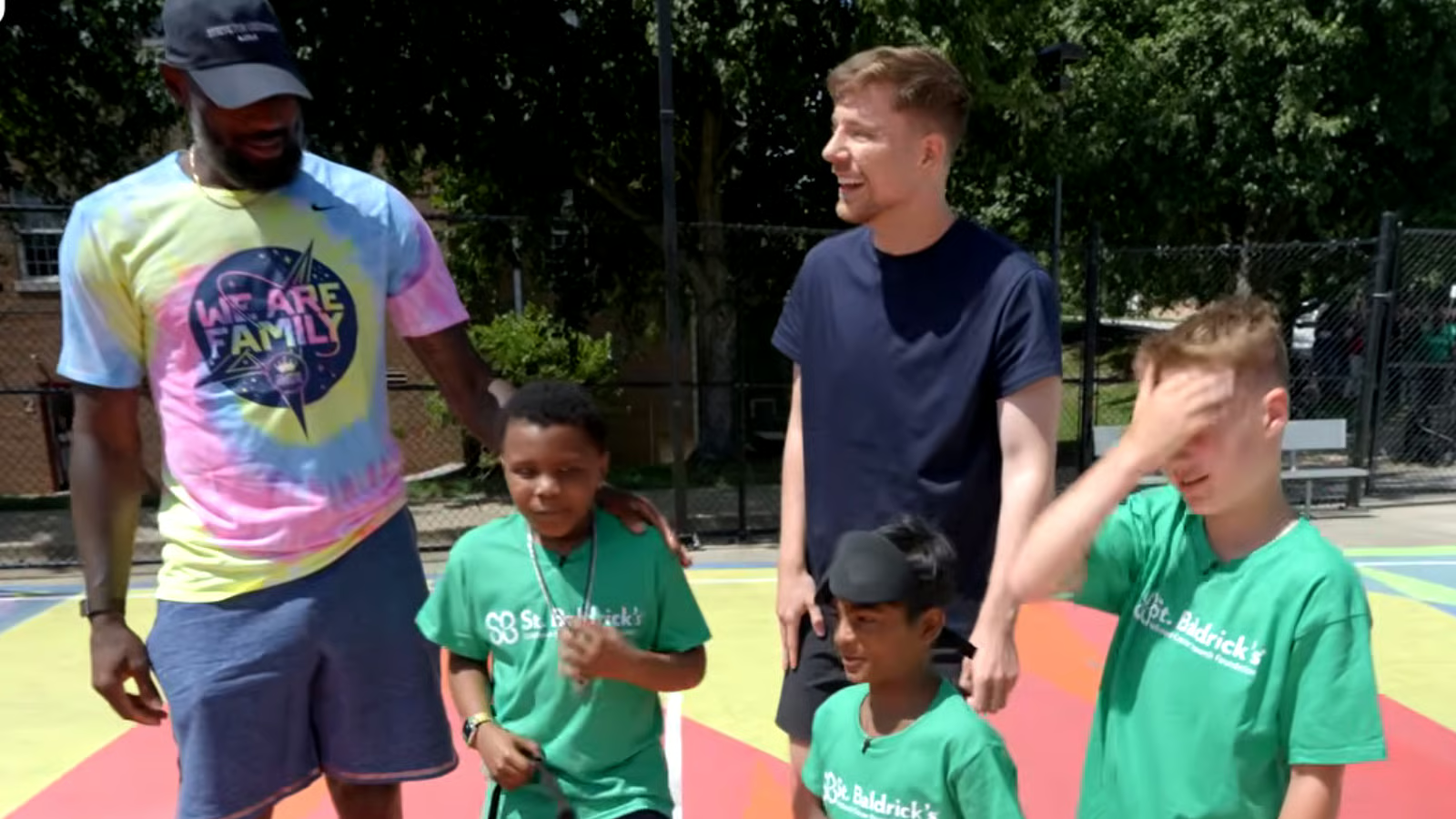
MrBeast, whose real name is Jimmy Donaldson, teamed with LeBron James, Dwayne “The Rock” Johnson and a rotating cast of creators to grant 100 wishes for children affected by cancer, then added a $6.5 million push for pediatric cancer research.
The July 25 upload, “We Helped 100 Kids Fight Cancer,” is built like a MrBeast stunt at full volume: celebrity entrances, huge gifts, emotional reveals, and just enough structure to make the chaos feel intentional. The video brings together LeBron James, The Rock, IShowSpeed, KSI, Stray Kids, LaurenZSide, Sam and Colby, Dr. Mike, Christina Tosi and others for a wish list that ranges from ski trips and Disney World vacations to gaming setups, shopping sprees, F1 experiences and meetups with favorite creators.
What makes the project stand out is not only the number of wishes. It is the way the campaign turns access into entertainment. Kids do not just receive money or gifts; they meet sports icons, enter theme parks, visit resorts, sign a real SpaceX Falcon 9 rocket and get moments that feel custom-built for the internet age.
The wish list worked like a YouTube premiere
The video opens with Mac, a child who recently completed cancer treatment, receiving his wish to go skiing. From there, the format expands into a parade of emotional set pieces: 30 children go to Disney World, another child swims with a whale shark, young space fans sign a Falcon 9 rocket before launch, and several kids receive experiences tied to their personal interests.
That personalization matters. A gaming setup is different from a whale shark encounter, and a live-action Moana premiere is different from a basketball session with LeBron James. MrBeast’s formula depends on making each wish feel specific, even when the overall production is massive.
LeBron James adds a particularly strong layer because his appearance connects entertainment, sports, philanthropy and local community work. After playing h According to the St. Baldrick’s Foundation, six of its “Honored Kids” and other pediatric cancer survivors were part of the surprise.
“I thought I was in a dream.”
That quote says as much about the video’s design as any production note could. MrBeast’s best moments often feel less like scripted charity and more like a carefully arranged wish machine, where the audience watches the exact second someone realizes they are seeing a person they admire in front of them.
Why the celebrity stack matters
The celebrity lineup is not random decoration. It shows how far creator-driven charity has moved from solo giveaways into a shared ecosystem of sports, music, K-pop, film, streaming and brand partnerships. LeBron brings sports prestige. The Rock brings movie-star reach. KSI, IShowSpeed, Sam and Colby and Stray Kids bring younger internet-native audiences.
Disney and SpaceX make the campaign feel bigger than a typical influencer event. Those partnerships provide access that most creators cannot manufacture on their own: resort trips, movie premieres, rockets, attractions and experiences tied to major cultural brands. MrBeast’s advantage is not just money; it is his ability to turn those doors open for everyone watching.
The $6.5 million bet on pediatric cancer research
The final wish gives the project its larger purpose. One anonymous participant asked MrBeast to use the opportunity to help other cancer patients, which led to a blood drive in Greenville, North Carolina that reportedly collected enough donations to potentially help save as many as 1,000 lives.
MrBeast then announced a combined $6.5 million commitment with biotechnology company Amgen and the St. Baldrick’s Foundation to help launch a new Stand Up To Cancer Pediatric Cancer Dream Team. St. Baldrick’s has separately committed to raising $1.5 million for the wider campaign. The proposed Dream Team would bring scientists, doctors and research institutions together to accelerate new pediatric cancer treatments.
That research angle is important because it moves the story beyond spectacle. Amgen, a major biotechnology company with a long oncology portfolio, gives the effort a medical and institutional layer. The Dream Team is not just another viral donation; it is an attempt to convert attention into research infrastructure.
What changes for families, fans and charities
For the children involved, the impact is personal and immediate: a ski trip, a Disney vacation, a meeting with a hero, a gaming setup, a trip to Hawaii or a moment with someone they already admired. For families, those experiences can become lasting anchors during or after treatment, even if they cannot solve the broader medical challenge.
For charities, the campaign shows how powerful creator distribution can be. St. Baldrick’s and Stand Up To Cancer are not just receiving donations; they are reaching audiences that may not normally follow pediatric cancer research, clinical trials or treatment funding gaps.
For fans, the most visible lesson is that audience scale can now move celebrities and brands in real time. LeBron James, The Rock, Disney, SpaceX, Amgen and St. Baldrick’s all appear in the same emotional space as a YouTube upload. That blending of philanthropy, entertainment and commerce is one of the defining features of modern digital culture.
The risk is that wonder can outrun follow-through
There is a legitimate concern here: wish fulfillment is not the same as curing cancer. Pediatric cancer remains a complex, underfunded area of medicine, and a viral campaign does not automatically translate into treatments, trials or long-term patient support.
There is also the question of how much of each child’s private struggle becomes public content. The emotional reveals are the point of the video, but they can also blur the line between celebration and exposure. The best charitable creator content has to protect the people at its center, not just deliver the biggest reaction shot.
And then there is the basic challenge of credibility. Viewers will want to know whether the Dream Team actually produces grants, partnerships, clinical pathways or measurable progress. The $6.5 million commitment is meaningful, but the real proof will come after the applause fades.
Charity is becoming creator-native
This campaign fits a broader trend: philanthropy is increasingly being delivered through the formats people already watch. The old model was the gala, the telethon, the benefit concert or the nonprofit ad campaign. The new model is the premiere-worthy upload, the celebrity ambush, the branded partnership and the emotional payoff designed to travel.
That does not make it shallow. It simply reflects how attention actually moves now. If a cause needs awareness, volunteers, donors, researchers or policy support, the platform has to meet people where they are. MrBeast’s version is loud, expensive and deeply theatrical, but the reach is part of the mechanism.
MrBeast’s own success depends on making generosity legible at a glance: the number of kids, the size of the gift, the shock value, the visible reaction. Here, those tools are aimed at pediatric cancer, which is a more serious subject than a giant chocolate bar or a private island, but the delivery system is recognizably the same.
The real test comes after the clip ends
The next things to watch are practical: whether the Dream Team secures funding, whether St. Baldrick’s raises its $1.5 million commitment, whether Amgen’s involvement produces research partnerships, and whether the campaign leads to sustained pediatric cancer support beyond one massive video.
For now, the project succeeds as a rare example of influencer-scale charity that is also specific about its goals. The wishes are the emotional hook, the celebrity appearances are the spectacle, and the research donation is the piece that could outlive the upload.
As MrBeast put it, “No kid should have to deal with cancer.” The stunt makes that idea visible to millions of viewers. Whether it helps stop it is the question everyone will be watching next.


Comments (0)
Loading comments…