

Some of the best first-person shooters ever made are now completely unplayable in their original forms. Overwatch, Evolve, and Tribes Ascend each represented the peak of their respective subgenres — and each one is certifiably dead. Server closures, sequel replacements, and vanished player bases have turned these once-vibrant multiplayer worlds into ghost towns you can only visit through private servers or old footage.
Overwatch: The Hero Shooter That Got Replaced by a Sequel
Blizzard's Overwatch didn't just win Game of the Year in 2016 — it reshaped the entire hero shooter landscape. With a vibrant cast of characters, a color palette that popped, and gameplay that balanced chaos with teamwork, it drew tens of millions of players. Support mains found their home. DPS players got their dopamine. Even the tanks had their moments. For years, it felt untouchable.
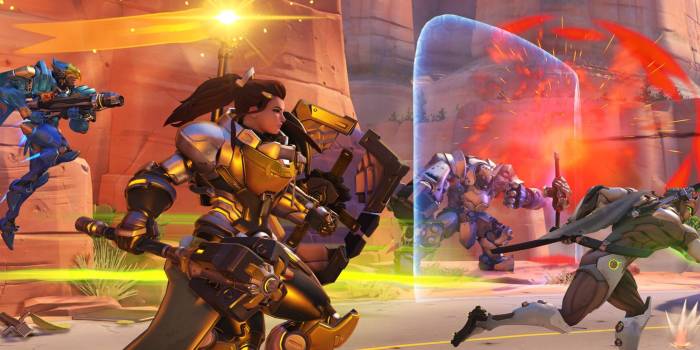
Then came Overwatch 2. Blizzard framed it as a sequel, but it functionally replaced the original game entirely. The core shift from 6v6 to 5v5 fundamentally altered the flow of matches. Abilities were reworked, roles were rebalanced, and the original game was delisted. Anyone who preferred the original's pace — the slower, more methodical team fights, the double-tank compositions — was simply out of luck. Activision Blizzard moved on, and the original Overwatch became a closed chapter. Private servers exist, but they're a pale echo of what the game was at its peak.
Evolve: Asymmetric Brilliance That Couldn't Outrun Its Mistakes
Turtle Rock Studios' Evolve took the asymmetric multiplayer concept and ran with it. Four hunters versus one giant monster — each monster had a radically different playstyle, from the speed-focused Kraken to the brute-force Goliath. The cat-and-mouse dynamic was genuinely thrilling, and at launch, it looked like the next big thing in competitive PvP.
But the game stumbled hard. A controversial DLC model — selling individual hunters and monsters rather than bundling them — left a bad taste in players' mouths. Combine that with a steep learning curve and a natural player base drop-off, and Evolve went from promising to dead remarkably fast. The official servers eventually shut down. The only way to play today is through private server workarounds, which require technical know-how and a dedicated group. The market simply didn't reward its ambition.
Tribes Ascend: Speed Like Nothing Else, Abandoned by Its Maker
Hi-Rez Studios' Tribes Ascend was a different beast entirely. A fast-paced arena shooter built around jetpacks, skiing, and physics-defying movement, it delivered a speed that no other FPS could match. The skill ceiling was absurdly high — a good player could cross a map in seconds while chain-ing shots at 300 kph. It was beautiful, chaotic, and deeply rewarding.
And then Hi-Rez moved on. The developer shifted focus to SMITE, which became a massive hit, and Tribes Ascend was left in maintenance mode. Updates stopped. The community dwindled. The game was never officially shut down — it's still technically playable — but the official servers are empty, matchmaking is broken, and the game is effectively a zombie. The spiritual successor, Midair, tried to revive the genre but never caught on. What remains is a memory of speed that no modern shooter has replicated.
The Live Service Trap: Great Games That Couldn't Last
These three games illustrate a brutal reality of modern multiplayer gaming: being great isn't enough. Overwatch was killed by its own sequel. Evolve was killed by its business model. Tribes Ascend was killed by its developer moving on. In the live service era, a game's lifespan is determined by corporate priorities, player retention metrics, and quarterly earnings — not by how fun it is.
Consider the hardware arms race too. When Tribes Ascend launched, AMD and NVIDIA were fighting over a very different PC gaming landscape. Today's GPUs and CPUs could run these games at flawless framerates on ultra settings, but that doesn't matter when the servers are gone and the matchmaking queues never pop. Modern handhelds like the ASUS ROG Ally could theoretically run Tribes Ascend or Evolve beautifully — if there were anyone to play with.
The Activision approach to game preservation — where older titles are delisted to make way for newer iterations — has become an industry norm, and it's a worrying one. Overwatch is far from the only casualty; it's just the most prominent.
The Preservation Problem: Can We Save These Games?
There's a legitimate argument that these games had their time. Evolve's model was broken. Overwatch 2 needed to evolve the formula. Tribes Ascend was a niche title that never had mainstream legs. But the total loss — the inability to ever experience these games as they were, with full servers and thriving communities — is a genuine cultural loss. Video game preservation is still a legal and technical minefield, and multiplayer titles are the hardest to preserve because they depend on server infrastructure that vanishes when the publisher pulls the plug.
Some communities have fought back. Private servers for Evolve exist, and dedicated fans still host matches. Tribes Ascend has community-run events. But these are stopgaps, not solutions. The original Overwatch is simply gone for the vast majority of players, locked behind a sequel that plays differently.
What Comes Next for Dead FPS Classics
The most likely future is that these games remain dead — or at best, get spiritual successors that capture the feel but not the exact experience. Turtle Rock Studios has moved on to other projects. Hi-Rez shows no interest in revisiting Tribes. And Blizzard has made it clear that the original Overwatch is not coming back. Industry consolidation, live service fatigue, and the sheer cost of maintaining older multiplayer titles make revivals unlikely.
If you never played these games at their peak, you missed something special. Overwatch at its prime was a cultural phenomenon. Evolve was a bold experiment that mostly worked. Tribes Ascend offered speed that no other shooter has matched. They're gone now — and the industry is worse off for it.





Comments (0)
Loading comments…