
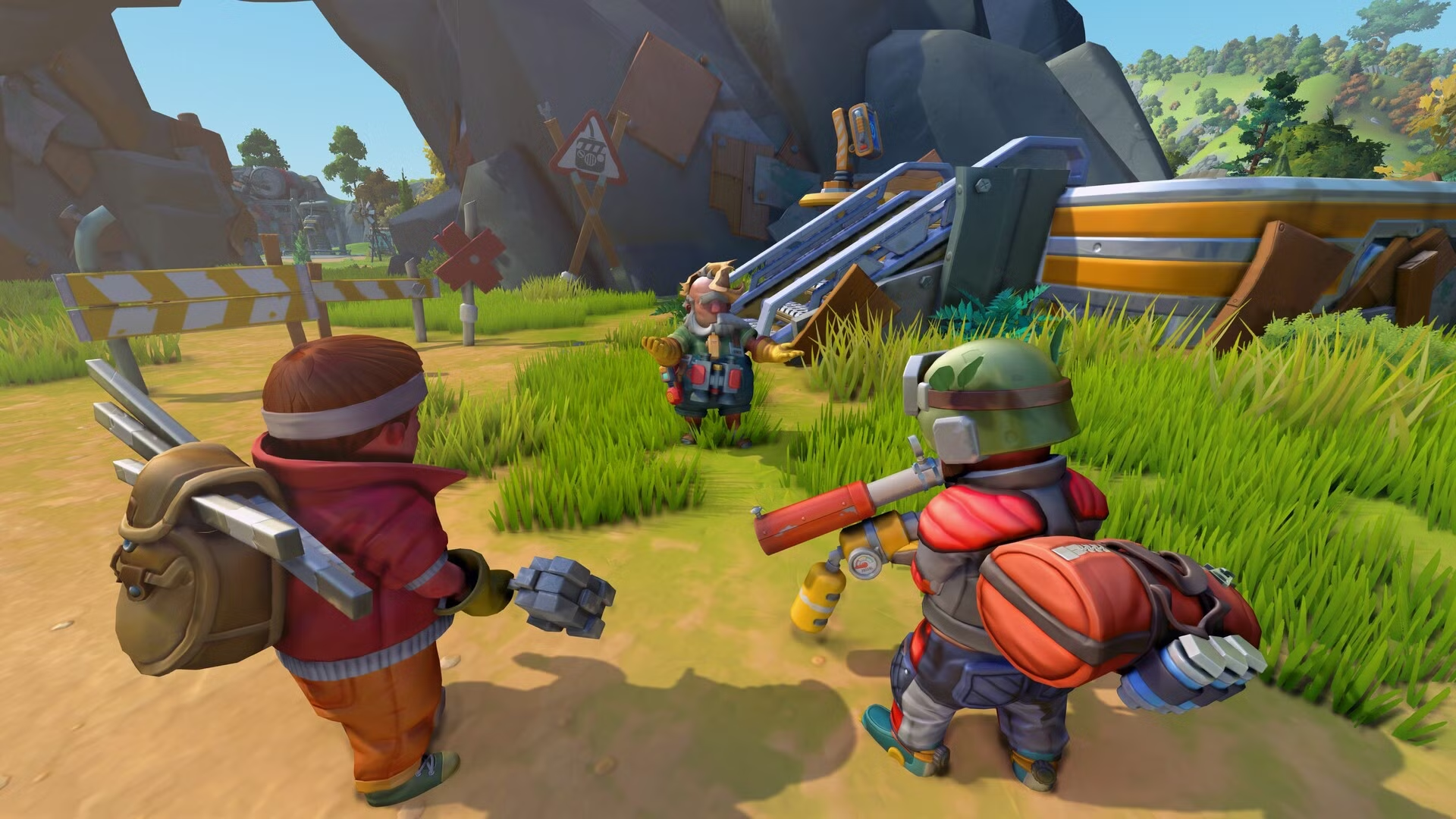
Scrap Mechanic’s 1.0 launch on Steam is already a hit: the co-op survival sandbox released July 24, 2026, with 90% positive reviews from more than 46,000 ratings and a 35,169-player peak in its first day.
The numbers are strong enough to make this feel like more than a routine Early Access graduation. Scrap Mechanic launched on PC for $28.99 from developer Axolot Games, and Steam’s response has been immediate: players are buying in, building ridiculous machines, fighting robots, and spreading the word fast.
That matters because this was never a quick release. Scrap Mechanic entered Steam Early Access in January 2016, giving Axolot Games a long runway to tune its physics-based building, mining, farming, combat, and co-op systems. A decade in development is expensive in patience as much as money, and the 1.0 launch is the moment that long effort has to prove itself commercially.
A decade in Early Access made the full release feel earned
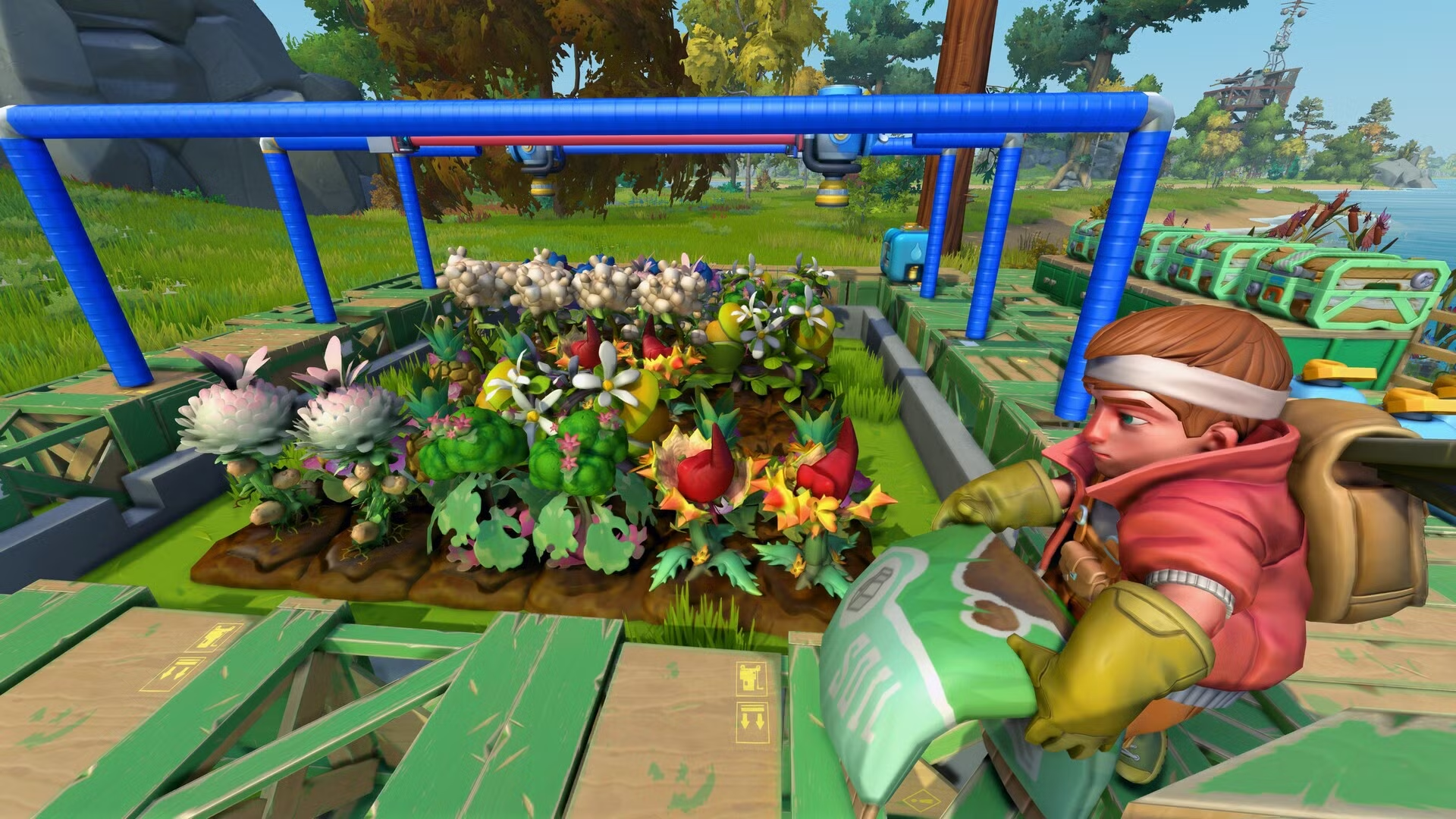
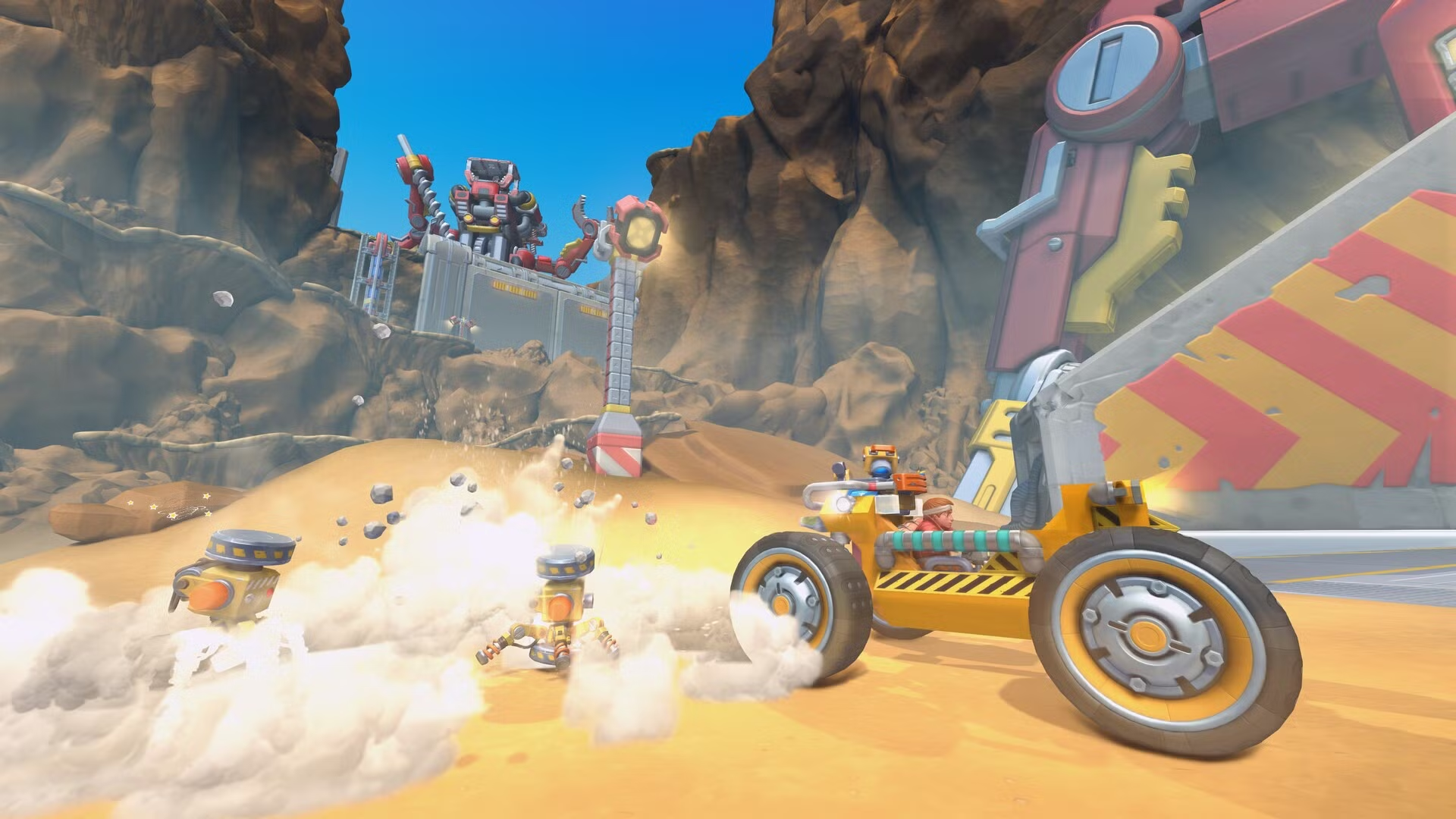
Scrap Mechanic is built around a simple but durable fantasy: explore a procedurally generated world, dig up scrap, grow more materials, then turn those resources into vehicles, bases, machines, or weapons. Its core loop is familiar in the broadest survival-sandbox sense, but the physics layer gives it a distinct personality. A base is not just a structure; it is a machine that can be repaired, rebuilt, weaponized, or turned into a giant walking disaster.
The game offers Creative, Challenge, and Survival modes, which helps it serve different kinds of players. Creative mode leans into construction and experimentation, Challenge mode adds structured goals, and Survival mode is the one that has driven the biggest recent interest. That is where Scrap Mechanic asks players to keep gathering resources while dealing with increasingly dangerous haywire robots.
Here’s the thing: the best co-op games often give friends a shared problem that is complicated enough to require planning, but dumb enough to end in chaos. Scrap Mechanic works because a vehicle can be practical, silly, overbuilt, or barely held together, and the game still treats it as a valid solution. That is the kind of emergent nonsense Steam players seem to be rewarding right now.
The 1.0 update turns Scrap Mechanic into a more complete survival loop
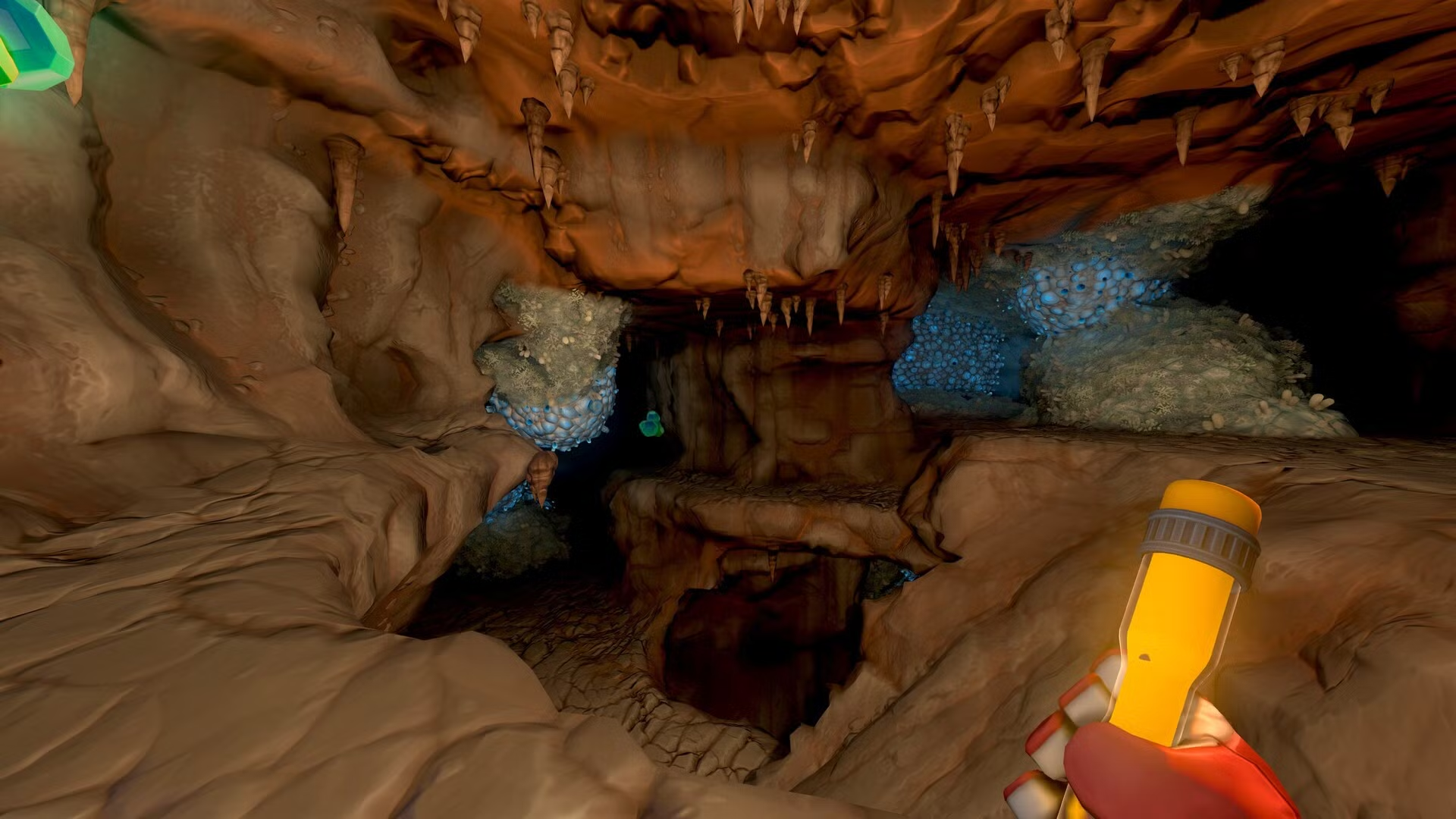
The 1.0 update is the biggest version of the game yet. Survival mode now has a full story from start to finish, the world has expanded with new locations and growlabs, and terrain generation has been reworked. Axolot Games also added new building parts, new enemies, Steam achievements, and a visual overhaul with dynamic lighting and weather.
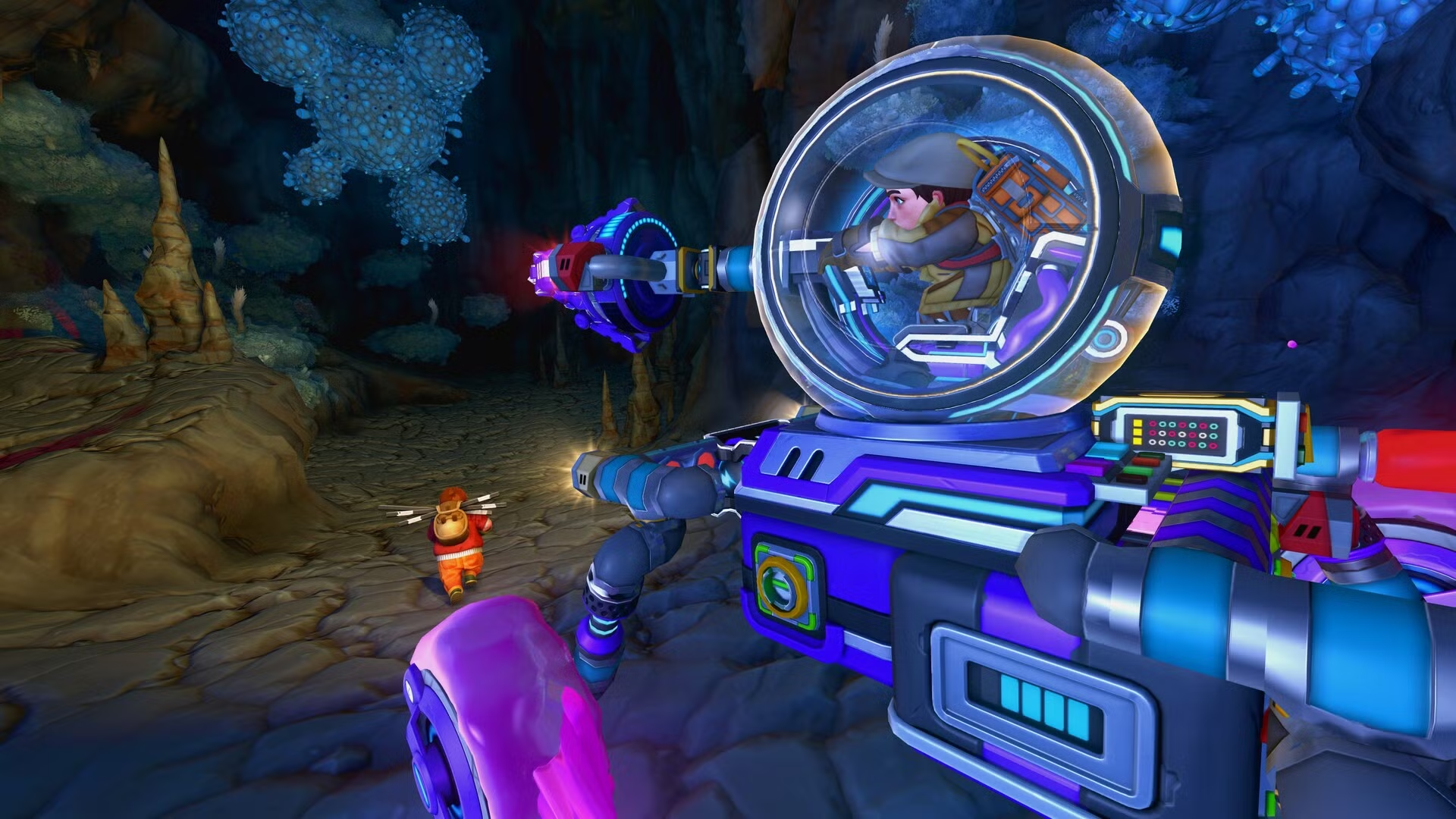
The standout addition is probably the Claygun, a weapon that lets players shape terrain directly. That gives the game a more hands-on way to bend the world around the player, which is especially useful in a sandbox where roads, ramps, ramps, and entire bases can all become improvised solutions. It also makes Scrap Mechanic feel less like a survival game with construction tools and more like a construction game with survival consequences.
Steam players are responding to the full release
Across more than 46,000 Steam reviews, 90% are positive, and the recent review score is even stronger at 91%. That is the kind of split that suggests the 1.0 launch is not just pulling in old Early Access goodwill; new players are also finding the game solid enough to recommend.
The player count backs that up. Scrap Mechanic’s 35,169-player peak is the second-highest recorded peak for the game, trailing only the 46,643 peak from May 2020, when Survival Mode first introduced. Still, it is a major lift for a sandbox that has spent much of its life with quieter player counts.
The timing also makes sense. The survival-sandbox market is crowded, but it is not empty. Players keep returning to games that offer open-ended building, online co-op, and a reason to gather with friends beyond a scripted campaign. Scrap Mechanic lands with enough polish and enough personality to compete in that space without needing a huge brand behind it.
Axolot Games is betting on one strong identity
For Axolot Games, this is a high-stakes release because Scrap Mechanic is its first and only game. A successful 1.0 launch can turn a long-running indie project into a real commercial identity, giving the studio more leverage for future development, larger marketing, and a stronger player base to build on.
That is also why the game’s comparisons to mining-heavy survival games and automation sandboxes are useful, even if they are imperfect. Scrap Mechanic has a bit of the underground resource grind familiar to mining co-op games, and its vehicle-building and automation systems echo factory-style sandbox design. The difference is that Scrap Mechanic is less interested in perfect industrial efficiency than in letting players build whatever would-be genius machine they can drag through the dirt.
The real test is keeping the launch momentum alive
The obvious concern is that a strong review score does not guarantee long-term retention. Steam reviews often reflect both current quality and the affection players have built during Early Access, so the 90% score is encouraging but not a finished verdict. If the game can keep new players after launch week, it will have earned its place beyond the release spike.
There are also design risks built into the concept. Physics-based building is fun until a bridge collapses, a robot tears through a base, or a vehicle becomes too clever for its own good. Survival mode may also alienate some sandbox purists who prefer open-ended play over a story-driven structure, even if that story gives new players a clearer path into the game.
What comes next is simple to track but important to watch: Steam review trends, player count, patch cadence, and whether Axolot Games doubles down on new content or focuses on stabilizing the 1.0 experience. If the studio can keep the game polished while adding meaningful survival content, Scrap Mechanic has a real chance to reclaim its May 2020 peak.
For players, the takeaway is straightforward: Scrap Mechanic’s 1.0 launch makes the game look ready for a wider audience, especially co-op groups that enjoy building, mining, farming, and improvising under pressure. For Axolot Games, the launch proves that a decade-long Early Access project can still arrive with real momentum. The next question is whether Steam’s curiosity turns into a durable community.





Comments (0)
Loading comments…