

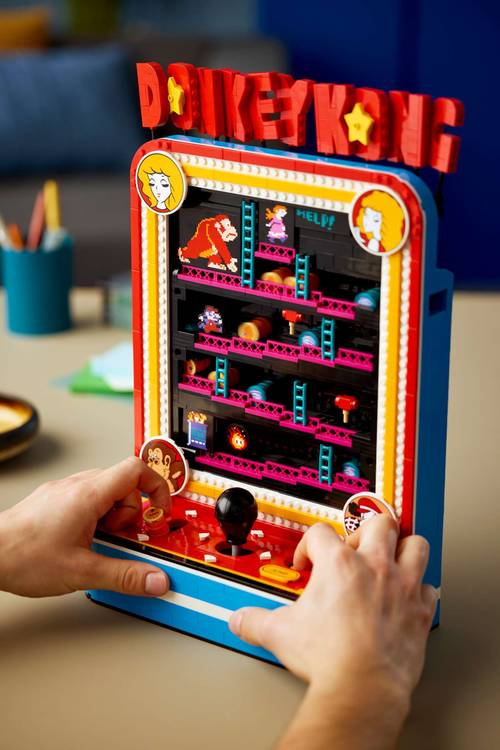
Lego and Nintendo have officially unveiled the Donkey Kong Arcade set, a 1,367-piece build that recreates the original 1981 arcade game's first level with working levers, a joystick, and rolling barrels. It's available for pre-order now for $199.99 and launches August 1. The set is more than a static diorama—it's a playable toy that actually simulates the iconic barrel-jumping action.
A Nostalgic Arcade Cabinet You Can Build
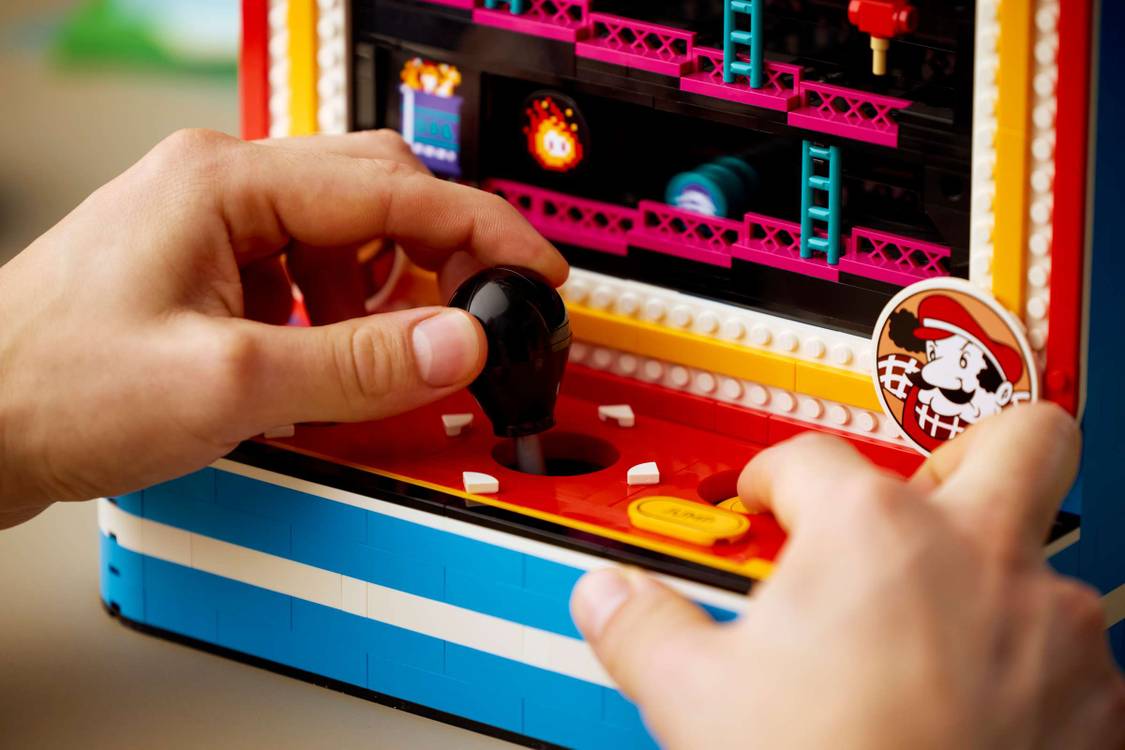
The Lego Super Mario Donkey Kong Arcade (72051) measures 15.5 inches high, 10.5 inches wide, and 5.5 inches deep when assembled. It includes 21 rolling barrels, plus three minifigures: Jumpman (Mario), Donkey Kong, and Lady (Pauline). The interactive features are the headline: a lever pushes barrels down the ramp, a joystick moves Jumpman left and right, and a button makes him jump. It's a surprisingly faithful translation of the original game's mechanics into brick form.
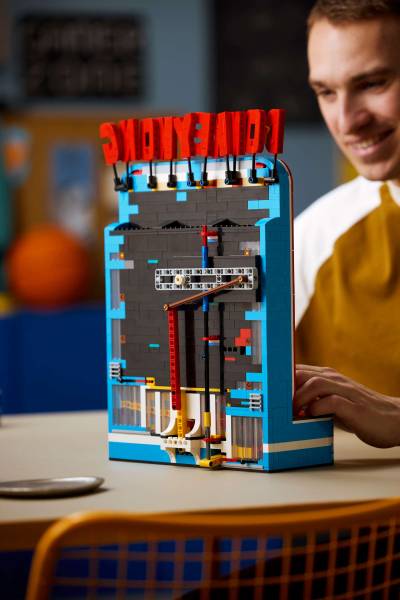
To promote the set, Lego and Nintendo tapped Steve Wiebe, the legendary Donkey Kong player whose high-score battle was chronicled in the documentary The King of Kong. The teaser video is deliberately haunting, framing the set as a gateway to an obsessive pursuit. It's a smart nod to the game's competitive history, but the set itself is designed for casual play, not score chasing.
Why This Set Exists Now
This isn't the first Lego Nintendo collaboration, but it's one of the most conceptually ambitious. Since 2020, the two companies have released a range of sets: the Nintendo Entertainment System with a hidden TV, a giant Bowser figure, Animal Crossing builds, Legend of Zelda dioramas, and the wildly popular Lego Game Boy. The Donkey Kong Arcade set continues the trend of turning classic Nintendo hardware and games into physical, interactive experiences. It's part of a broader strategy to keep the Super Mario line fresh by leaning into retro nostalgia, especially as the 40th anniversary of Donkey Kong approaches.
The interactive elements are purely mechanical—no batteries, no screens, no AI. That's a deliberate choice. Unlike the earlier Lego Super Mario sets that used a sensor-packed Mario figure to detect coins and enemies, this set relies on simple levers and springs. It's a refreshingly tactile approach in an era of app-connected toys. The set's design prioritizes physical feedback over digital gimmickry, which makes it feel more like a classic arcade cabinet than a modern gadget.
How It Changes the Lego Nintendo Lineup
The Donkey Kong Arcade set expands the Lego Nintendo partnership into a new genre: the fully playable diorama. Previous sets like the NES or Game Boy were static display pieces, while the Super Mario course sets were modular but required the electronic Mario figure. This set is self-contained—you don't need any additional electronics to play with it. The three Action Figures (Jumpman, Donkey Kong, Pauline) are standard minifigures, but the set's core fun comes from the environment itself. It's a significant step toward making Lego Nintendo sets that are games in their own right.
For collectors, the $199.99 price point is steep but competitive with other large Lego sets. It's roughly the same price as the NES set (which was $229.99) and the Game Boy ($199.99). The 1,367 pieces are a solid count, but the real value is in the playability. This isn't just a shelf decoration; it's a desktop toy you can actually operate. The set's size is compact enough to fit on a desk or bookshelf, much like the world of A Short Hike is compact but full of character.
Competition and Skepticism
Not everyone will be thrilled by the price or the building experience. The set is aimed at adults and older fans who remember the original arcade game, not necessarily young children. The interactive mechanisms are delicate—small hands might break the lever or joystick. The set also lacks any digital scoring system, which might disappoint competitive-minded players. And while the barrel-rolling action is fun, it's a single loop: you push the lever, jump the barrels, repeat. There's no win condition, no high score display. It's a toy, not a game.
Some might argue that the set is too expensive for what it offers. For $200, you could buy a real retro arcade machine or a modern console. But Lego's appeal has always been about the building process and the display value, not just the final function. The Alien: Isolation of building sets—tense, detailed, and rewarding once completed—this set aims to capture that same feeling of mastery.
What Comes Next for Lego Nintendo
Given the success of the partnership, it's safe to assume more sets are coming. The Donkey Kong Arcade set tests a new formula: a standalone, interactive build that doesn't rely on the Mario figure. If it sells well, we could see similar treatments for other classic Nintendo arcade titles, like Mario Bros. or Punch-Out!!. The Lego Group has already shown interest in expanding into more retro franchises, and Nintendo's back catalog is deep. The set also aligns with the growing trend of "adult toys"—collectible builds that double as functional objects, like the Lego Typewriter or Vincent van Gogh's Sunflowers.
For now, the Donkey Kong Arcade set is a clever, tactile love letter to a game that defined the industry. It's not a perfect simulation, but it doesn't need to be. It's a reminder that sometimes the best way to experience a classic is to build it yourself.





Comments (0)
Loading comments…