

Palworld’s Steam reviews are hilarious because they are honest in exactly the way the game is: adorable on the surface, deeply weird underneath, and somehow more revealing about its design when people are joking about it than when they are writing formal critiques.
That is the thing about Steam reviews. They are not polished. They are not balanced in the same way a critic’s verdict is, and they are rarely written for anyone except the next person trying to decide whether 100 hours of chaos sounds worth it.
Steam Reviews Are Where Palworld Explains Itself
On paper, Palworld is easy to describe. It is a survival game about crafting, building, breeding, fighting, and collecting creatures called Pals. That description sounds almost wholesome until you remember that the game also lets you put those creatures to work in production camps, hand them guns, and watch your base become a firey, ammo-chewing ecosystem.
The best Steam reviews do not just say whether the game is good. They describe the emotional whiplash of playing it. One minute you are raising a tiny monster like a virtual pet. The next, you are running a supply chain that looks suspiciously like a workplace with better character design.
That is why the reviews land so hard. Players are not only rating Palworld; they are translating the game’s central contradiction into jokes, and the jokes are usually more accurate than the review score itself.
The Labor Joke Works Because It Is Accurate
The most common joke in Palworld’s Steam reviews is also the most annoyingly fair: Pals are adorable monsters, but they are also free workers. You catch them, assign them tasks, and watch them produce resources while looking cute enough to make the whole thing feel morally flexible.
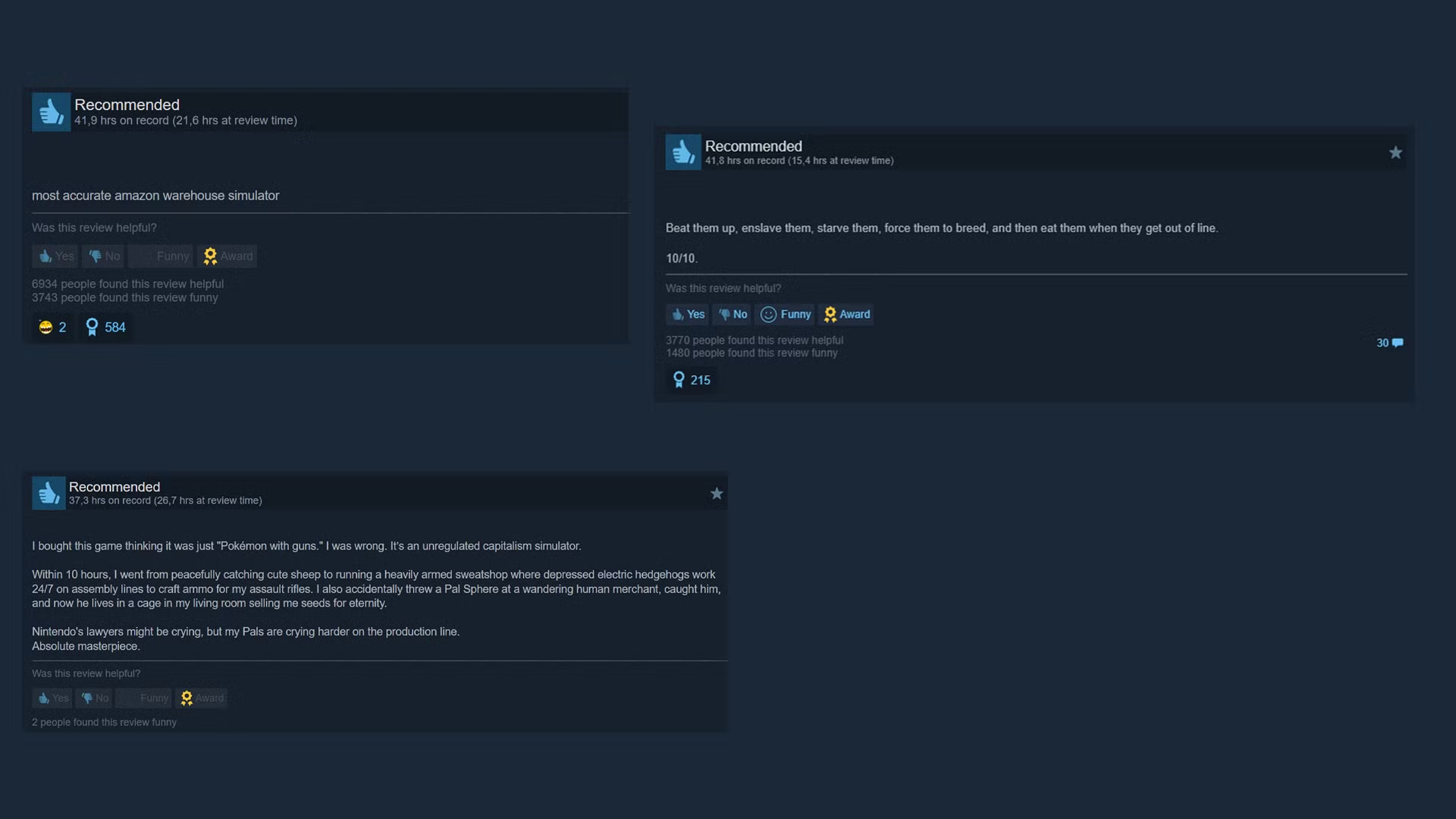
“Most accurate Amazon Warehouse simulator.”
That review is funny because it sounds like an insult, but it is also a compact explanation of the loop. Capture a creature. Send it to a job. Harvest the output. Expand the base. Repeat until your camp feels less like a survival shelter and more like a tiny industrial complex run by emotionally available livestock.
“It’s like Pokemon, but you shoot them in the face and force them into unpaid labor.”
This one is meaner, but it points at the part of Palworld that makes the game distinct. Creature collecting is not just about bonding here. It is also about deployment. A Pal’s value is not only in its personality or design; it is in what task it can be assigned next.
That is where the humor becomes strangely useful. A player can joke about exploitation all day, but the joke only works because the game’s systems actually encourage that behavior. Palworld asks you to turn companions into labor units, and then gives them enough charm to make the arrangement survivable.
The joke gets even stranger because the game can capture humans too, which makes the labor metaphor harder to dismiss. That is not a small side detail. It turns Palworld from “cute monster survival game” into something more like a slapstick social experiment about ownership, convenience, and what players are willing to rationalize when the base-building gets tedious.
The funny reviews are honest because they describe what the game makes you do, not what it pretends to be. Palworld sells you a world of strange creatures and open skies, but the day-to-day play is built around logistics. You are not just surviving. You are organizing a tiny economy with creatures that look like they should be in a daycare.
The Nintendo Feud Turned Buying the Game Into a Statement
It would be incomplete to talk about Palworld’s Steam reviews without mentioning the Nintendo lawsuit. The legal fight gave the game a second storyline, and a lot of players treated buying Palworld as a way to side with the underdog, spite Nintendo, or support the developer through the controversy.
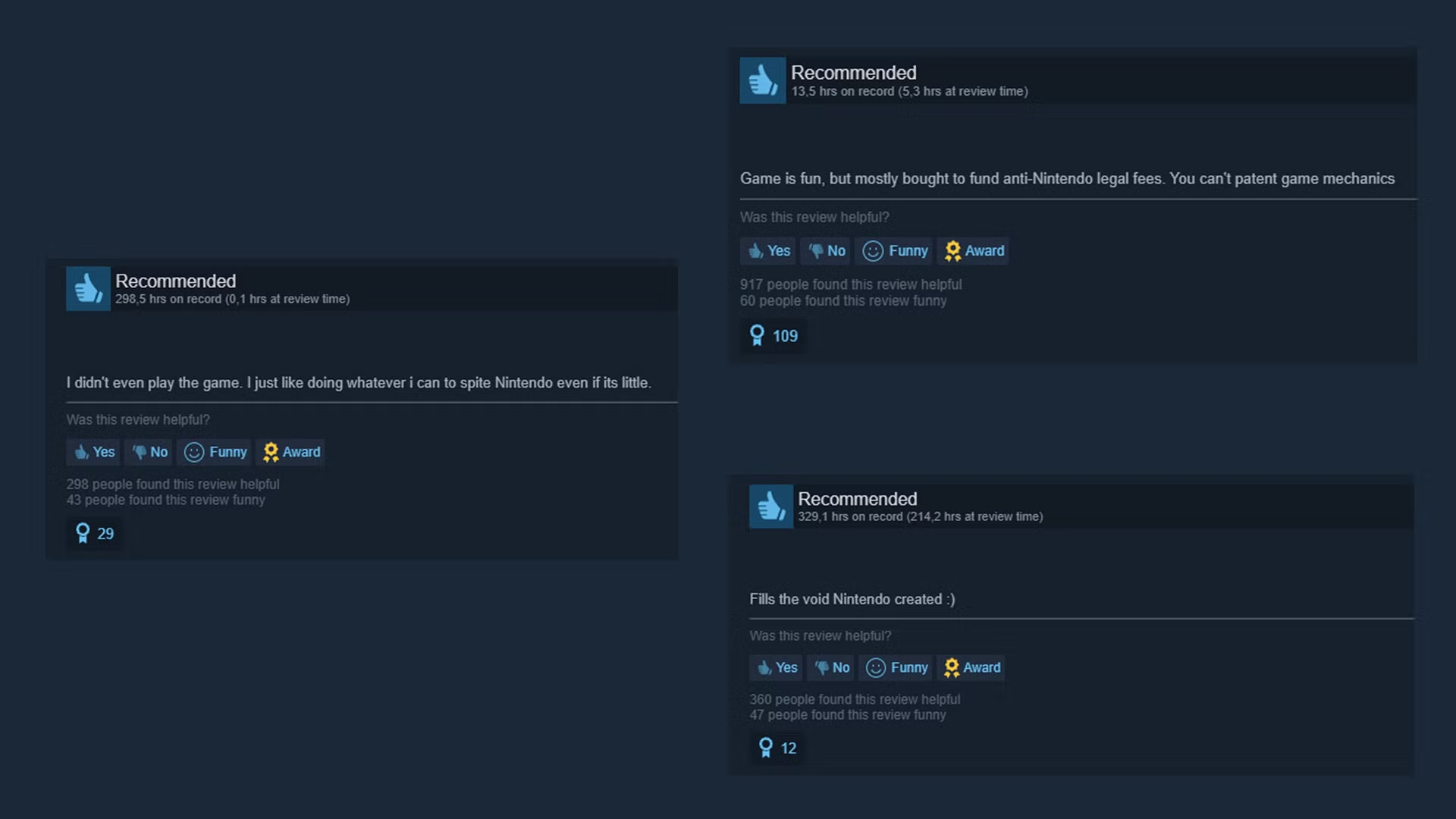
“I didn’t even play this game. I just like doing whatever I can do to spite Nintendo, even if it’s little.”
That is the kind of Steam review that sounds unserious until you remember how much gaming discourse is shaped by franchise loyalty, disappointment, and the desire to punish a company with your wallet. Palworld became a proxy war for players who wanted a different kind of creature collector, or at least wanted a louder alternative.
The Nintendo comparison also stuck because it is mechanically useful, even when it is reductive. Palworld borrows the broad language of creature collection: catch creatures, breed creatures, use creatures. The difference is that Palworld pushes the post-capture phase much harder, turning creatures into tools, workers, weapons, and breeding stock.
That is why the reviews can sound both petty and insightful. Saying “this is for people who dislike Nintendo’s recent games” is a blunt statement. Saying “this gives me more to do after capture” is closer to a design argument. Both show up in the same Steam comments because Palworld is not just a game people play. It is a game people have feelings about.
The funniest part is that the reviews often treat the lawsuit less like a legal issue and more like a plot point. Players are not only asking whether Palworld is good. They are asking what kind of market signal it sends, whether it can survive controversy, and whether the comparison to Pokémon is an insult, a warning, or just the easiest way to explain the game.
Chaos Is the Gameplay, Not the Bug Report
Another major review category is simple: Palworld is a mess, and players love that it is a mess. The game throws together survival crafting, base building, gunplay, creature breeding, cooking, combat, and exploration, then lets all of those systems collide in public.
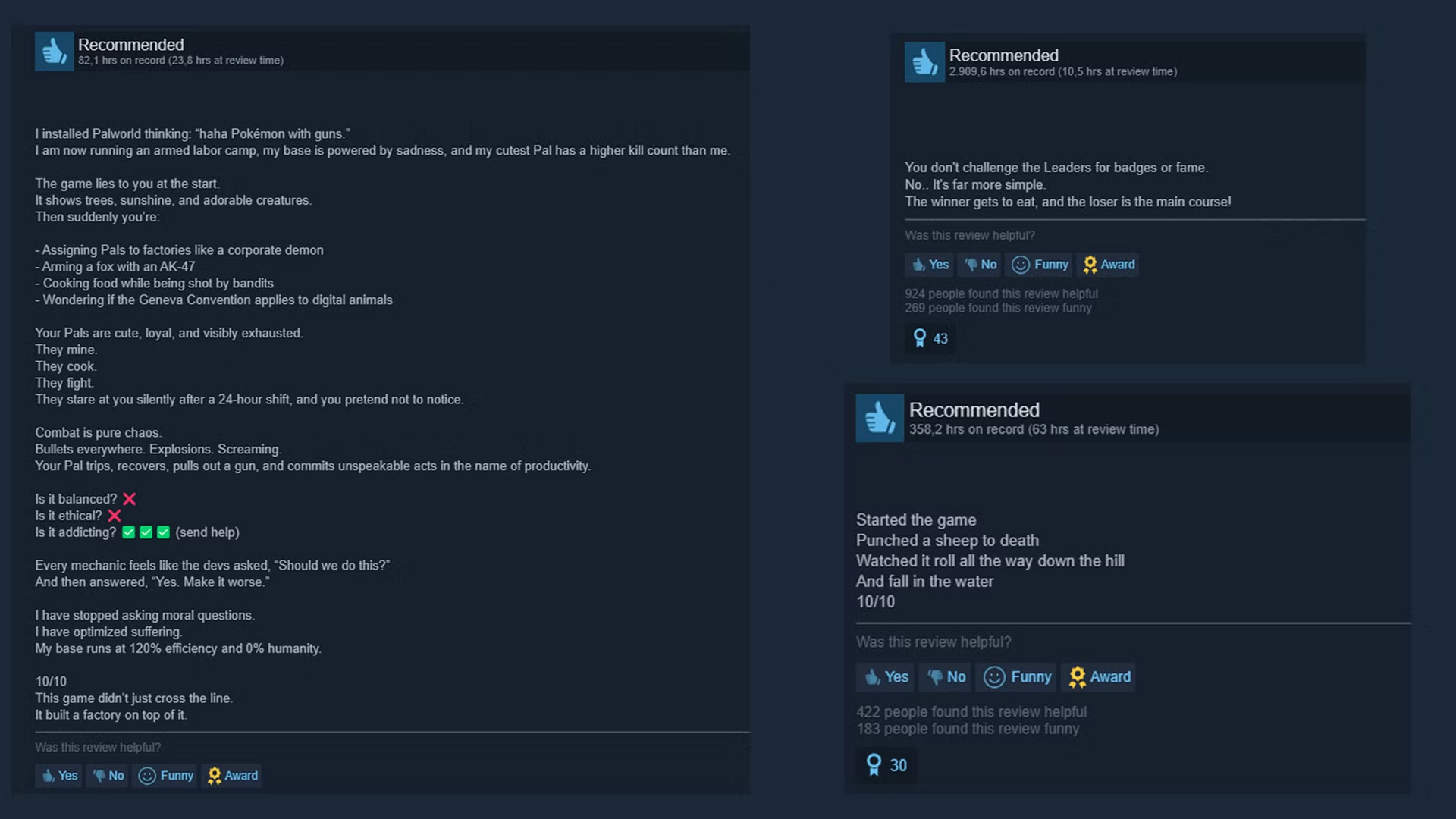
“You don’t challenge the leaders for badges; it’s much simpler than that. The winner gets to eat, and the loser is the main course.”
That line is funny because it reduces Palworld’s progression fantasy to something primal and stupid. There are no badges, no clean heroic ladder, no tidy adventure structure. There is just appetite, danger, and a world that keeps giving you new things to break.
Players also describe the game’s quest structure as a trap for attention. You start one task, then notice another creature, another crafting recipe, another base upgrade, another thing to hunt, breed, build, or set on fire. The result is not always efficiency. It is momentum.
“Every mechanic feels like the devs asked themselves if they should do it, and the answer was always: ‘Yes. Make it worse.’”
That review is probably the cleanest description of Palworld’s design philosophy. The game does not always become better when it adds more. Sometimes it becomes more chaotic. But that chaos is also the source of its identity. A normal survival game might stop at “craft tools, build shelter, survive.” Palworld keeps asking, “What if a Pal with a gun was also cooking dinner?”
This is why the game can feel bloated and irresistible at the same time. The systems are not always clean, but they produce stories. A base fire, a malfunctioning work assignment, a Pal wandering into combat, a chicken becoming an unexpectedly powerful menace — those are not just bugs or distractions. They are the game’s native language.
The Funniest Reviews Are Field Notes From a Weird Little Monster World
Some of the best Palworld Steam reviews are not arguments at all. They are tiny disaster reports from players who found themselves doing things that should have been emotionally confusing but were, somehow, hilarious.
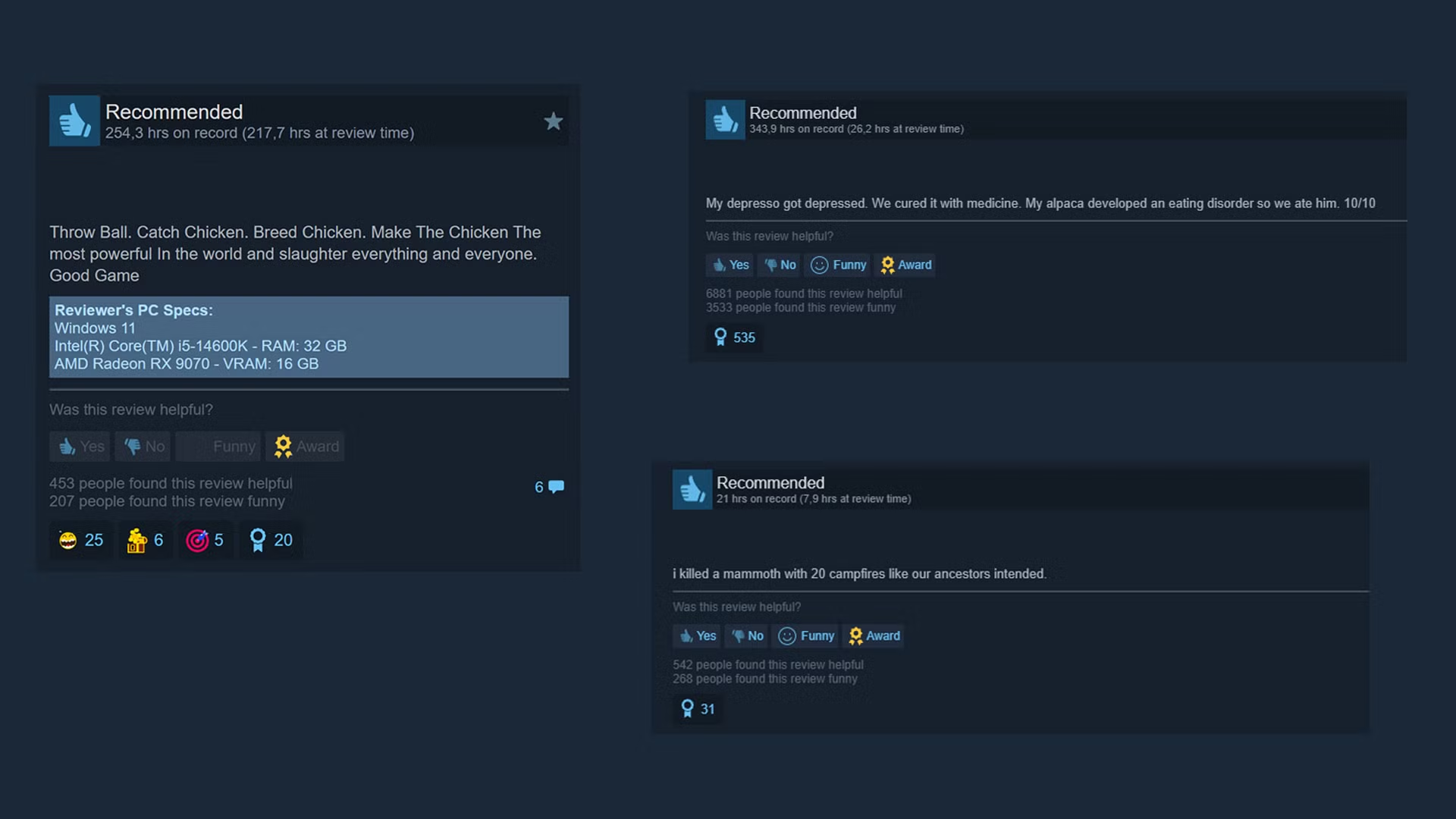
“My Depresso got depressed, so we cured it with medicine. My Melpaca developed an eating disorder, so we ate it. 10/10.”
This is the kind of review that sounds like it was written by someone who had already accepted the game’s rules and decided morality was optional. It is also exactly the kind of sentence that spreads because it captures Palworld’s tone better than a paragraph of explanation could.
“I killed a Mammoth with 20 Campfires, as our ancestors intended.”
That line works because it describes a ridiculous emergent event as if it were the natural order of civilization. Palworld is full of moments where the player has to improvise with fire, animals, terrain, and sheer bad planning. The game does not always hand you a heroic solution. Sometimes it gives you campfires and lets you commit a war crime against wildlife.
“Throw ball, catch chicken. Breed chicken. Make the chicken the most powerful in the world and slaughter everything and everyone. Good game.”
This one is probably the purest Palworld review in spirit. It skips the philosophy, skips the controversy, skips the labor critique, and lands directly on the part that makes the game addictive: turn something harmless into something absurdly overpowered.
That is the appeal of raising a monster army of Chikipis, Lamballs, and Mozzarinas. The idea is so stupid that it becomes compelling. You imagine a max-level chicken walking around firing fireballs, and suddenly the entire map looks like a problem waiting for a very specific kind of answer.
“They Love Their Jobs” Is the Darkest Joke in the Thread
The funniest review is also the one that makes the game’s joke harder to resolve.
“Don’t worry, they love to work. They love doing their jobs.”
It is simple, almost sincere, and somehow darker than all the other jokes. The Pals’ expressions and animations can make them look happy when they complete a task, which gives the whole labor system a weird emotional ambiguity. Are they content workers? Happy little creatures with jobs? Or adorable victims in a survival game that has convinced you not to think about it too hard?
The joke is funny because it gives players the sentence they need to keep going. Assign the Pal. Collect the resource. Build the next machine. Do not ask whether the camp is a workplace, a prison, or a cult. The game is too busy producing ammo.
That ambiguity is the heart of Palworld’s best humor. The reviews keep circling the same question from different angles: is the game cruel, silly, both, or none of the above? Steam is where players try to answer it, usually by making the funniest possible joke and pretending that is not a critique.
What Palworld’s Reviews Reveal About the Game
The real value of these reviews is not that they are funny. It is that they expose how players experience Palworld after the novelty wears off. The game is not just a creature collector, not just a survival sim, not just a workplace satire disguised as a monster game.
It is a game about turning systems into habits. You start by chasing Pals for fun, then you start thinking in assignments, work speeds, resource chains, and base layouts. The humor comes from the moment you realize you are managing a tiny industrial workforce populated by creatures designed to make you forgive them.
That is why Palworld’s Steam page has become such a useful mirror. Critic scores can tell you whether reviewers found the game successful. Steam reviews tell you how players justify the success, how they mock the design, and how they keep coming back anyway.
The game’s reputation is built from that tension. Players can complain about the labor logic, the chaos, the comparisons to Pokémon, the legal drama, and the sheer number of systems. Then they will still write the most enthusiastic review possible because the game





Comments (0)
Loading comments…