
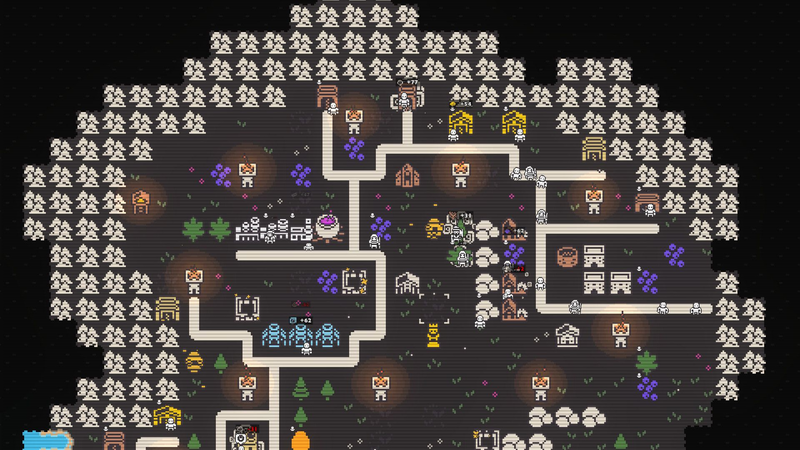
Pocketpair has opened up a free Steam demo for RIFT, a new survival crafting sandbox that mixes factory-style automation, town building, and open-world exploration before the game even reaches Early Access.
The demo gives players a first look at Pocketpair’s next experiment after Palworld, and the big hook is not just “more creatures and base building.” The pitch is a more structured loop: gather resources, build production chains, expand a settlement, and use that growing infrastructure to push deeper into the world.
That combination should feel familiar to anyone who has lost an evening to Factorio, Dwarf Fortress, Don’t Starve Together, or Valheim. The difference is that Pocketpair is trying to make all of those ingredients feel less like separate modes and more like one continuous reason to keep playing.
The free demo is the main event

RIFT is available to try for free on Steam, which makes this a useful test run for a studio whose last game was not exactly low-profile. Palworld became a massive commercial and cultural flashpoint in 2024, so every new Pocketpair project is already being measured against that unusually loud success.
The free demo matters because it lowers the barrier for players who are curious but skeptical. Pocketpair has learned that its games work best when players can immediately touch the fantasy: catching creatures, building bases, surviving chaos, and then turning that chaos into systems they want to optimize.
RIFT appears to be leaning into that same hands-on appeal, but with a more industrial rhythm. Instead of building around creature companions alone, the game seems to ask players to build around production itself.
Automation changes the way the town feels

The automation angle is the part that separates RIFT from a standard survival sandbox. In many survival games, crafting is a menu-based chore: collect wood, smelt ore, craft tools, repeat until the game politely tells you to stop.
Here, the appeal is that the settlement can become a machine. If the game delivers on its demo, the real joy comes from watching a rough camp turn into a functioning settlement with resource flows, upgraded buildings, and enough momentum to keep expanding.
That is a very different emotional payoff. Survival games often make you feel like the world is trying to push you out. Automation games make you feel like you are slowly teaching the world to work for you.
Why Pocketpair is moving in this direction
After Palworld, Pocketpair has an obvious incentive to avoid being pinned to one formula. The studio’s breakthrough worked because it combined several proven genres into one highly shareable package: creature collection, survival, base building, crafting, and open-world exploration.
RIFT looks like a strategic next step from that playbook. It keeps the open-world sandbox DNA, but shifts more of the identity toward settlement growth and production systems.
That is smart because the survival-crafting market is crowded, but players keep returning to games that make infrastructure feel alive. A base that grows from a messy pile of resources into a functioning town creates a kind of ownership that is hard to fake with quests alone.
What players get to test
The free Steam demo gives players a chance to sample the core loop before the game commits them to Early Access or a full release. That is especially useful for a game this broad, because automation-heavy sandbox titles can split players quickly.
Some players love the logistics of production lines. Some care more about exploration. Some just want to build a weird little village and see what happens next. A demo lets RIFT find which version of itself lands hardest.
For Pocketpair, that feedback is probably valuable. Palworld benefited from a huge player base testing its systems under chaotic real-world conditions. A smaller but more focused demo community can do the same thing for RIFT, especially around balance and progression.
And yes, the demo being free is part of the appeal. You do not need to decide whether this is the next big survival game before you have spent a few hours trying to make your little settlement stop being a pile of problems.
The broader trend: sandbox games are getting more ambitious
RIFT is part of a larger shift in sandbox design. Modern survival and crafting games are increasingly comfortable borrowing from other genres. They pull from city builders, factory games, roguelikes, MMOs, and management sims because player attention spans have expanded.
Players no longer expect a survival game to be only about staying alive. They want a reason to stay engaged: build something, automate something, protect something, expand something, or solve the constant little puzzles that come from making a world less hostile.
That is why the “automation plus town building” label matters. It tells players this is not just another base-building sandbox with a different coat of paint. It is a game about making progress compound.
One good production line can unlock the next. One upgraded building can make the next resource run easier. One settlement improvement can change how the whole map feels. That compounding feedback is the magic sauce.
There is still a risk here
The danger is that RIFT could end up feeling too familiar. Factory automation, creature collection, survival crafting, and town building are all proven ingredients, but proven ingredients still need fresh seasoning.
If the game is mostly “Palworld meets Factorio meets town builder,” then players will judge it by how well Pocketpair blends those influences rather than whether it says anything new. That is a hard bar to clear when the genre is already crowded.
The demo will reveal whether RIFT has enough personality to stand apart. The setting, pacing, progression, and social design all need to make the mix feel intentional instead of assembled from the most marketable parts of successful games.
What comes next for Pocketpair
The next question is how much of this demo translates into a polished Early Access experience. Pocketpair has the advantage of having already built a global audience, but that also means expectations will be high from the start.
If RIFT can turn its automation and town-building ideas into a smooth, replayable loop, it could become an important follow-up to Palworld rather than just a side step.
If the systems feel too tangled or the settlement progression does not click, players may spot the seams quickly. Sandbox games are generous when they work, but they are also brutally honest when they do not.
For now, the free Steam demo is the right move: low-risk for players, useful for feedback, and a clear signal that Pocketpair is looking beyond its breakout hit without abandoning the ideas that made people pay attention in the first place.
This is Clicky Islands!
Made by 2 very nice devs from Poland, it’s a really fun mix of clicker, incremental, automation and town building!
It is, I promise, very addictive!
A new demo has been
 View on X →




Comments (0)
Loading comments…