
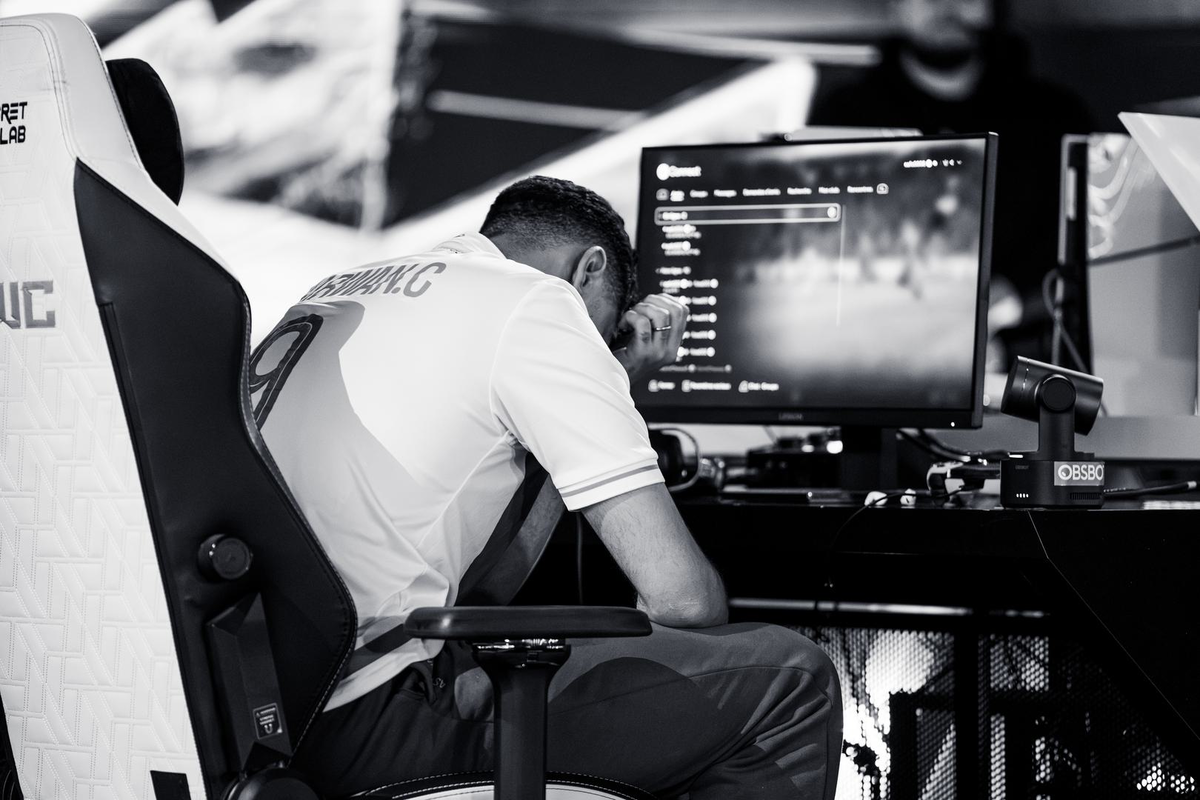
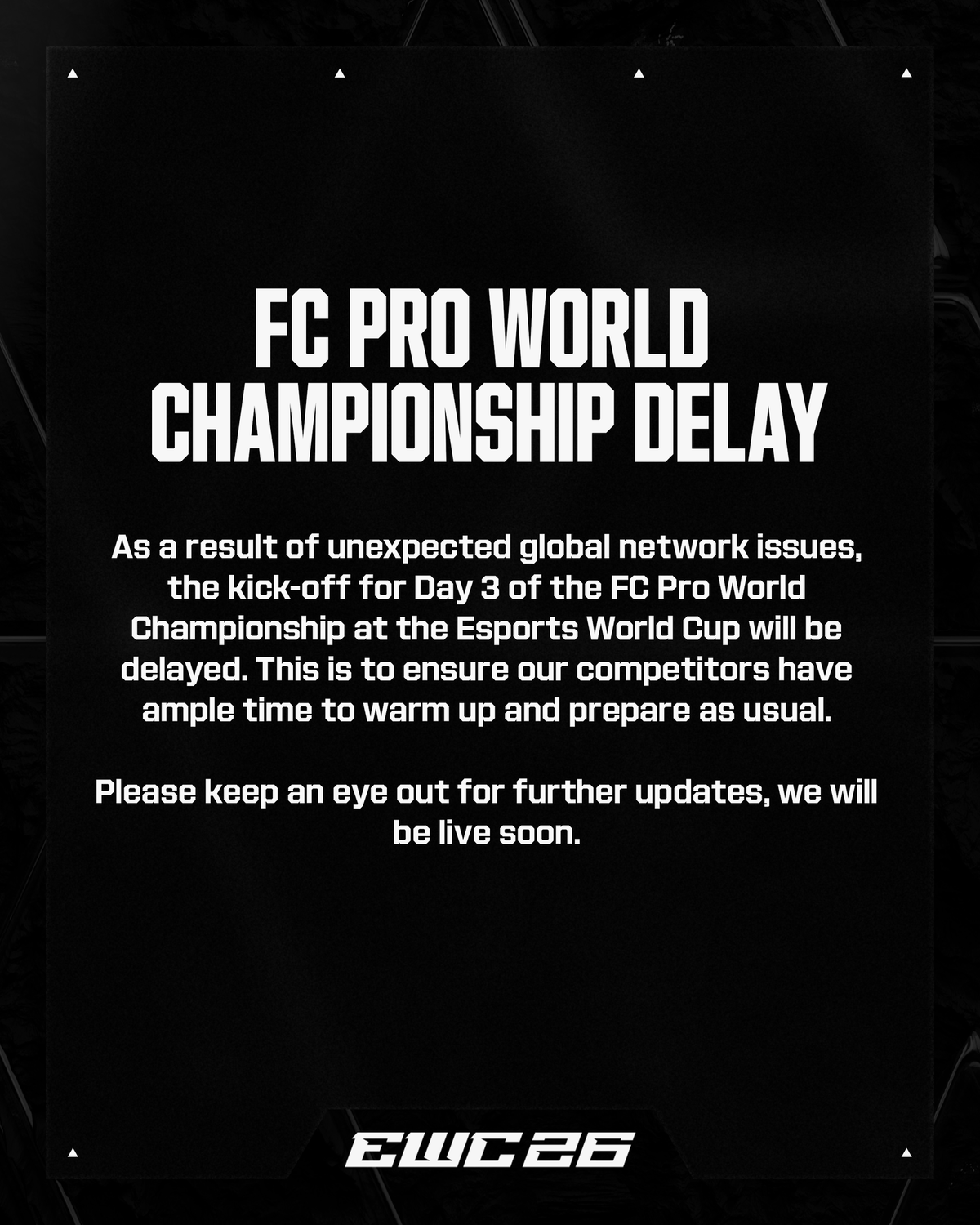
Day 3 of the Diogo Jota FC Pro World Championship has been delayed after a PlayStation Network outage stopped players from logging in and accessing their online squads.
The delay affects the League Stage at the Esports World Cup, where 36 players were supposed to be cut down to 24 on July 24, 2026. Matches were expected to resume soon, but organizers gave no firm return time as of the latest update.
The issue is especially awkward because EA Sports FC can technically be played locally. For this tournament, though, players need PlayStation Network access because professional matches use online-only Ultimate Team squads and competitive infrastructure.
That means the outage did more than cause a login problem. It removed the same competitive environment players rely on for preparation, warmups, and match-day consistency.
Day 3 was supposed to decide the playoff field
The League Stage was already a pressure cooker. The top eight players at the end of Day 3 would skip directly into the Round of 16, avoiding earlier knockout rounds and locking in at least $40,000 in prize money.
Instead, players had to wait while servers stayed down for more than three hours. Sony had not issued a public update at the time of reporting, and the tournament’s “live soon” message did not give competitors a usable schedule.
That matters because esports schedules are not just administrative. A tournament day is built around match windows, practice blocks, broadcast timing, team prep, and player recovery. When one of those moving parts fails, the whole structure bends.
Current leaders Levy “levyfinn” Rieck and Matías “Bonanno” Bonanno had both won all four of their matches so far, making the remaining Day 3 results even more consequential. A delay now could reshape the standings, the seeding path, and the pressure around the playoffs.
The outage hits casual players and pros differently
This is not the first time a network problem has disrupted online gaming at scale. The PlayStation outage affected thousands of users worldwide, blocking access to digital games and online services.
For casual players, that usually means lost time, failed logins, or abandoned sessions. For FC Pro competitors, the stakes are sharper: no access to the exact squad setup, match environment, and online tools used in competition.

The irony is obvious. EA Sports FC is one of the most accessible esports on paper, but its competitive ecosystem still depends on fragile online services. Local play can keep a match going. It cannot fully replace a tournament built around live teams, ranked modes, and online progression.
That gap has become more visible as console esports try to sit between two worlds: the reliability of LAN events and the convenience of always-online game modes.
Why this timing is a problem
The Esports World Cup is not just another tournament bracket. It has become one of the biggest stages for competitive gaming, drawing attention from publishers, sponsors, players, and fans who expect production values to match the prize pool.
That level of visibility raises the cost of even a short outage. A three-hour delay may look minor in normal gaming terms, but during a championship it can trigger broadcast changes, schedule compression, and fairness complaints.
The tournament was scheduled to end Sunday, July 26, and the delay now puts that timeline at risk. If organizers need to make up missed matches, they may have to shift later rounds, reduce rest windows, or reshuffle the competitive calendar.
For players, the practical concern is simple: nobody wants a championship decided by downtime, but downtime is still downtime.
Competitive fairness becomes the real issue
The official delay rationale was that competitors need “ample time to warm up and prepare as usual.” That is fair enough on the surface, but the follow-up question is harder: can they prepare under the same conditions?
If some players can access alternative networks, backup hardware, or non-PlayStation setups while others cannot, the delay may not fully solve the fairness problem. Even a small mismatch can matter in a game where match speed, input timing, and squad familiarity all affect results.
The best case is that Sony restores service quickly and the tournament resumes with minimal disruption. The better case is that organizers create a transparent recovery plan before the next matches start.
That plan should cover match order, rest periods, practice access, broadcast timing, and how any missed games will be scheduled without punishing players who were already on top of the standings.
The outage points to a bigger esports problem
Modern esports increasingly depends on services that were not designed like traditional tournament infrastructure. A LAN event can isolate machines, networks, and peripherals. A live service game depends on account systems, matchmaking servers, anti-cheat services, and cloud-backed progression.
When those systems fail, the tournament has to stop. That is not a criticism of the players or the event organizers. It is the reality of competitive games built on always-online platforms.
The industry has spent years pushing esports toward bigger prize pools, stronger regional scenes, and more polished production. Network dependence is the part that still feels underbuilt when it matters most.
For fans, the delay is frustrating because it interrupts a tournament with real stakes. For players, it is more than that: it interrupts the one environment they trained inside.
What happens next
The immediate priority is restoring PlayStation Network access and confirming whether the remaining Day 3 matches can be completed without compressing the rest of the event.
Organizers should also publish a clear update on match order, player rest, and broadcast timing. In a tournament this high-profile, silence is not neutral. It leaves players, teams, and viewers trying to guess how much the schedule has changed.
If service returns quickly, this may become a minor hiccup. If the delay spreads into the playoffs, it will be remembered as the moment the FC Pro World Championship found out how dependent a major esports event can be on a single network.

For now, the takeaway is straightforward: PlayStation Network was supposed to be the stage for elite EA Sports FC. When the stage went dark, the competition had to stop with it.


Comments (0)
Loading comments…