

Prime Video's Blade Runner 2099 trailer flips the franchise's central power structure: by 2099, replicants have won the war, humans are the second-class citizens, and the city is being rebuilt around their era.
The first official trailer, shown at San Diego Comic-Con 2026, opens with the brutal admission, "We already fought a war, we lost." That line changes everything. The Blade Runner universe is no longer asking whether humans will keep control over bioengineered people; it is asking what happens when those people become the state.
The war has already happened

Showrunner Silka Luisa has described the premise as a replicant uprising that finally boiled over between Blade Runner 2049 and Blade Runner 2099. In that world, the conflict has already happened, and the winners are now the power brokers of the city. The trailer gives us the aftershock, not the full map of how it got there.
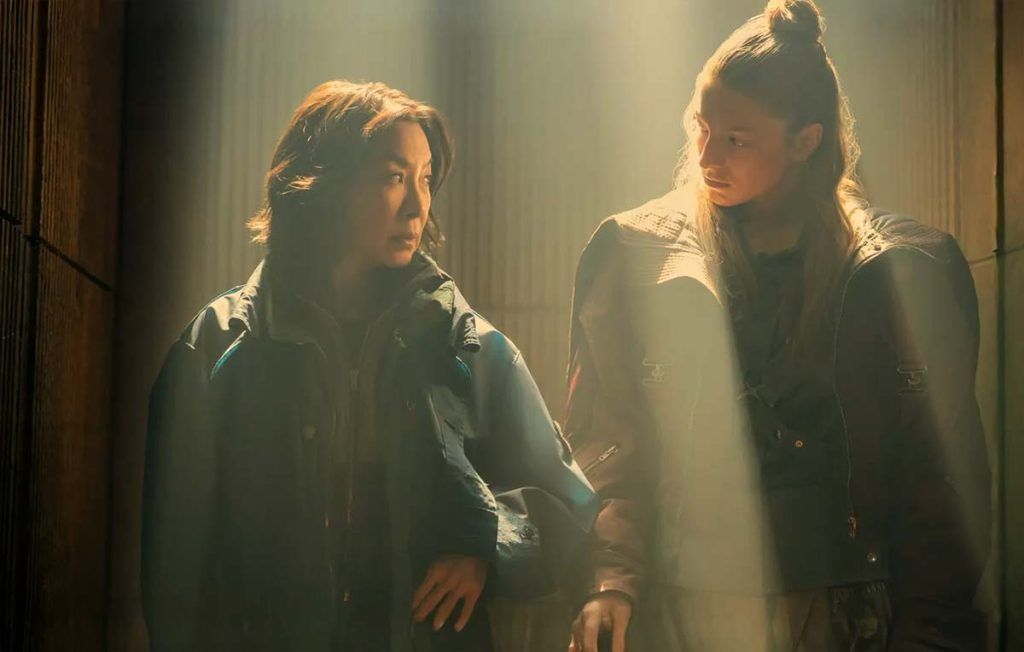
Hunter Schafer's Cora frames the new order as a human panic over displacement, telling the camera, "Replicants, they keep taking it all away... until we have nothing, until we are nothing?" That sounds like propaganda at first, but in a Blade Runner story, every perspective comes with a cost. Cora is a human hiding as a replicant, which means the trailer is already using disguise as survival strategy.
Michelle Yeoh plays Olwen, a replicant Blade Runner hunting rogue replicants, and her trailer line lands differently because she is now on the side of institutional power. "Humans want what was taken from them," Olwen says, "but it's our time now." The interesting part is not that the roles are reversed for shock value, but that Olwen may have to enforce a system she did not necessarily choose.
A sunny city with a brutal politics

While Blade Runner has long been defined by dark, rainy neon, Luisa says Blade Runner 2099 will lean into something she calls "sunshine noir." The trailer's Los Angeles feels hot, sticky, coastal, and bright, with plenty of Santa Monica coastline in the mix. That choice matters because it prevents the show from simply remaking the original film as a mood board.
“It’s about a birth of a city. It’s about a birth of a replicant era.”
The "birth" language is doing a lot of work here. This is not just a new era of humans versus replicants; it is a new social order trying to convince itself it is natural. If the original film turned noir into a question of identity, Blade Runner 2099 appears to turn that identity crisis into a full-blown history lesson.
The franchise finally changes the power structure
Ridley Scott's 1982 Blade Runner popularized a neon-soaked noir future inspired by Philip K. Dick's Do Androids Dream of Electric Sheep?, while Denis Villeneuve's 2017 Blade Runner 2049 kept humanity in control but made the cost of that control harder to ignore. The new series appears to be taking that unresolved moral debt and turning it into a new political reality.
In an era when artificial intelligence has moved from speculative horror to everyday workplace anxiety, Blade Runner 2099's premise feels less like a twist than a late-stage cultural pressure test. The franchise's replicants are old-fashioned bioengineering, not chatbots, but the questions around labor, identity, and who gets to rule the future still hit close to home.
That is what makes the trailer more than a status quo flip. Humans losing power is the headline, but the sharper story is how everyone adapts to being on the wrong side of the machine. Cora survives by passing, Olwen polices from above, and the city itself becomes the prize.
Why the brighter Blade Runner may still work
For Ridley Scott devotees, the brighter palette may raise an eyebrow. The original film's oppressive rain and layered grime became part of its DNA, and the first trailer does not yet prove the new series can match that level of iconic atmosphere. That said, a change in lighting can be a change in ideology, not just aesthetics.
What Blade Runner 2099 needs now is not simply more chrome, more rain, or more melancholy saxophone energy. It needs to make its new world feel lived in, where the old wounds of the franchise show up in architecture, law, fashion, and everyday fear. The trailer hints at that, but it has not earned it yet.
What the premiere has to prove
The trailer also leaves a lot of unanswered questions. We do not yet know how the war ended, who benefited from the uprising, or whether the new order is liberation for some and domination for others. That vagueness can be exciting, but it also means the show has to earn its premise with more than a reversal of fortunes.
Blade Runner 2099 premieres Nov. 25 on Prime Video. What to watch for is whether the series can turn its big twist into a lived-in world, with Cora's fear and Olwen's authority colliding in ways that feel specific rather than merely symbolic. If it does, the show could mark the franchise's most significant world-building leap since the original film's rain-soaked streets first set the tone.



Comments (0)
Loading comments…