
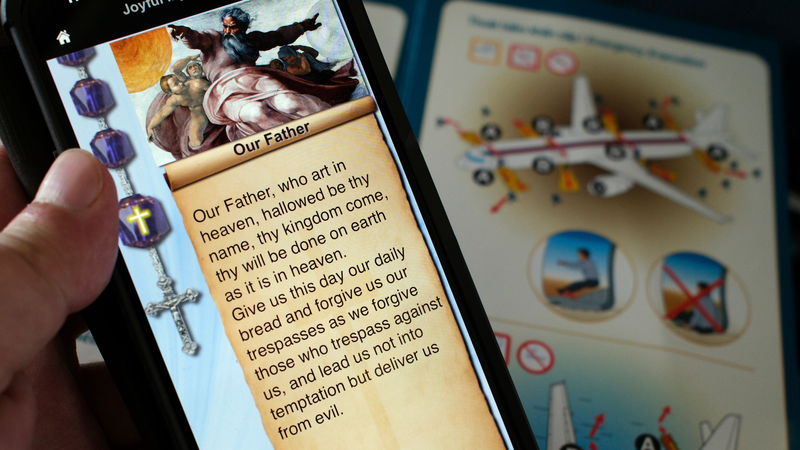
The Vatican-linked Click to Pray app exposed personal data for more than 700,000 users through a misconfigured cloud database that remained accessible for at least six months. The reported leak included names, email addresses, dates of birth, countries, device identifiers, push notification tokens, and account metadata, turning a prayer app into a large, avoidable privacy incident.
The flaw was tied to Firebase, Google Cloud's backend service for storing and syncing app data. In a healthy setup, Firebase rules decide who can read or write each record. In this case, the exposed database appears to have allowed broad access, meaning anyone with the right database address could pull records without normal app authentication.
What actually happened
Click to Pray is the free iOS and Android app used for daily prayers, prayer requests, and reminders tied to the Jesuit prayer network. Its users are spread globally, so the app needed a backend that could handle accounts, notifications, and account activity at scale. Firebase is common for exactly that kind of mobile app because it is fast to ship and cheap to operate.
Security researchers found the exposed database and connected it to Click to Pray's Firebase setup. The data had been sitting there for more than six months, and the access window was long enough for copies to be made. That is the key difference between a scary headline and a real risk: the database did not just get a peek at once; it was available for weeks or months.
The reported fields are the kind of personal data that powers spam, phishing, and social engineering. Names plus email addresses are enough for targeted messages. Dates of birth and countries add context, while device IDs and push notification tokens can make follow-up attacks feel more specific.
Those push notification tokens are small keys that let an app send alerts to a specific device. They do not automatically give an attacker control of a phone, but they do show that the exposed data came from real, active accounts. That makes the leak more useful than a random list scraped from the open web.
Why this matters now
Here's the thing: this is not a dramatic break-in. It is a misconfigured door left unlocked in the cloud. The app likely did not need to store or expose so much information in a broadly readable table. Modern apps can use scoped records, access controls, and retention limits so one bad setting does not expose the whole user base.
The timing also matters. Mobile apps increasingly use managed services to move quickly, and many teams treat security as a later configuration pass instead of a core product feature. That shortcut is how a prayer app can end up with the same class of exposure seen in startups, games, fitness apps, and dating platforms.
The reported data does not include payment details or passwords, which keeps this from becoming the same category of incident as a compromised e-commerce database. But that does not make it harmless. A clean list of 700,000 people with emails and birth dates is still a useful target for scammers, especially when the app is associated with a global institution.
Who benefits, and who loses
Users lose privacy first. The app may be built around prayer, but a leaked device identifier or email address still becomes a new channel for unwanted contact. Attackers benefit from the scale and trust signal. A list tied to a Vatican-linked app carries a veneer of legitimacy that a random spam sender would have to fake.
Competitors are not the real winners here. The bigger loser is the expectation that official apps can be trusted by default. When a major religious organization has a misconfigured backend, the lesson is practical: institutional authority does not protect the database if the permissions are wrong.
This fits a bigger pattern in software security. The most damaging incidents are often not the ones where attackers bypass the front door; they are the ones where the back door was never locked. Firebase, AWS, and similar services are powerful because they let developers ship fast, but speed without permission review creates predictable failures.
That is why cloud security teams spend so much time on rules, roles, and access controls. The technology is not the weak link by itself. The weak link is the gap between “the app works” and “the database only gives the right people the right data.”
The less dramatic counterpoint
The less dramatic view is that this was not a public hack of Vatican systems, and the issue has been reported as fixed. There is also no evidence that the app's core purpose, daily prayers and prayer requests, was directly altered. That matters, because not every database exposure becomes a disaster.
Still, “fixed” is not the same as “clean.” If the database was readable for six months, copies may already exist. The responsible next step is not just closing the door; it is telling users what was exposed, rotating affected tokens where possible, and reviewing whether the app collected more data than it needed.
What users should do
For users, the practical risk is not that prayer requests will be publicly posted. The more likely risk is a spike in suspicious emails, push messages, or social engineering attempts. If you used Click to Pray, treat unexpected messages from official-looking senders with extra caution and avoid clicking links that ask for new account details.
If you reuse passwords, change the password for any account tied to the app. That is not because passwords were in the exposed database, but because leaked emails often get folded into automated login attempts using stolen password pairs. A unique password turns a privacy leak into a smaller problem.
The app's operators should also publish a fuller incident report. A useful report would name the fields exposed, the date range of access, whether notification tokens were rotated, and how users can confirm their data was removed from copies. Without those details, users are left to infer their own risk from a headline.
What comes next
The next thing to watch is whether the app's operators publish those details. The fix closes the immediate leak, but the real accountability comes from transparency: who was exposed, what was taken, and what changed after the database was found. That is how users can judge whether the app learned from the mistake.
For the industry, the takeaway is simple. Cloud databases make apps faster, but they also make mistakes bigger. A single misconfigured rule can expose hundreds of thousands of people before anyone notices. The best apps will treat that as a design constraint, not a rare operational blip.
So the short answer is: yes, Click to Pray leaked data, and the exposure window was long enough to matter. The real story is not the Vatican app itself; it is how ordinary cloud settings can turn ordinary user information into a global privacy problem.





Comments (0)
Loading comments…