
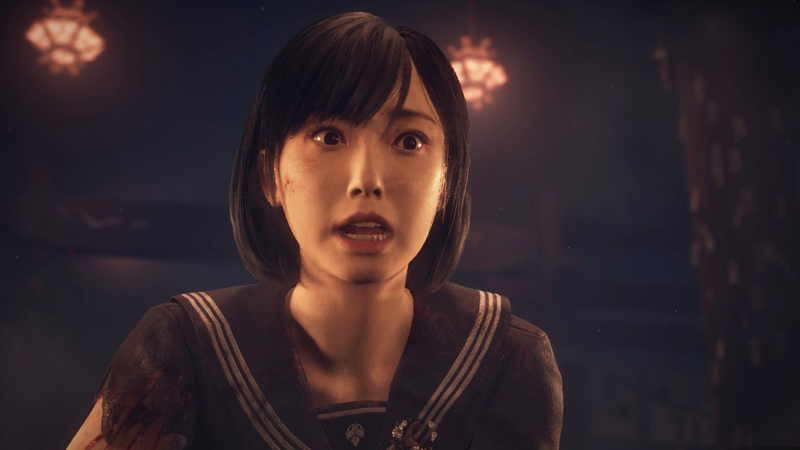
Producers on Silent Hill f reportedly pushed the writing team to read roughly 100 to 200 books a year, not as a quirky productivity stunt, but as a way to make the next Silent Hill feel strange in a fresh cultural register.
That detail, from producer Riku Inagaki, says a lot about how Konami is trying to approach this new chapter. Instead of asking writers to simply mine the series’ established imagery — fog, blood, suburban dread, industrial decay — the team was encouraged to build a different kind of fear, rooted in literature, period detail, and the emotional texture of 1960s Japan.
What Konami said it wanted from the writers
Inagaki described the reading requirement as intense: writers were encouraged to read at least 100 to 200 books a year. That is not “read one or two horror novels and call it research.” That is a sustained pressure campaign against creative sameness.
The point, apparently, was not to make every story sound like a book review. It was to give the writers a broader emotional and cultural toolkit, so the game’s horror could come from atmosphere, psychology, and social tension rather than only from the familiar machinery of Silent Hill.
That matters because Silent Hill has spent decades operating with a very specific visual vocabulary. Foggy streets. Dim hospitals. Rusting machinery. Personal demons made physical. The series has been so influential that its language is now part of the horror game canon, which also means it is easy to imitate badly.
Why the reading demand fits Silent Hill f
Silent Hill f is not a straightforward return to Brookhaven, New York, or the fog-drenched roads that defined so many classic entries. It is set in 1960s Japan, which immediately changes the center of gravity. The fear is not just about an American suburb collapsing into nightmare; it is about a country negotiating postwar identity, gender roles, memory, and modernization.
That setting asks a different set of questions from the writers. What does horror look like when it comes through Japanese cinema, literature, folklore, and the pressure of a society reshaping itself? What does fear feel like when the monster is not only in the town, but in the rules people are expected to obey?
The reading push makes sense as a production choice here. A game built around 1960s Japan needs texture beyond “old cars and traditional architecture.” It needs an understanding of how stories from that era imagined women, family, authority, trauma, and the future. Reading widely gives writers more ways to make the world feel inhabited rather than assembled from reference photos.
The practical pressure behind the idea
The number sounds almost absurd because it is so high. One hundred to 200 books a year means roughly two to four books a week, depending on length and schedule. For a game studio under deadline pressure, that is a lot of reading to add on top of meetings, reviews, lore checks, playtest notes, and the constant back-and-forth that turns a concept into a playable horror experience.
And yet the demand is not only about volume. It is about discipline. It asks writers to keep their minds moving across genres, eras, and perspectives instead of settling into the easiest reference points. In a franchise as recognizable as Silent Hill, that can be the difference between a fresh scare and a museum piece.
There is also a very real craft argument behind it. Horror writing often depends on expectation: what the player thinks they know, what the game lets them believe, and where it chooses to break that trust. Broad reading gives writers more patterns to bend. It gives them more ways to make the familiar feel wrong without simply repeating the same jump-scare grammar.
Why this matters for the player
For players, the most visible payoff would be tonal variety. If the reading push helped the team, Silent Hill f could feel less like a direct rerun of the series’ most famous beats and more like a new interpretation of its core idea: horror as memory, guilt, and cultural unease.
That is especially important because survival horror has changed around Silent Hill. Modern players have seen Resident Evil move between blockbuster spectacle and intimate horror, Alan Wake turn writing into supernatural mechanics, and indie games use psychological dread in ways that feel closer to literature or art than arcade design.
Silent Hill still has a rare ability to make internal fear feel environmental. Its best moments do not just place monsters in the world; they make the world feel like it has been personally assembled out of someone’s mind. A writing process built around reading could support that kind of subjective design.
The risk of overcorrecting
Of course, more reading does not automatically make a better game. A team can read 200 books and still produce something derivative, overexplained, or disconnected from what players need to feel. Horror games are not essays with enemies attached; they have to work through pacing, controls, sound, lighting, pacing, and the simple question of whether walking into a dark room still feels terrifying.
There is also a production risk in this kind of creative instruction. When a producer asks for an extreme reading standard, the message can land as enthusiasm from one side and intimidation from the other. The result depends heavily on management: whether the reading becomes a shared creative resource or an unpaid second job.
The most credible version of this approach is probably not “everyone must consume hundreds of books and quote them in the script.” It is more useful when reading expands the team’s imagination while the actual writing process remains focused, collaborative, and playable.
How Silent Hill f fits the franchise’s current moment
This is also part of Konami’s broader effort to keep Silent Hill alive without reducing it to nostalgia. The franchise has a long history of reinvention, from the survival-focused terror of the early games to the more cinematic, systems-heavy experiments that followed.
What is notable here is that Silent Hill f is not trying to be the next Silent Hill 2 in any direct sense. Its Japanese setting, 1960s lens, and different creative leadership suggest an attempt to treat the name as a flexible horror framework rather than a fixed location or aesthetic. That is a smart move, because the brand’s strength has always been its ability to turn personal trauma into place.
If that idea is handled well, Silent Hill f could remind players why the series mattered in the first place. Not because it invented psychological horror, but because it made horror feel intimate, literary, and deeply personal.
What to watch for next
The real test will be whether the reading push shows up in the game’s details: how it handles period atmosphere, female experience, family pressure, and the slow collapse of normal life. A clever visual design can borrow from an era. A stronger game understands what that era makes people afraid of.
When Silent Hill f arrives, the most interesting question is not whether it contains enough classic Silent Hill references to satisfy longtime fans. The better question is whether it can make the series feel dangerous again to people who thought they already knew the formula.
The 100-to-200-books demand may sound like a wild production note. In practice, it points to the bigger ambition here: Konami is trying to build a Silent Hill that reads less like a franchise reboot and more like a new nightmare assembled from literature, memory, and cultural history.


Comments (0)
Loading comments…