
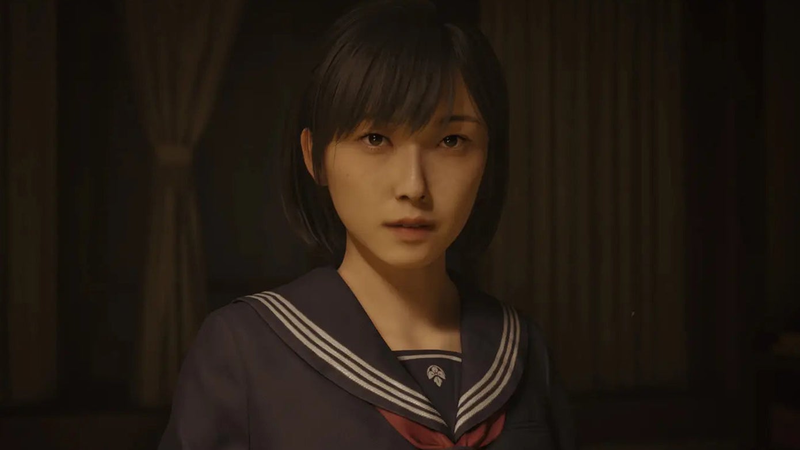
Silent Hill f’s writers were pushed to read roughly 100 to 200 books a year so they could absorb Ryukishi07’s storytelling habits well enough to write a new chapter in his style.
That was the core of a production talk from Silent Hill f producer Motoi Okamoto at CEDEC2026. Okamoto said the script team “pressured each other” to read widely, including Ryukishi07’s own body of work, because copying the surface details of a writer’s style is not the same as understanding why those details work.
The number sounds extreme, but the point is practical: if a studio is going to hire a writer with a recognizable voice, it should read as much of that writer’s work as possible before assigning the job. Okamoto framed it as both respect for the author and a production necessity. Every writer has strengths, weaknesses, habits, and blind spots, and those quirks are often what make the work feel personal.
How a game got a writer’s style without becoming a copy
Silent Hill f is unusual because it brings Ryukishi07 into a franchise built on a very different kind of dread. Konami’s series has long been associated with psychological horror, liminal spaces, institutional secrets, and slow-burning guilt. Ryukishi07, best known for games like AI: The Somnium Files and AI: The Somnium Files - nirvanA Initiative, is known for character-heavy mysteries, sharp dialogue, and emotionally messy casts.
The result is not a simple crossover of aesthetics. Silent Hill f uses Ryukishi07’s character writing to filter Konami’s horror framework through a new setting: rural Japan in the 1960s, centered on Hinako Misora, a young woman with her own emotional conflicts and supernatural encounter. That choice matters because the story is not just “Silent Hill with a different backdrop.” It is an attempt to make the series feel newly authored rather than merely restored.
Okamoto’s comments suggest Konami knew that risk. A revival can easily become a cautious business move: remake an old IP, test the waters, and avoid overcommitting. Instead, Konami announced a new Silent Hill game alongside the Silent Hill 2 remake as part of a broader push to prove the series was alive again.
Why the reading challenge mattered
The 100-to-200-books-per-year pressure was not about trivia. It was about pattern recognition. Ryukishi07’s writing has recurring tools: intimate character groups, secrets that reframe relationships, emotional pressure points, and dialogue that often carries more tension than the supernatural event itself.
For Silent Hill f, that approach helps explain why the game can feel both familiar and oddly fresh. The horror still comes from Konami’s world, but the character work leans into the kind of emotional specificity that has made Ryukishi07’s games so polarizing. Some players will click with the cast immediately. Others may find the dialogue too dramatic or the mystery mechanics too familiar.
That split is part of the tradeoff. A strong authorial style gives a game identity, but it also narrows the audience. A generic horror script might be safer, smoother, and easier to market. A Ryukishi07-shaped script is more memorable because it is more opinionated.
Why now: Konami is trying to rebuild trust
Okamoto also said that when Konami greenlit a Silent Hill revival, about half of the development team was in their 20s. Much of the prior team had been replaced, including the original developers now associated with “Team Silent.” That detail is important because it means this revival was not simply handed off to people who already knew the old formula.
It had to be taught, researched, and interpreted. That can create distance from the original team’s instincts, but it can also create room for new ideas. Konami did not need to make Silent Hill f feel like a museum piece. It needed players to believe the franchise was being actively cared for.
That is why the announcement of a new game alongside the remake mattered. It signaled commitment. In a market where publishers often revive IP through cautious remasters, soft launches, or “wait-and-see” releases, a new project says something different: the company is betting on the brand’s future, not just monetizing its past.
What this means for players
For players, the most visible payoff is tone. Silent Hill f’s 1960s Japan setting gives the series a different cultural texture, while Ryukishi07’s involvement pushes the characters into sharper emotional focus. That combination helps explain why the game landed as more than another entry in a long-running franchise.
It also matters because survival horror often depends on atmosphere, but modern Silent Hill depends on emotional atmosphere. The fear is not just monsters in hallways or foggy streets. It is the sense that the world is reacting to guilt, grief, and memory. Ryukishi07’s style is a good fit for that kind of storytelling because his work usually treats character secrets as horror engines.
The production method Okamoto described also helps explain why the game’s cast feels so central. If the writers were studying how another writer builds character dynamics, then the goal was not merely to generate plot twists. It was to understand how characters create dread before the game ever shows the player a monster.
The risk of leaning on one writer’s identity
There is a downside to this approach. The more a studio tries to capture a specific writer’s style, the more it risks flattening that writer into a set of recognizable moves. Dialogue can become too theatrical. Mystery reveals can start to feel formulaic. Characters can become vehicles for emotional shocks instead of people.
That is especially risky with Ryukishi07, whose fans often have strong expectations around structure and payoff. Silent Hill f benefited from the distinctiveness of his involvement, but that same distinctiveness also creates a higher chance of division. Not every player wants the same kind of mystery, and not every Silent Hill fan wants the series to sound quite the same way.
Still, the fact that Konami openly discussed this process is telling. It shows a publisher acknowledging that authorship is part of game production, not just an afterthought. In an industry that often treats scripts as support documents, Silent Hill f points toward a more deliberate model: build the game around a voice, then make the production process respect that voice.
What comes next for Silent Hill
The broader trend is clear. Konami is rebuilding Silent Hill through a mix of revival, reimagining, and new creative bets. Bloober Team’s Silent Hill 2 remake helped restore visibility for the series, while Silent Hill f helped prove there was still room for a new direction.
With Silent Hill Townfall confirmed for PC and PlayStation 5 on September 24, the series is entering a phase where each release has to do more than keep the name alive. It has to convince players that Konami’s horror brand can still produce fresh experiences, not just familiar scares.
The 100-to-200-books-a-year story may sound like a behind-the-scenes production quirk, but it says something bigger about how publishers are approaching legacy franchises now. The winning formula is not nostalgia by itself. It is nostalgia with a clear creative point of view, even if that point of view is uncomfortable, divisive, or hard to reproduce.
For Silent Hill f, that effort seems to have worked. The game’s strongest identity came from the collision between Konami’s haunted-house instincts and Ryukishi07’s character-first storytelling. That is the part players will remember: not just that Konami revived Silent Hill, but that it tried to make the revival sound like someone in particular.


Comments (0)
Loading comments…