
The Monopoly of Team Esports Has Never Felt More Complete
Look at the numbers and it’s hard to argue with the dominance of team-based competitive gaming. League of Legends pulled in over 735 million hours watched in 2025. Counter-Strike 2 pushed past 584 million hours, with the Cologne event earlier this year hitting 2.75 million peak viewers—the most-watched CS tournament ever. Mobile Legends: Bang Bang casually recorded 5.6 million concurrent viewers during its championship cycle. VALORANT, Dota 2, Rocket League—they all command massive broadcast footprints, and they all share one thing: teams.
There’s a clear reason these titles rule the charts. They mimic traditional sports. You root for a club, buy into team rivalries, buy merch, and watch five-player strategies unfold in real time. It’s comfortable, familiar, and scalable. But in our collective obsession with team synergy, we’ve been sleeping on the most raw, high-stakes form of competition in gaming: single-player esports.
The Raw Tension of Standing Completely Alone
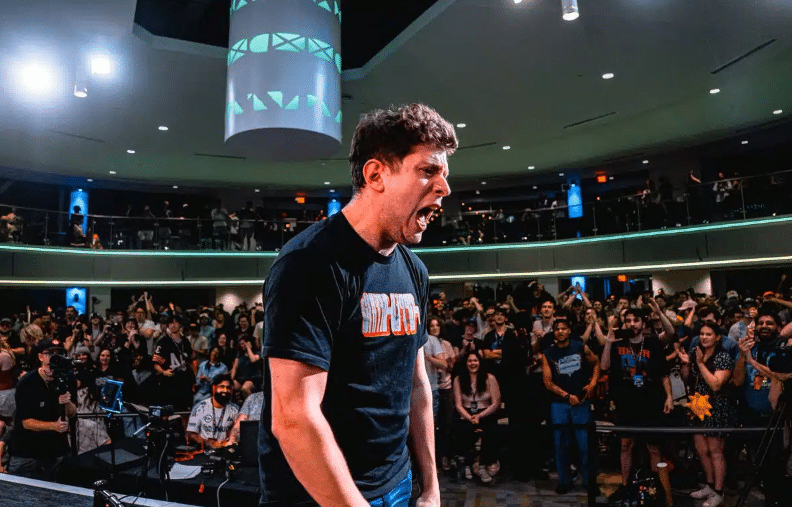
When you step onto a stage in a 1v1 title or a solo speedrun, there is no safety net. No team captain to call a timeout, no teammate to trade a kill, no bench player to swap in when you’re having an off day. It’s just you, your opponent, and a screen. That isolation creates an intensity that team games cannot replicate.
Think about fighting games like Street Fighter, Tekken, or Super Smash Bros., or the high-stress world of competitive speedrunning. Every input is a high-wire act. When a player makes a mistake in a solo esport, they carry 100% of the blame. That single dropped combo or missed frame skip haunts them, and you can see the visible weight of it in the player cam. That vulnerability makes victories taste incredible and defeats feel devastating.
Consider the Kemonomichi Legends LIVE event that pitted Saul Leonardo “MenaRD” Mena II against Daigo Umehara. Japanese fighting game fans took it so seriously they compared it to a sword fight to the death. Only one person comes out alive. MenaRD trained for months, knowing the severity of that first-to-ten match. In an interview, he told Esports Insider: “It’s one of the most challenging things I’ve ever done. At the end of the day, it was really important because I wanted to be at a level that would challenge him and be worth his time. He was also preparing. It made me really happy that it was worth it.”
“It’s one of the most challenging things I’ve ever done.” — MenaRD on facing Daigo Umehara
That’s a totally different vibe from League of Legends or Call of Duty, where smoke billows as players march onto stage together while commentators scream like a soccer broadcast. It’s wild and fun, but it’s not a fight to the death. That’s probably why the FGC takes itself so seriously: there may not be as much money on the line, but they’re putting their souls on the stage, collapsing and crying at a loss, throwing a chair at a win.
Personal Rivalries Hit Different
Team rivalries are fun, but solo rivalries are pure narrative gold. In a team game, rosters change constantly. Players get traded, contracts expire, and by next season the heated feud between two organizations feels like a corporate marketing campaign. In single-player games, rivalries stay personal for years. You stare directly across the stage at the exact person who knocked you out of the bracket six months ago. No shifting blame onto a bad support player or bad communication.
The back-and-forth intensity between Juan “Hungrybox” DeBiedma and Joseph “Mang0” Marquez is next-level entertainment. It wasn’t just watching their faces on stage. They were taking real jabs at each other online—not funny sky messages and corny memes, but real heat. Reddit threads were dedicated to comparing them, bashing the other. One Reddit user noted: “Mango Hbox is the most storied active rivalry. It’s actually so sick how long they have been going. At this point, I think their head-to-head record is the most important one in Melee history. When they are both retired, their H2H results will be poured over endlessly by the GOAT debate nerds.”
And there are so many more. Super Smash Bros. Melee is over 20 years old. Mang0 and Jason “Mew2King” Zimmerman constantly one-upped each other—a duel between the analytical mind of Mew2King and the hypeman Mang0. Even new-gen competitors have incredible storylines. “Zain vs Cody is my favorite rivalry,” said another Reddit user. “Neither is my favorite player, but literally every set between them feels like peak competitive Melee. I love how they keep pushing each other further and consistently trade both matches and sets.”
You get these long, personal storylines you just won’t find in team games. As an esports journalist, I remember asking Overwatch and League players who their greatest rivals were, and they didn’t have much to say—probably because that same person could end up on their team next season. Yawn.
The Focus Required Is Next Level
Playing at a championship level on your own demands a completely different tier of mental fortitude. You have to handle all the game sense, mechanics, clutch factor, and emotional regulation strictly inside your own head. And you have to do it time and time again, for years, decades. Think Tekken 8 GOAT Arslan Ash, the Gods of Melee, the 30-plus-year-old fighting game players who keep those mechanics and emotions at peak level.
A speedrunner attempting a world record at a major event is fighting their own nervous system while executing frame-perfect inputs for hours. A fighting game pro has to parse subtle animations in milliseconds to bait a whiff punish, all while knowing a single wrong guess loses the game. It is raw, unadulterated human skill pushed to its limits.
“When you are at a high level, you feel alone,” Arslan Ash admitted after winning his eighth Evo championship. “My friends aren’t even here. Your family is the one that always supports you. Real support. At the top, you’re alone. There’s just you and your family.”
Team games will always have their place at the top of the broadcasting mountain, and that’s fine. But if competitive gaming wants to reach its peak as a spectator sport, it’s time to start giving more respect, more broadcast budget, and more main-stage energy to the solo warriors holding it down all by themselves. No verdict needed—just a recognition that the loneliest battles often make for the best stories.


Comments (0)
Loading comments…