
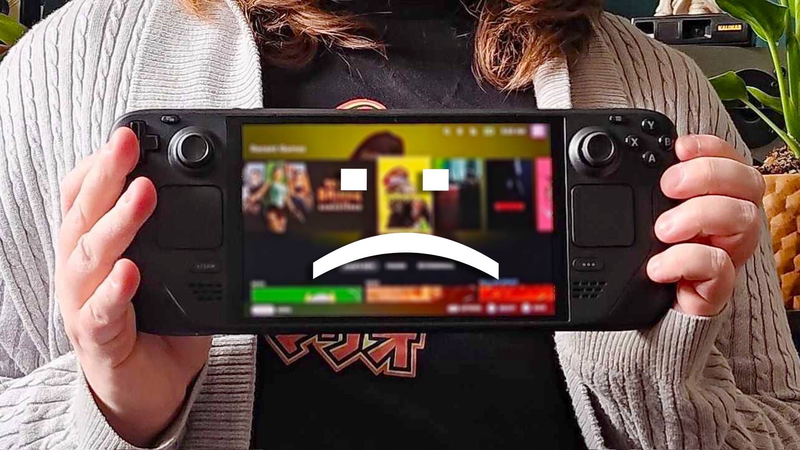
If you were hoping the handheld PC boom would keep accelerating forever, I've got some sobering numbers for you. According to new estimates from industry analysts, Steam Deck sales have cratered roughly 82% compared to their peak quarterly performance in 2022. Yes, you read that right — 82%.
Before you panic and assume the handheld PC form factor is dead in the water, let's talk about what these numbers actually mean. The estimate, which appears to come from supply chain data and retail tracking firms, compares the most recent quarter against the blockbuster holiday period when the Steam Deck first launched to widespread pent-up demand.
Here's the thing: that launch quarter was always going to be an outlier. Valve shipped hundreds of thousands of units to clear a reservation backlog that had been building for months. Comparing any subsequent quarter to that initial spike is like comparing a regular Tuesday dinner rush to New Year's Eve at a Michelin-starred restaurant. Of course the numbers look brutal.
"The 82% figure, while attention-grabbing, largely reflects the natural lifecycle of a first-generation hardware product that has already saturated its most eager early adopter market segment," reads a recent note from Omdia's games hardware analyst team.
How did we get here?
The Steam Deck launched in February 2022 with a reservation system that immediately ballooned to months-long wait times. Valve couldn't make them fast enough. Scalpers were having a field day. You couldn't scroll through gaming Twitter without seeing someone flex their freshly unboxed Deck.
Fast forward to today, and the situation couldn't be more different. You can walk into most major electronics retailers — or just order directly from Steam — and have a Deck at your door in a few days. Supply has caught up, and then some. That's the boring but crucial context: the 82% decline isn't just about falling demand; it's about supply finally matching reality.
The second factor is competition. When the Steam Deck launched, it was the only serious player in the PC gaming handheld space. Now you've got the ASUS ROG Ally, the Lenovo Legion Go, and a growing fleet of Chinese competitors like the Ayaneo and OneXPlayer lines. Each one offers different trade-offs — better screens, higher refresh rates, different form factors — that eat into the Deck's addressable audience.
The numbers behind the headline
Let's get concrete. Analysts peg the Deck's best quarter at roughly 1.5 million units shipped during its launch window. Current estimates suggest quarterly sales have settled somewhere in the range of 250,000 to 300,000 units. That's still a respectable number for a niche-first-generation PC accessory that costs $400 to $650. For comparison, Sony's PlayStation VR2 — which got far more marketing muscle — reportedly sold around 600,000 units in its launch quarter and has struggled to maintain momentum since.
The more telling metric might be attach rate and software spend. Valve doesn't break out hardware revenue in its financial reporting — the company is privately held and famously tight-lipped — but third-party estimates suggest Steam Deck owners tend to buy more games than the average Steam user. That's the real play for Valve. The Deck isn't just a piece of hardware; it's a portal to keep you inside the Steam ecosystem.
The bigger picture
The 82% sales decline narrative is a useful reminder that the handheld PC market is still a nascent, volatile category. It's not a PlayStation or Switch-level juggernaut, and it may never be. The audience for "I want to play Baldur's Gate 3 on the bus with mouse-and-keyboard controls mapped to thumbsticks" is real but finite.
Meanwhile, Nintendo's next console — whatever it ends up being called — is expected to launch in 2024 or 2025 with a handheld component that will almost certainly dominate the portable gaming conversation. The Switch successor will have Mario, Zelda, and Pokémon locked down. The Steam Deck and its rivals are fighting over the "also-ran" space for people who want to play the latest PC releases on the go.
That said, the category's ceiling is higher than it was two years ago. ASUS, Lenovo, and others are pouring R&D into second-generation designs with better battery life, lighter chassis, and more powerful APUs. AMD's new Ryzen Z2 series chips, expected to launch in late 2024, could provide a meaningful generational leap. The hardware train isn't stopping.
What happens next
Valve has been quiet about a Steam Deck 2, and that silence is probably strategic. The company is known for iterative, slow-moving hardware development — the Steam Deck itself took years to materialize after the Steam Controller and Steam Machine experiments. Expecting a sequel in 2024 feels optimistic. A revised model with a better screen and longer battery life? More plausible.
In the meantime, Valve is reportedly working on improving the software experience. SteamOS updates have steadily added features like per-game performance profiles, better sleep/wake behavior, and improved HDR support. The company is also rumored to be in talks with other hardware makers to license SteamOS as a Windows alternative. If that happens, the "Deck" brand could expand beyond Valve's own hardware into a software platform play — think Android for handheld gaming PCs.
For now, the Steam Deck remains the best entry-level option in a growing but fragmented category. Sales are down off a dizzying peak, but the product isn't going anywhere. The real test will come when the next wave of competitors arrives and Valve has to decide whether to respond with a hardware refresh or let the software do the heavy lifting.





Comments (0)
Loading comments…