
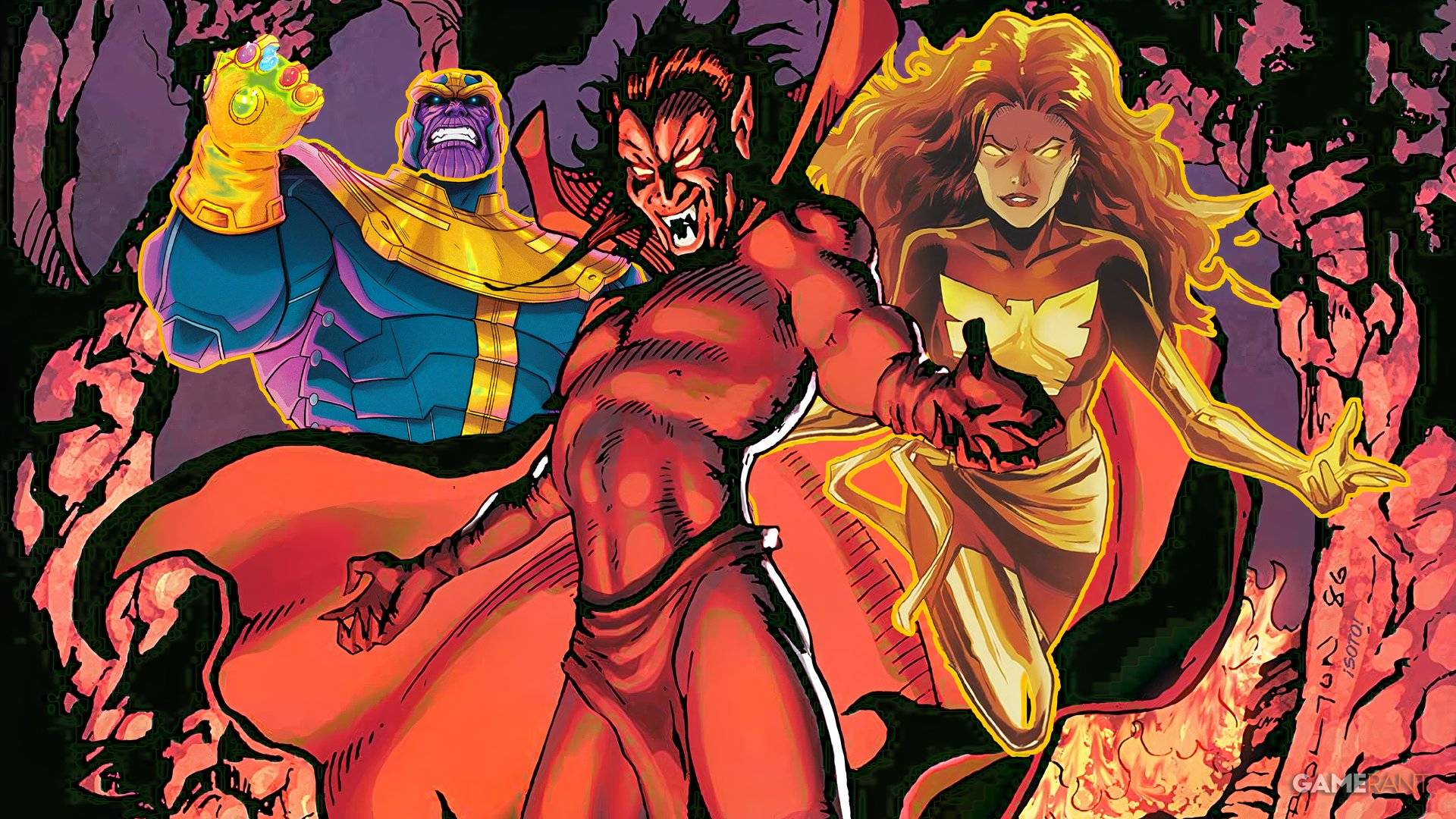
GameRant has updated its definitive ranking of Marvel Comics' most powerful villains, expanding the list to 20 cosmic threats and dark gods just as the MCU barrels toward Avengers: Doomsday and a new Spider-Man film. The ranking evaluates each antagonist at their absolute peak — whether that means wielding the Infinity Gauntlet, absorbing celestial entities, or rewriting reality on a multiversal scale.
The timing is deliberate. With the Multiverse Saga entering its endgame, Marvel's rogues' gallery has never been more relevant. The list spans from psychic amalgamations like Onslaught to universe-scouring forces like Annihilus, reflecting how the source material has escalated from street-level schemes to existential threats that make Thanos look like a mid-tier warlord.
The Psychic Singularity: Onslaught at #20
Born from the fused psyches of Professor X and Magneto, Onslaught represents a nightmare scenario: the world's most powerful telepath merged with the master of magnetism, then amplified by absorbing Franklin Richards and Nate Grey. The result is a being of pure psionic energy who commands Sentinel armies, constructs a citadel in Manhattan, and requires the combined might of the Avengers, Fantastic Four, and X-Men just to contain — not defeat. His first appearance in X-Men vol. 2 #53 (1996) remains a benchmark for "hero-turned-threat" storytelling.
What makes Onslaught fascinating isn't just raw power — it's the thematic weight. He's the physical manifestation of Xavier's repressed darkness and Magneto's righteous fury, a villain born not from malice but from the failure of two ideologies to reconcile. That psychological dimension elevates him above generic "evil Superman" archetypes.
The Negative Zone Tyrant: Annihilus at #19
Annihilus begins as a microscopic insectoid in the Negative Zone, but with the Cosmic Control Rod, he becomes a conqueror capable of threatening the positive matter universe. His Annihilation Wave event devastated galaxies, destroyed the Nova Corps, and forced uneasy alliances between cosmic heavyweights like Galactus and the Silver Surfer. The Rod grants him virtual immortality, energy projection, and command over a hive mind of insectoid soldiers.
Unlike Onslaught's internal tragedy, Annihilus embodies external existential horror — a force of nature that cannot be reasoned with, only survived. His recent MCU teases suggest Kevin Feige understands the character's potential as a Thanos-level antagonist for the cosmic side of the franchise.

Why Power Rankings Matter Now
Marvel's villain hierarchy has always been fluid, reshaped by whoever holds the pen. But the MCU's narrative gravity has hardened fan expectations. When Avengers: Doomsday arrives, the big bad needs to feel earned — not just powerful, but narratively inevitable. Rankings like this serve as a barometer for which comic arcs the films might adapt, and which characters have the conceptual weight to carry a two-part finale.
The list also reflects a broader trend: Marvel Comics has spent two decades escalating from planetary to universal to multiversal stakes. Villains who once seemed unbeatable — Doctor Doom, Kang, Ultron — now occupy middle tiers beneath abstract entities like the Beyonders or the First Firmament. This inflation creates a problem: when everyone destroys universes, the stakes lose texture.
The Skeptic's Case
Any ranked list of comic characters fights a losing battle against continuity. Onslaught was "killed" in 1997, returned in 2011, then reimagined as a Krakoan entity in the X-Men's current era. Annihilus has died and resurrected enough times that his threat level fluctuates wildly between "galactic conqueror" and "jobber for the Guardians of the Galaxy." Power levels serve the story of the week, not a consistent taxonomy.
There's also the AI problem: modern battleboarding communities feed character feats into language models to generate "objective" rankings, but comics don't work like RPG stat blocks. A villain's threat is contextual — narrative, thematic, emotional. Reducing the Beyonder to "multiversal+" strips away what made Secret Wars matter.
What to Watch For
The top 18 spots remain unrevealed in this update, but the pattern is clear: expect abstract entities, Celestials, and multiversal architects. Doctor Doom — currently riding high from his "One World Under Doom" comic run — likely cracks the top five. The Beyonders, Molecule Man, and a certain Mad Titan with a certain glove all loom.
More importantly, watch how Avengers: Doomsday handles its antagonist. The Russo brothers have a track record of grounding cosmic threats in human stakes. If they adapt the comic hierarchy faithfully, we're looking at a villain who doesn't just want to rule or destroy — but to rewrite the rules of existence itself. That's the tier where rankings stop mattering and storytelling takes over.
For now, the list stands as a snapshot of Marvel's cosmic pecking order circa 2026 — useful for debates, essential for speculation, and ultimately provisional until the next retcon rewrites history again. Activision's Marvel games have taught us that power scaling makes for great boss fights; Amazon's comics platform makes the source material accessible; and the Android ecosystem ensures you can read them anywhere. But the real measure of a villain isn't where they rank — it's whether they haunt you after the book is closed.


Comments (0)
Loading comments…