
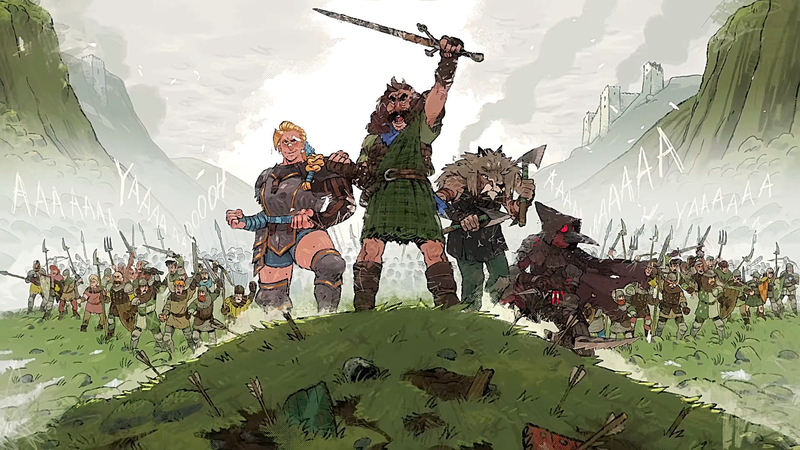
The dark state of gaming has been mentally clawing at me for months — the endless live-service roadmaps, the battle passes, the games that feel more like spreadsheets than worlds. Then No Rest for the Wicked dropped into Xbox Game Preview and PC early access, and for the first time in a long while, I remembered why I fell in love with this medium.
Moon Studios, the team behind Ori and the Blind Forest and Ori and the Will of the Wisps, released their brutal isometric action RPG on April 18, 2024. It's not finished. The developers are upfront about that — Act 1 of 3 is playable, multiplayer is coming later, and balance passes will continue through 2025. But what's here feels deliberate in a way that modern gaming rarely allows itself to be.
The Weight of Every Swing
Combat in No Rest for the Wicked doesn't want you to feel powerful. It wants you to feel deliberate. Stamina management matters. Positioning matters. The weight of your weapon — whether it's a ponderous greatsword or a quick dagger — dictates the rhythm of every encounter. Healing isn't a button press; it's a resource you manage through food you cook and rations you carry. Death drops your gear durability and scatters your currency, Dark Souls-style, but the run back is rarely a slog because the world is dense with shortcuts and secrets.
This is not a game that respects your time in the modern, frictionless sense. It respects your attention. There's a difference.

Why This Game, Why Now
The industry has spent the last decade optimizing engagement. Battle passes. Daily login rewards. Seasons designed to keep you subscribed, not satisfied. Even single-player games increasingly launch with "roadmaps" before they've proven they're worth playing for ten hours. No Rest for the Wicked arrives as a quiet rejection of that philosophy. It's a premium early-access title — $39.99, no microtransactions, no battle pass — that asks you to trust the developers' track record rather than a content calendar.
Moon Studios earned that trust. The Ori games weren't just beautiful; they were precisely engineered, every platforming challenge tuned to the millisecond. That same craftsmanship is visible here in the animation canceling, the enemy telegraphing, the way a parry window feels earned rather than gifted.
The Early Access Contract
Early access has a deservedly mixed reputation. For every Hades or Baldur's Gate 3, there's a project that stalls, pivots, or abandons its vision. Moon Studios has committed to a 12-18 month early access period with Act 2 and 3, multiplayer, New Game+, and "hundreds of balance changes" planned. The roadmap is public. The communication has been frequent. But the contract remains: you're paying for a promise.
That promise includes a world that already feels lived-in. The island of Isola Sacra drips with atmosphere — plague-ridden villages, corrupted forests, ancient ruins that hint at a civilization that fell long before you arrived. The environmental storytelling does heavy lifting. A child's doll in a burned cottage. A letter from a soldier who didn't make it home. The writing trusts you to piece it together.
Where the Cracks Show
It would be dishonest to pretend the experience is seamless. Performance on Xbox Series X|S has been uneven at launch — frame drops in dense areas, occasional texture pop-in, a few crashes that cost me progress. The inventory UI feels like a placeholder. Some weapon types are clearly undertuned. Multiplayer is absent entirely for now, which matters because the game's difficulty clearly anticipates co-op coordination.
And the difficulty will alienate players. This is not an accessible game in the modern sense. No difficulty sliders. No assist mode. The developers have stated they want the challenge to be the point, the language through which the story is told. That's a valid artistic choice, but it's also a barrier that will exclude people who might otherwise love the world Moon Studios built.
A Different Kind of Faith
What No Rest for the Wicked restored isn't faith that gaming is "fixed." It's faith that developers still exist who want to make something specific rather than something scalable. A game with a point of view. A game that would rather be someone's favorite thing than everyone's okay thing.
The early access label means this review is provisional. The game I'm playing in April 2024 won't be the game that launches in 2025. But the core — the weight, the care, the refusal to compromise its vision for engagement metrics — that's already there. And in this climate, that's enough to keep playing.


Comments (0)
Loading comments…