
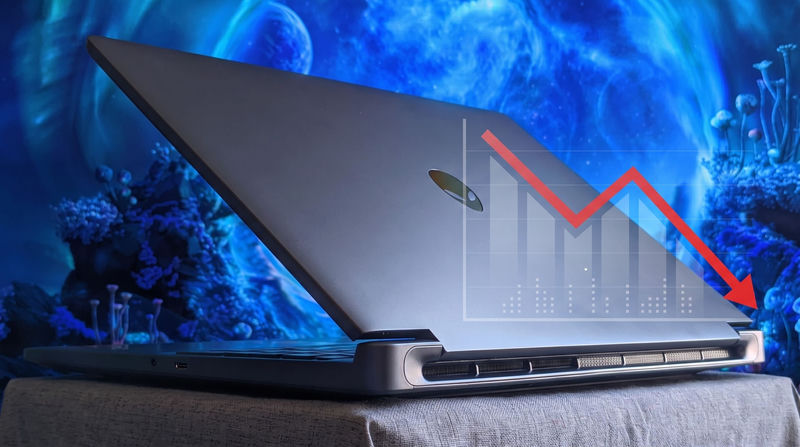
Global PC shipments fell in Q2 2026, ending PC sales growth as memory costs tightened around both laptops and desktops; the only bright spot was one PC brand that still managed to improve while the rest of the market slipped.
That is the headline, and it is an annoying one because memory usually feels like a spec-sheet detail. In real life, it is the part that decides whether a PC feels like a good deal or just another expensive appliance with a gaming logo on it.
What actually happened
PC shipments dropped globally in Q2 2026, breaking the growth streak that had kept the market feeling cautiously optimistic. The available details point to a broad slowdown, with only one PC brand posting improvement instead of decline.
The single improving brand matters, but not as much as the fact that the rest of the market could not hold the line. When every major PC maker is feeling the same pressure, it is no longer a product problem; it is a market problem.
The memory crisis is changing what a “good PC” costs
The memory crisis is not just for people who count RAM sticks like collectible cards. Memory sits between the marketing copy and the actual experience: faster loading, smoother multitasking, better editing, and fewer excuses to close tabs in the background.
When memory prices rise, the first thing buyers notice is not a benchmark. It is the cart total. A laptop that used to land at a comfortable price can suddenly feel overpriced even if the processor, display, and graphics card look familiar.
That is especially bad news for PC gaming. A new desktop or laptop that promises high-refresh Windows gaming can still feel like a budget exercise if the memory package pushes the price past the point where the upgrade makes sense.
Why this is happening now
The timing makes sense because the PC market is not dealing with one issue at a time. AI demand has pulled attention and capital toward memory-heavy computing, while PC buyers are still deciding whether a new machine is worth the money in a market that never fully returned to pandemic-era growth.
That AI angle is easy to overstate. Data-center AI memory is not the same as DDR5 in a gaming laptop, but supplier priorities still matter. If the most profitable memory categories get priority, ordinary PC components can still feel squeezed from the side.
There is also a simpler problem: people are keeping PCs longer. Pandemic-era home-office machines, gaming desktops, and hybrid laptops are still circulating, which means fewer urgent refreshes and more shoppers waiting for prices to stop looking strange.
Who gets squeezed
Consumers are the obvious losers. A gamer building a desktop may already have to choose between a better graphics card and a healthier memory kit; laptop shoppers face the same tradeoff without the fun of opening the case and upgrading later.
OEMs are in a tougher spot too. They need to move enough machines to justify production runs, but higher memory costs make aggressive discounts dangerous. That is how a slow market can become self-fulfilling: fewer shipments lower confidence, and lower confidence slows shipments even more.
PC game publishers feel the effect in a quieter way. A smaller pool of people buying new machines can mean less urgency for demanding Windows games, especially when the same budget could go toward a better display, a bigger SSD, or a console upgrade.
The improving brand has the advantage of proving that buyers still exist. That kind of growth probably comes from a stronger lineup, better inventory control, or a customer mix that is less exposed to casual upgrades.
PC gaming is shifting from growth story to maintenance mode
This decline fits a bigger pattern: the PC market is less about explosive expansion now and more about defending value. Handhelds like the ASUS ROG Ally changed expectations around portable Windows gaming, while Steam Deck-style hardware pushed the industry to think harder about what people will actually carry in a bag.
At the same time, AI has changed how people talk about computing. Most buyers are not training models, but they are starting to expect machines that can handle streaming, editing, voice tools, and background assistance without feeling outdated the second they unbox them.
For gamers, that means the old “buy the best parts” mindset is becoming less practical. Memory costs can turn a polished spec sheet into a lukewarm purchase, especially when the same budget could otherwise buy a better GPU, a faster SSD, or a bigger display.
But this is not automatically a collapse
It is too soon to turn one weak quarter into a doom report for PC gaming. Quarterly shipment data can be noisy, especially when inventory cycles, seasonal buying, and regional demand are all in play.
The better read is that the market is correcting. After years of people treating PCs as workstations, gaming machines, and entertainment hubs, buyers are now asking whether each upgrade still pays off.
That is not a death spiral. It is maturation, and maturation can be good for the market if it forces clearer products instead of vague “more power” promises.
What comes next
The next few quarters will tell us whether this is a temporary wobble or the start of a longer pause. Watch memory prices, OEM launch calendars, and whether the lone improving brand can keep its momentum once discounts get harder.
There is also a bigger signal to track: whether PC makers respond with lower-cost configurations or better value bundles. A cheaper memory kit may not sound glamorous, but it could decide which machines feel worth buying again.
For players, the practical takeaway is simple: the next good PC deal may be less about raw specs and more about balance. The market is moving from “how much power can I buy?” to “how much of that power can I actually use without the price getting weird?”





Comments (0)
Loading comments…