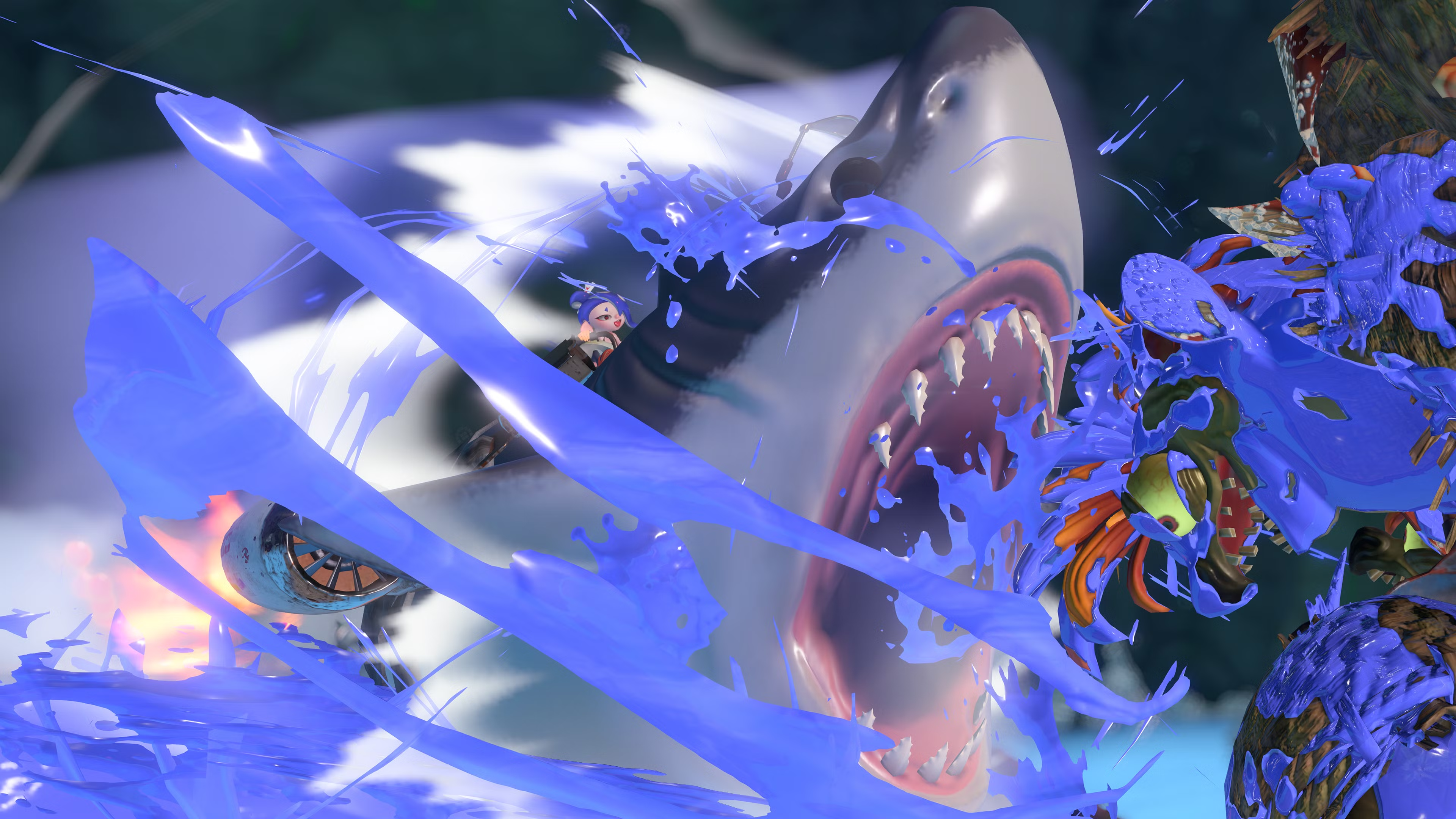
The Nintendo Switch 2’s extra power is finally showing up in Nintendo’s first-party games as stable, chaotic, colorful spectacle rather than a simple jump in realism. The important part is not that Kirby suddenly looks like a realistic furry space raccoon. It is that Nintendo can now load the screen with enemies, explosions, speed, particles, and effects that the original Switch simply could not handle without grinding to a halt.
That is the value of this hardware generation for Nintendo’s own studios: it removes performance barriers. The result is a new kind of cartoon overload, where the best Switch 2 exclusives feel like they were built around the console’s extra juice from the start.
The Switch 2 Is Revealing Nintendo’s New First-Party Playground
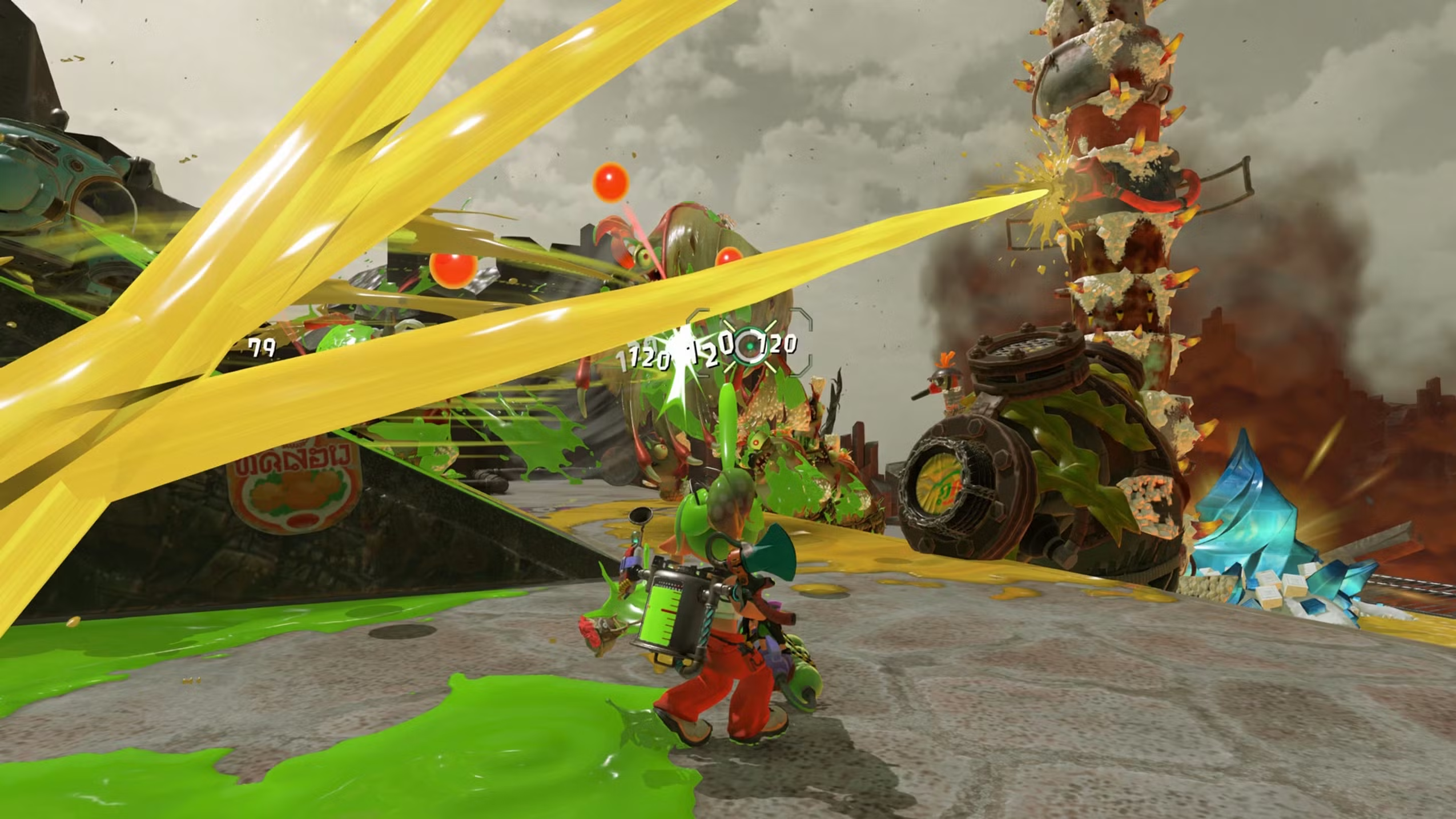
Splatoon Raiders is the clearest recent example of Nintendo using more hardware for more madness. In its high-level endgame challenges, the game throws waves of Salmonids at you from every angle while ink sprays, bullets fly, and your own shots cut through the mess. It is loud in the best way: less like a technical demo, more like a party game that got dangerously ambitious.
The important thing is that it does not just look busy. It stays stable while busy. That matters more than raw visual sharpness for games like this, because the fun depends on reading colorful chaos quickly and reacting fast. If the frame rate drops during a packed encounter, the design breaks. If it holds, the chaos becomes the point.
This is where the Switch 2’s power starts to make sense. The original Switch was built around clever constraints: compact design, mixed handheld play, and performance budgets that forced games to be careful with what appeared on screen. Nintendo’s first-party games always adapted beautifully, but adaptation is not the same as freedom. The Switch 2 gives Nintendo more room to let the screen get ridiculous.
Donkey Kong Bananza Made the Pattern Obvious
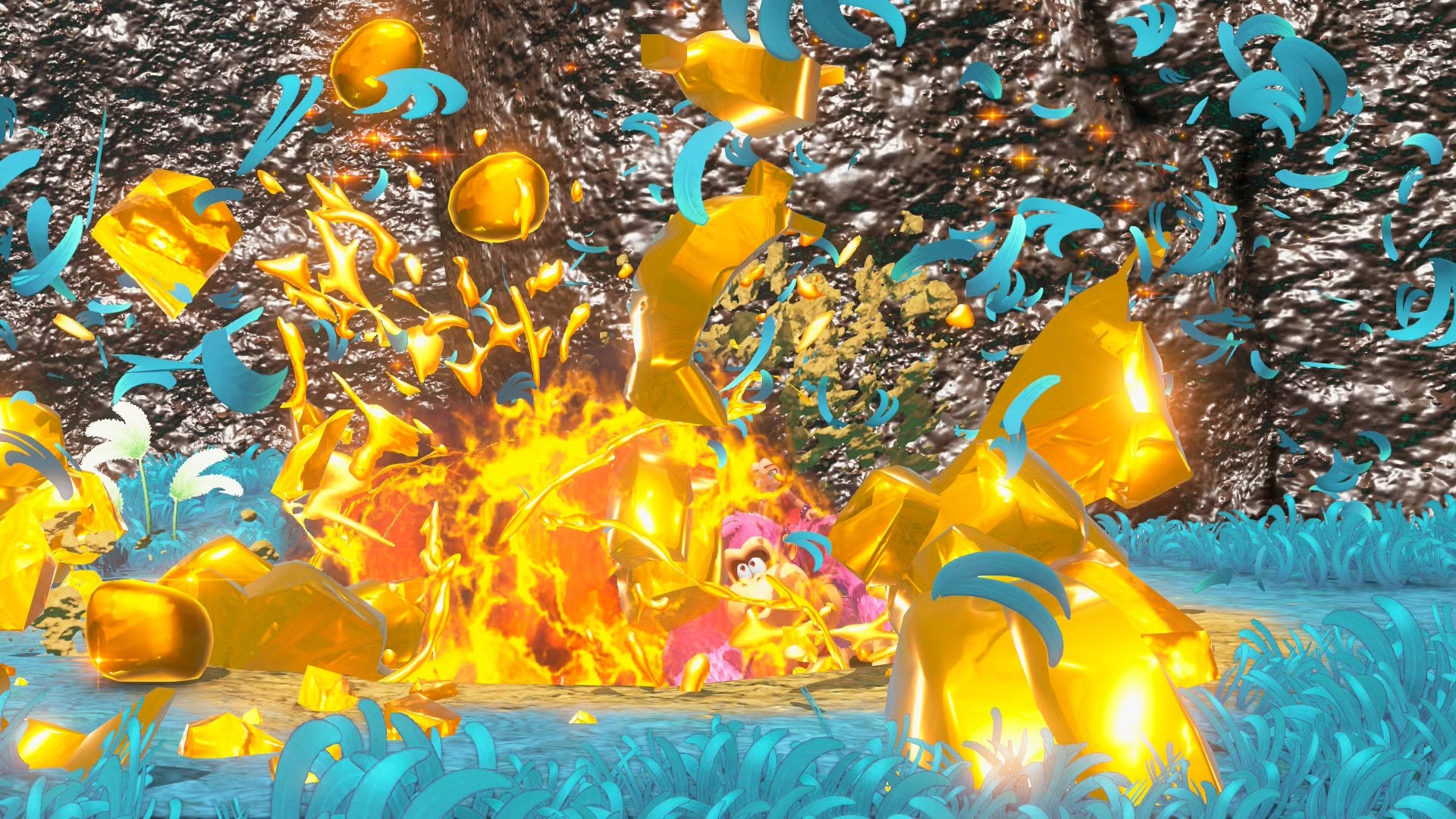
Donkey Kong Bananza was the early proof that Nintendo’s next console could do more than upscale familiar games. It is still the Switch 2’s show pony because it lets you tear through levels with terrain exploding in showers of gold particles while the camera whips around and the game keeps moving.
The co-op performance is especially telling. A top-down action game with lots of moving parts, physics, and on-screen effects is exactly the kind of thing that can make older hardware sweat. On the original Switch, even relatively modest top-down Zelda-style games could struggle to keep things smooth. Bananza does not merely run; it thrives under the pressure.
That is the real generational shift for Nintendo’s own titles. The Switch 2 is not just making games look cleaner. It is letting Nintendo design encounters around volume: more enemies, more objects, more speed, more simultaneous effects. The hardware is not hiding behind polish. It is enabling the gag.
The Pattern Is Bigger Than One Game
Several early Switch 2 exclusives are pointing at the same design philosophy. Hyrule Warriors: Age of Imprisonment can put hundreds of enemies on screen without the slowdowns that haunted its Switch predecessor. Kirby Air Riders throws everything it can at you during City Trial mode while you rip across the map at cartoonishly high speed. Mario Tennis Fever can stack multiple Fever Racket effects on one court without the scene collapsing into visual mush.
These are not all the same genre, but they share a common technical ambition: keep the screen full. That is the opposite of the old Switch mindset, where developers often had to be careful about how much was happening at once. The Switch 2 changes the design question from “Can this run?” to “How much nonsense can we safely put here?”
That is a big deal for Nintendo because its best games often come from hardware-specific ideas. The GameCube’s four-controller support helped make it a multiplayer haven. The Wii’s motion controls led to a golden age of casual party games. The Wii U’s second-screen concept pushed Nintendo toward experimentally odd play. The Switch shaped games around portable chunks, quick pickups, and flexible play sessions.
The Original Switch Made Great Games Through Limits
The original Switch was not a failure of imagination. It was a masterclass in working inside a box. The best Switch games had huge scope, but they were built for short sessions and handheld play. Breath of the Wild used shrines as bite-sized rewards. Super Mario Odyssey packed levels with collectible Moons that could be chased down between snacks, commutes, and bedtime.
That approach made Nintendo’s library unusually durable. A lot of Switch games still feel designed around the kind of life people actually have: five minutes here, twenty minutes there, console on the TV when possible, handheld when not. The original Switch’s technical limits were part of that identity, but they also shaped what Nintendo felt comfortable building.
The Switch 2 is creating a different identity now. Its first-party games are less about making big adventures fit into tiny windows and more about making big moments feel unblocked. The hardware is no longer just a container. It is becoming a tool for sensory escalation.
Why This Matters for Nintendo’s Biggest Franchises
The most interesting part is what this unlocks next. Nintendo’s major franchises are built around speed, scale, and personality, so more power can translate into more expressive design rather than just better textures.
- Super Smash Bros. could push faster pacing, more explosive items, and even busier stage gimmicks without worrying as much about frame drops.
- Mario’s next 3D outing could follow the same logic that made Super Mario Galaxy feel technically dazzling in 2007: use the hardware to make the fantasy bigger.
- F-Zero suddenly feels less like a pipe dream because the series depends on speed, precision, and visual clarity under intense motion.
- Kirby can keep being Kirby while doing things Nintendo never had the hardware to stage cleanly before.
The F-Zero point is especially telling. The series has always sounded like it needed a modern Nintendo machine behind it. High-speed racing leaves little room for slowdown, blur, or input hesitation. If Nintendo can make Splatoon Raiders hold together in a packed endgame fight, then a future F-Zero revival has a much stronger technical foundation.
The Real Upgrade Is Not Fidelity. It Is Permission.
This is the part that matters most for Switch 2 owners and first-party fans: Nintendo is not treating the extra power as a reason to chase realism. It is using that power to protect the weirdness. The colorful chaos is not decoration layered on top of a conservative design. It is the design.
That matters because older hardware often forces games to choose. Fewer enemies, fewer effects, slower camera movement, simpler physics, or shorter encounters. The Switch 2 gives Nintendo room to keep the thing funny, frantic, and readable all at once. That is harder than it sounds, and it is why stable performance matters more than marketing language about graphical improvements.
For players, the practical difference is immediate. A packed battle should feel packed, not sluggish. A racing game should feel fast, not compromised. A party or action game should let the screen get ridiculous without turning into a slideshow. Nintendo’s early Switch 2 games are showing that the extra power can improve the actual experience, not just the screenshots.
There Is Still a Catch
The obvious concern is that this advantage only fully matters when games are built for the Switch 2 from the start. A first-party Switch 2 exclusive can use the extra power to expand its design. A cross-platform game may still be held back by the lowest common denominator, especially if it has to support multiple hardware modes.
There is also a risk of mistaking busyness for depth. More particles, more enemies, and more effects do not automatically make a better game. The useful version is when the chaos supports the core loop, as with Splatoon Raiders’ combat pressure or Donkey Kong Bananza’s destruction-heavy movement. If Nintendo just adds visual noise, the extra power becomes a trick. If it uses the power to make the fantasy sharper, faster, and more reliable, it becomes a real upgrade.
That is the difference between “more graphical power” and “more game design freedom.” Nintendo seems to be aiming for the second one, and the best early Switch 2 games are proof of that.
What Comes Next
The next few years will tell whether this is just a strong early console phase or the beginning of a new Nintendo design language. If more first-party games follow the Switch 2’s lead, Nintendo’s biggest franchises could become faster, denser, and more expressive without losing their identity.
The important thing to watch is not whether these games look more realistic. They probably will not, and that is fine. The better question is whether they can keep their personalities while doing more at once. If Nintendo can keep that balance, the Switch 2’s power will matter for exactly the right reason: it gives its best games more room to be weird.


Comments (0)
Loading comments…